





Phone with Charger in Singapore: What to Expect in 2026
From 1 April 2026, most new phones, tablets and laptops sold in Singapore must support USB-C charging under IMDA rules, so a phone with charger purchase should now be judged on USB-C compatibility and whether an adapter is bundled. That matters because Singapore has one of the world's highest smartphone adoption rates, at about 91% of the population, so charger choices touch almost everyone's daily routine.
If you've stood in a shop aisle or scrolled a product page and wondered whether the box still includes a charger, you're not alone. The old assumption was simple, a phone came with a charger and a matching cable. In Singapore now, that question has become more practical, because the charger is part of a wider ecosystem of compatibility, reuse, repair and waste reduction.
Table of Contents
- Why the Phone With Charger Question Matters in 2026
- Why Brands Stopped Bundling Chargers
- Charger Types, Speeds and Connectors Explained
- How to Verify What Comes in the Box Before You Buy
- Refurbished, Surplus and As-New Phones With Chargers
- Sustainability, Repair and the Right-Sized Charger
- A Simple Decision Framework Before You Buy
Why the Phone With Charger Question Matters in 2026
You might be comparing two listings that look almost identical, except one says USB-C cable only and the other says charger included. That small line can change how useful the phone is on day one, especially if you're buying for a student, a family member, or a work team that needs everything ready immediately.
The shift is no longer just about convenience. Singapore's move to USB-C charging for most new mobile phones, tablets and laptops sold from 1 April 2026 is policy-driven, and it changes how buyers should read a bundle description. The point isn't to hunt for a big wall charger in every box. The point is to confirm the device fits the local USB-C ecosystem and can work with chargers you already own.
What the new buying question really means
A phone with charger search now has two separate checks. First, does the device support the right charging standard. Second, does the seller include an adapter in the box, or only a cable. If you miss that distinction, you can end up paying twice for the same function.
That matters in Singapore because smartphones are already embedded in daily life. With about 91% smartphone adoption, charger compatibility affects not just personal buyers but also schools, retailers and SMEs that equip multiple users at once. When a standard becomes widely shared, one good charger can serve several devices instead of sitting in a drawer.
Practical rule: treat the charger like a car fuel nozzle. If the nozzle fits, the car still needs the right fuel flow, and not every nozzle comes with the car.
For first-time buyers, the main mindset shift is simple. Stop asking only, “Does this phone come with a charger?” Ask, “Will this phone work with the chargers I already have, and if not, what exactly am I paying for?” That question is the one that helps you avoid unnecessary accessories and avoidable e-waste.
Why Brands Stopped Bundling Chargers
The removal of bundled chargers didn't happen by accident. Brands pushed towards it as part of a broader move to cut waste, reduce box contents and make shipping lighter. For the buyer, that can feel like a cut. For the market, it's become the new normal.
Singapore gives that shift a local context. The National Environment Agency reported that Singapore generated about 60,000 tonnes of e-waste in 2023, roughly 10 kg per person. Chargers and cables sit in the same small-electronics stream, which is exactly why standardisation matters. Every reused USB-C charger is one less adapter that needs to be manufactured, packed and eventually discarded.
Why absence is now a policy outcome
A charger missing from the box can feel annoying if you expected a complete set. But in many cases, it reflects a deliberate product strategy rather than a retailer cutting corners. The logic is straightforward. If most customers already own a compatible charger, bundling another one adds cost, packaging and waste without improving the device itself.
That has business consequences too. Fewer duplicated accessories can mean simpler inventory planning and less packaging to handle. It also helps buyers think in lifecycle terms. A charger is no longer a throwaway add-on. It's a reusable asset, much like a power cable for a laptop or a dock for a work desk.
If you manage devices for a team, this matters even more. A shared charging ecosystem reduces clutter and makes it easier to standardise accessories across phones, tablets and laptops. If you want a practical angle on bundling decisions in general, the B2B product bundle pricing guide is a useful way to think about how product bundles affect value, even outside electronics.
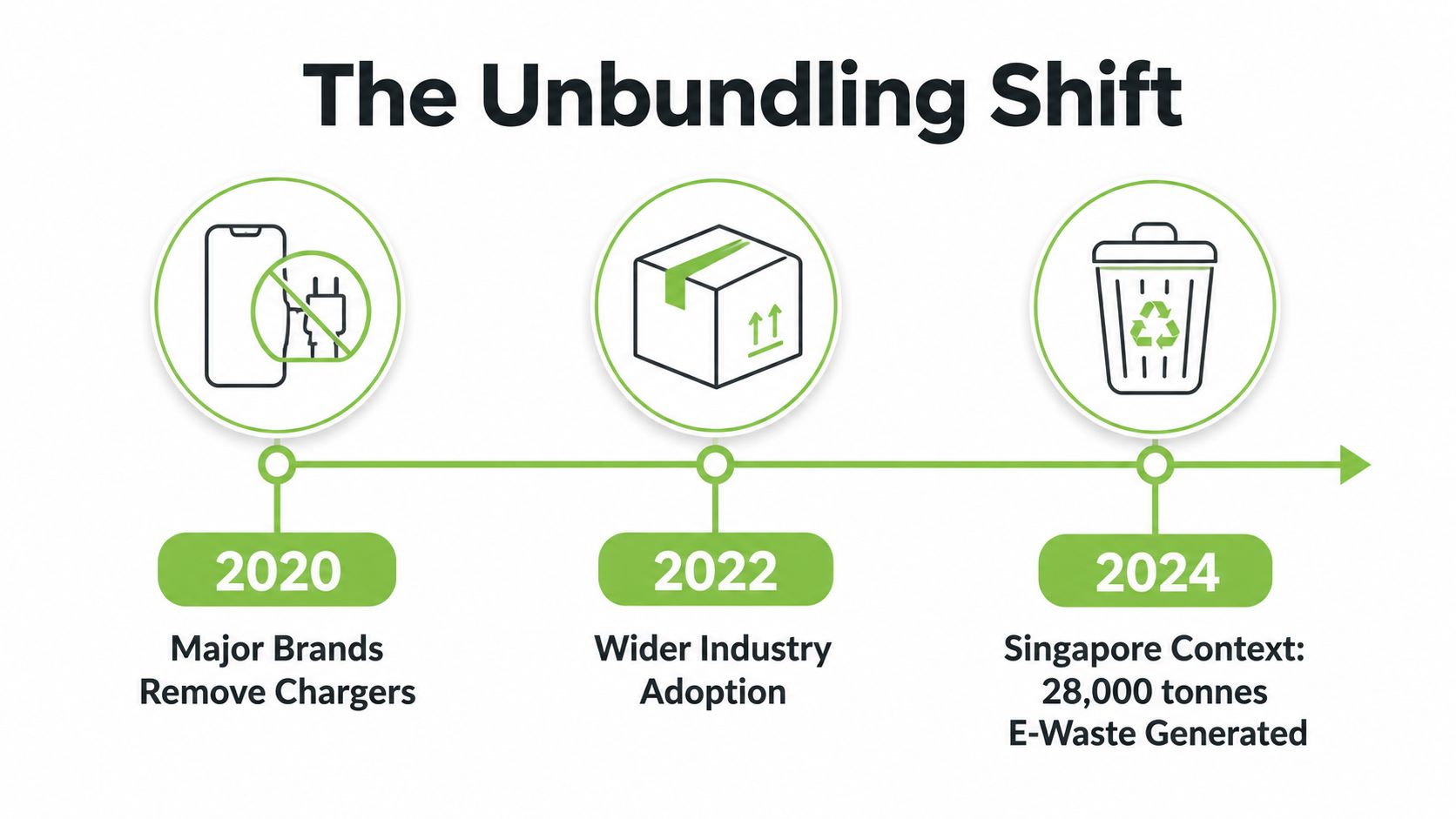
The practical takeaway is simple. A missing charger doesn't automatically mean a bad listing. It may just mean the market has moved on, and the smarter question is whether the device and your existing accessories work together cleanly.
Charger Types, Speeds and Connectors Explained
A charger can look like a simple block, but in practice it behaves more like a fuel pump with different nozzles and flow rates. If the nozzle is wrong, the fuel won't transfer well. If the flow is too weak, the device charges slowly. If the setup is poor, you can get heat, frustration or both.
The four charger families you'll actually meet
USB-C Power Delivery (PD) is the most useful standard to learn first. It's the broad compatibility option for many phones, tablets and laptops, and it's the one most aligned with Singapore's USB-C direction. Qualcomm Quick Charge is another fast-charging system, often seen on Android devices, but its compatibility depends on the phone and charger both supporting it.
Wireless charging removes the cable, which is convenient, but it still depends on alignment and heat control. Older proprietary connectors are the least flexible choice because they often lock you into a specific brand or older accessory line. If you already own a USB-C brick, that usually gives you the best chance of reuse across multiple devices.
A charger is only “fast” if the phone and the charger agree on the same language.
The safest buying habit is to read the connector and protocol together. A product can have a USB-C plug and still charge slowly if the protocol is basic. The opposite can also happen, where the phone supports fast charging but your old adapter doesn't.
Charger Standards at a Glance
| Standard | Typical Wattage | Connector | Best For |
|---|---|---|---|
| USB-C Power Delivery | Varies by device and charger | USB-C | Phones, tablets, many laptops |
| Qualcomm Quick Charge | Varies by device and charger | Usually USB-C, sometimes older USB-A setups | Compatible Android phones |
| Wireless charging | Varies by pad and phone | No cable connector at the phone | Desk use, bedside charging |
| Proprietary connectors | Varies by brand | Brand-specific | Older or brand-locked devices |
If you want a deeper practical example of cable choice and speed, this guide on fast charging cable shows how connector choice affects real charging behaviour. The key point is not to memorise technical jargon. It's to know whether your existing charger is reusable before you click buy.
How to Verify What Comes in the Box Before You Buy
A listing can look complete at a glance and still leave out the adapter. Product photos often show a phone next to a charger because that image sells the idea of readiness, not necessarily the actual bundle. The text details are the part that decide what arrives at your door.
Check the listing in four passes
First, read the product title and the bundle line. Look for plain wording such as adapter included, USB-C cable only, or charger sold separately. Those phrases matter more than a polished hero image.
Second, open the in the box or specifications tab. That section is where retailers usually spell out exactly what ships with the device. If the box contents are listed clearly, you can spot missing accessories before payment.
Practical rule: if the page uses vague wording, assume the charger may not be included until the box contents say otherwise.
Third, scan the warranty and accessories policy. This helps you understand whether a missing adapter is a deliberate bundle choice or something covered in a return or exchange process. Fourth, check the checkout summary before paying. That last screen is where bundle changes, add-ons and accessory removals are easiest to miss.
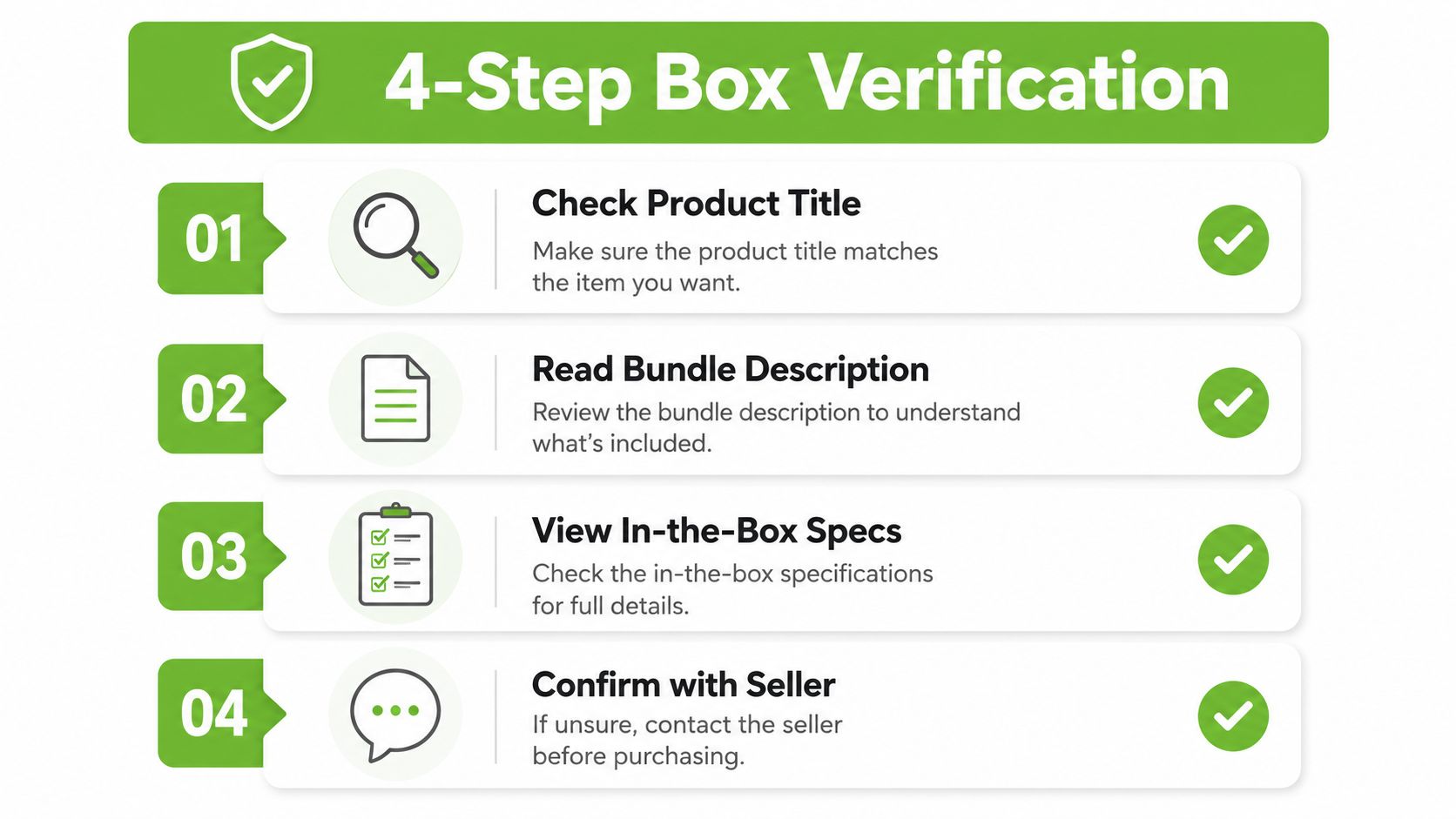
For Singapore buyers, this habit saves time and reduces return friction. It also makes comparing listings much easier, because you're looking for actual bundle content rather than assuming every phone still ships the same way. If a seller is unclear, ask before purchase. A two-line clarification message is far cheaper than buying the wrong adapter later.
Refurbished, Surplus and As-New Phones With Chargers
For budget buyers and SMEs, the clearest charger outcome is often found outside the brand-new market. New-device bundles can be inconsistent, but refurbished and surplus pathways usually make the accessory situation easier to understand because the seller has to define what is included, what is tested and what condition the device is in.
Why graded devices change the charger equation
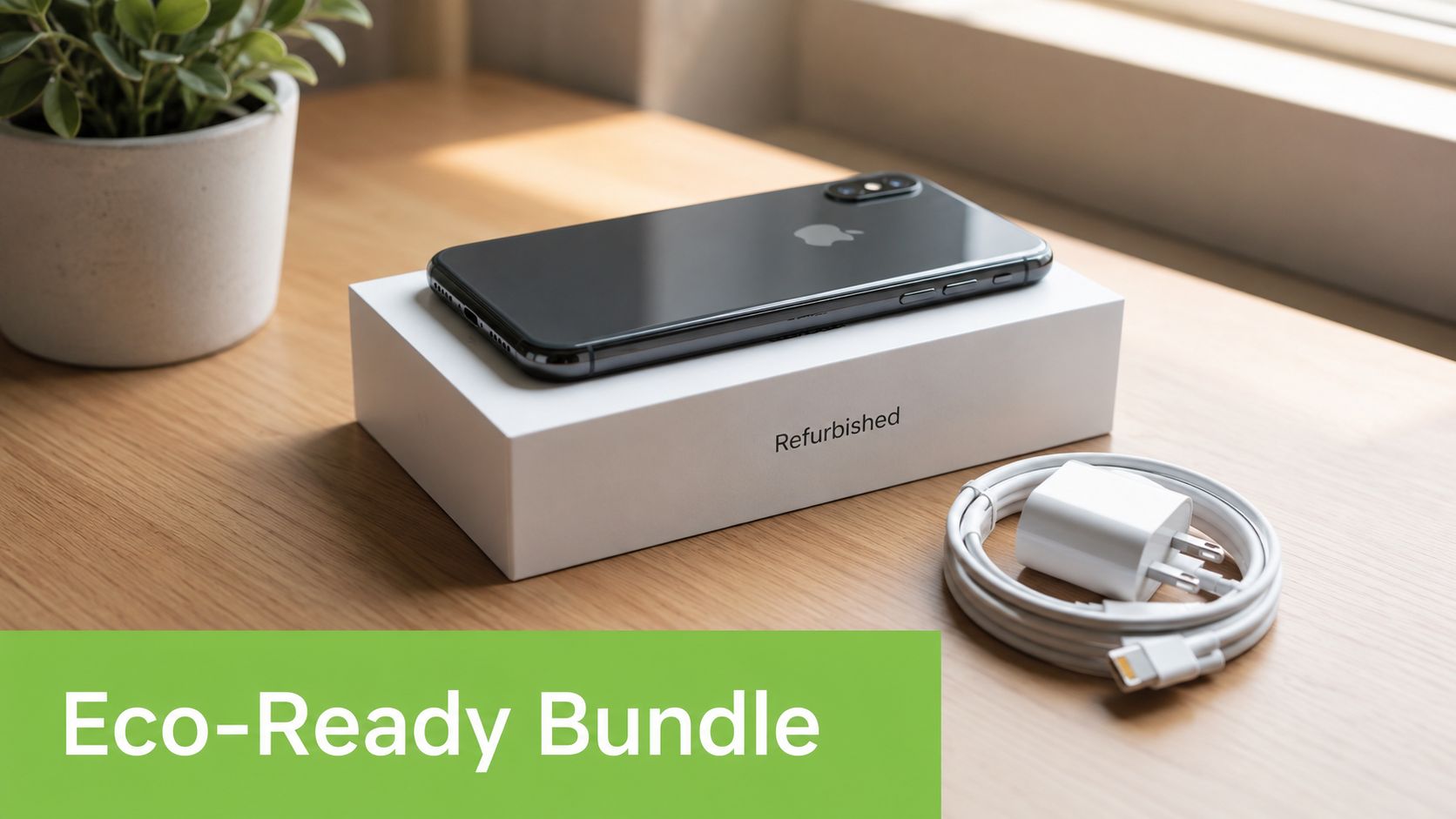
myhalo is one example of a lifecycle-focused retailer that offers Certified ReLoved, Certified Surplus and factory-sealed brand-new devices, with transparent grading and battery health disclosure. Its device checks are built around 30 quality checks, and the process is framed around ISO 9001 Certified quality management. That matters because buyers can see whether they're getting an As-New unit with a 6-month warranty, a ReLoved Premium unit with a 30-day warranty, or a more wear-tolerant option such as ReEco.
The practical value here is clarity. A buyer doesn't have to guess whether the charger is original, compatible or missing from the bundle. For students, that reduces the risk of paying for extra accessories they don't need. For SMEs, it helps standardise what a new hire receives, which supports budget control and easier device rollouts.
What to look for before choosing refurbished
The smarter choice is the one that matches the device's age, battery condition and accessory needs. Transparent grading makes that easier because it reduces the gap between what you see online and what lands on the desk. If battery health is disclosed, you can make a better call on whether to reuse your current charger, replace only the cable, or choose a device class that already suits your workflow.
There's also a resale and reuse logic here. Certified Surplus and ReLoved devices keep hardware in circulation longer, which is better for value retention and less wasteful than replacing a phone just to get a new charger in the box. That's especially useful for teams that need several devices at once and don't benefit from paying for a new retail bundle every time.
For a more detailed checklist, the things to look out for before buying a refurbished phone resource is worth keeping close. The main point is simple. A well-graded refurbished phone can make charger decisions cleaner, not messier.
Sustainability, Repair and the Right-Sized Charger
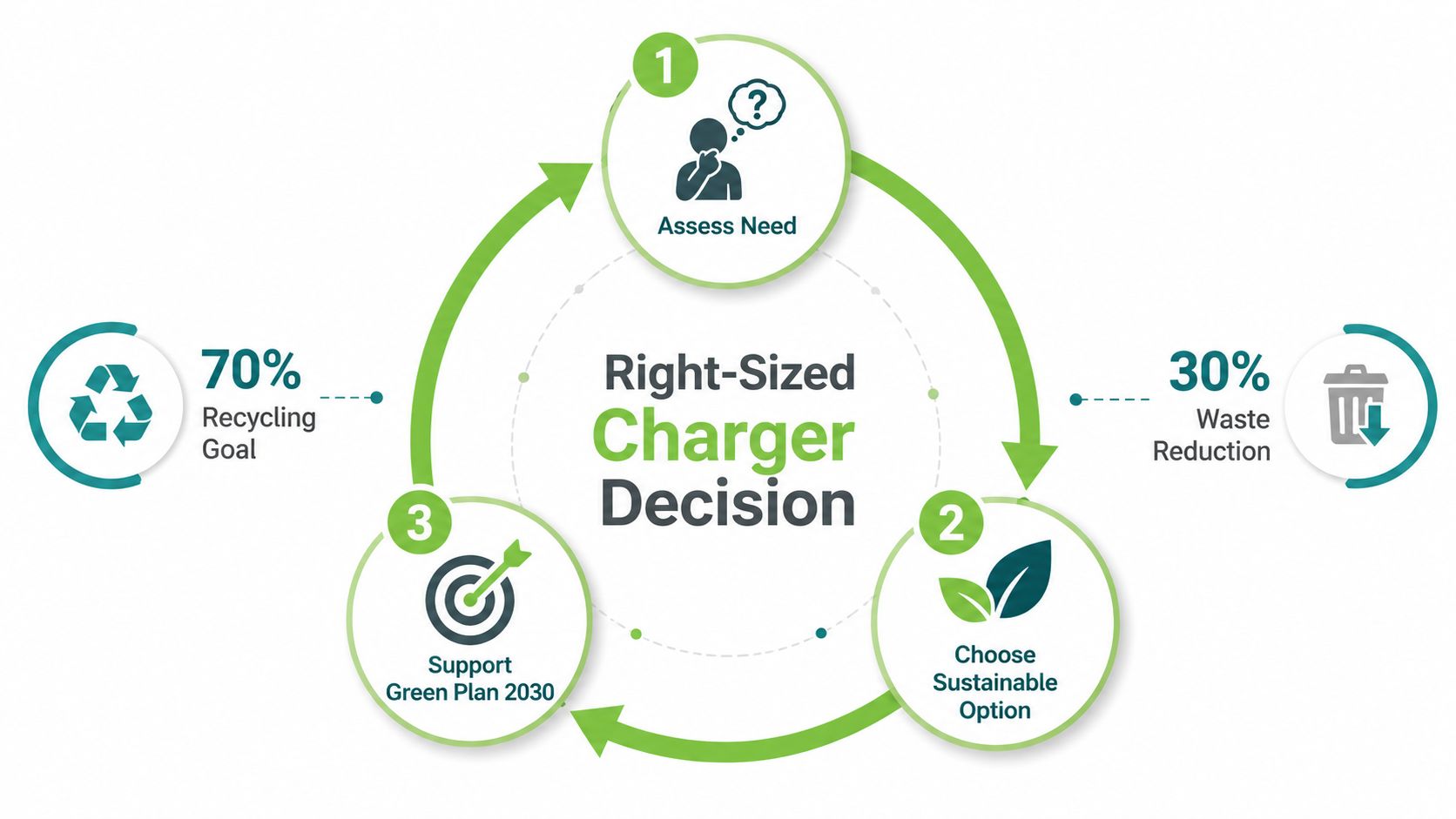
A charger decision is also a lifecycle decision. If you buy the right adapter once, repair instead of replacing, and hand over end-of-life devices through approved channels, you reduce clutter and keep hardware useful for longer. That lines up neatly with Singapore's Green Plan 2030, which targets a 30% per capita reduction in waste sent to Semakau landfill and a 70% domestic recycling rate by 2030.
Four practical moves that make sense in Singapore
Start by right-sizing the charger to the device. A charger doesn't need to be oversized to be useful, and a stronger charger is only helpful if the phone supports it. Then reuse existing USB-C bricks where possible, since that cuts duplication without reducing convenience.
If the phone charges only at an angle or the cable feels loose, consider repair over replacement first. Services such as myhalo Repair and RescueAdvise can help you separate a worn cable from a failing port, which is often the key decision point. myhalo also offers e-Xtender for proactive maintenance and Protect for accidental damage and liquid protection, both of which help extend device life instead of forcing a premature swap.
Practical rule: when charging becomes inconsistent, inspect the cable, the adapter and the port as a system, not as separate problems.
When a device has reached its end of life, use trade-in or approved collection points rather than general waste. Singapore's Extended Producer Responsibility framework already places regulated e-waste handling under a structured system from 1 July 2021, and the NEA's guidance is clear that mobile phones, tablets and laptops belong in approved channels, not household bins. That applies to chargers and cables too.
For a wider view of device lifecycle habits, the a zero e-waste world how can you help page is a useful reminder that small disposal decisions add up. If you're comparing accessory standards with wider regulatory change, the 2026 EU compliance steps resource shows how battery and accessory rules are becoming more lifecycle-focused across markets.
A Simple Decision Framework Before You Buy
Start with compatibility. If the phone supports USB-C and your current charger already works, you may not need a new adapter at all. Then check the box contents, because a listing that says USB-C cable only is very different from one that ships with a wall charger.
Next, think about the device's condition and your usage pattern. If you want lower upfront cost, clearer grading and less guesswork, refurbished or surplus options can make more sense than chasing a brand-new bundle. If you're equipping a household or SME, the main win is standardisation, not accumulation.
The big change coming on 1 April 2026 is that Singapore's buying habits will align more closely with a USB-C-first environment. That doesn't mean every box will include a charger. It means buyers should expect to reuse more, waste less, and choose devices based on compatibility and lifecycle value instead of old bundle habits.
If you want help choosing a phone, charger or refurbished device that fits how you use it, visit myhalo and look through the current device range, repair options and trade-in pathways. You'll find clear grading, accessory details and lifecycle support that make it easier to buy once, reuse longer and replace less often.