




iPhone Installment Plan Singapore: Your 2026 Options
""" You're probably in the same spot as most iPhone buyers in Singapore. Your current phone still works, but the battery isn't lasting, the camera feels dated, and the idea of dropping a large lump sum on a replacement doesn't feel smart. That's exactly why instalment plans keep pulling attention. They turn a painful one-shot purchase into something manageable, but the key question isn't just whether you can spread the payment. It's whether the plan makes financial sense once you look past the monthly number.
A lot of people compare instalment plans the wrong way. They look only at the lowest monthly payment, sign the form, and realise much later that they've tied themselves to a telco, picked a rigid payment schedule, or paid full price for a device that starts losing value quickly. A smarter comparison looks at total cost of ownership, flexibility, upgrade options, and whether buying refurbished changes the equation in your favour.
Table of Contents
- Why an iPhone Installment Plan Makes Sense in 2026
- The Four Main Types of iPhone Installment Plans
- Cost Comparison Which Installment Plan Is Cheapest
- Eligibility and Required Documents
- The Smart Alternative Trade-ins and Refurbished iPhones
- Your Step by Step Application Checklist
- Frequently Asked Questions About iPhone Installment Plans
Why an iPhone Installment Plan Makes Sense in 2026
A new iPhone often becomes a budgeting problem before it becomes a tech decision. You may want the better battery, cleaner photos, or longer software support, but paying the full retail price at checkout can feel unnecessary when there are structured payment options available.
That's not niche behaviour. It's mainstream. A global trend shows that 55% of iPhone buyers choose monthly instalment plans rather than paying upfront, and that same source notes how spreading the cost of a S$1,299 iPhone over 24 months makes the purchase easier to absorb for buyers facing high device prices (AppleInsider's report on the CIRP survey).
In Singapore, that pattern feels familiar because the upfront cost of premium phones is high enough to affect how people upgrade. Students want predictability. Young working adults don't want to wipe out a month's spare cash on one purchase. Small business owners may need several devices at once, and cash flow matters more than owning the newest model on day one.
Why instalments work for practical buyers
Instalments make sense when they solve a real cash flow problem without inflating the overall cost too much. That's the key distinction.
- Cash preservation matters: Keeping more money in your account for rent, transport, school fees, or business expenses often matters more than the satisfaction of paying upfront.
- Premium devices are easier to justify: A phone with a longer usable lifespan feels more reasonable when the payment is spread out.
- Upgrade timing becomes less painful: You don't have to wait until you've rebuilt savings after a lump-sum purchase.
Practical rule: If a plan lowers your immediate financial strain without locking you into avoidable fees or a weak contract, it's doing its job.
The catch is simple. Not every iPhone instalment plan in Singapore is built the same. Some are clean and transparent. Others look affordable month to month but become expensive once you include line commitments, merchant restrictions, or the fact that you paid full new-device pricing for something that won't hold that value for long.
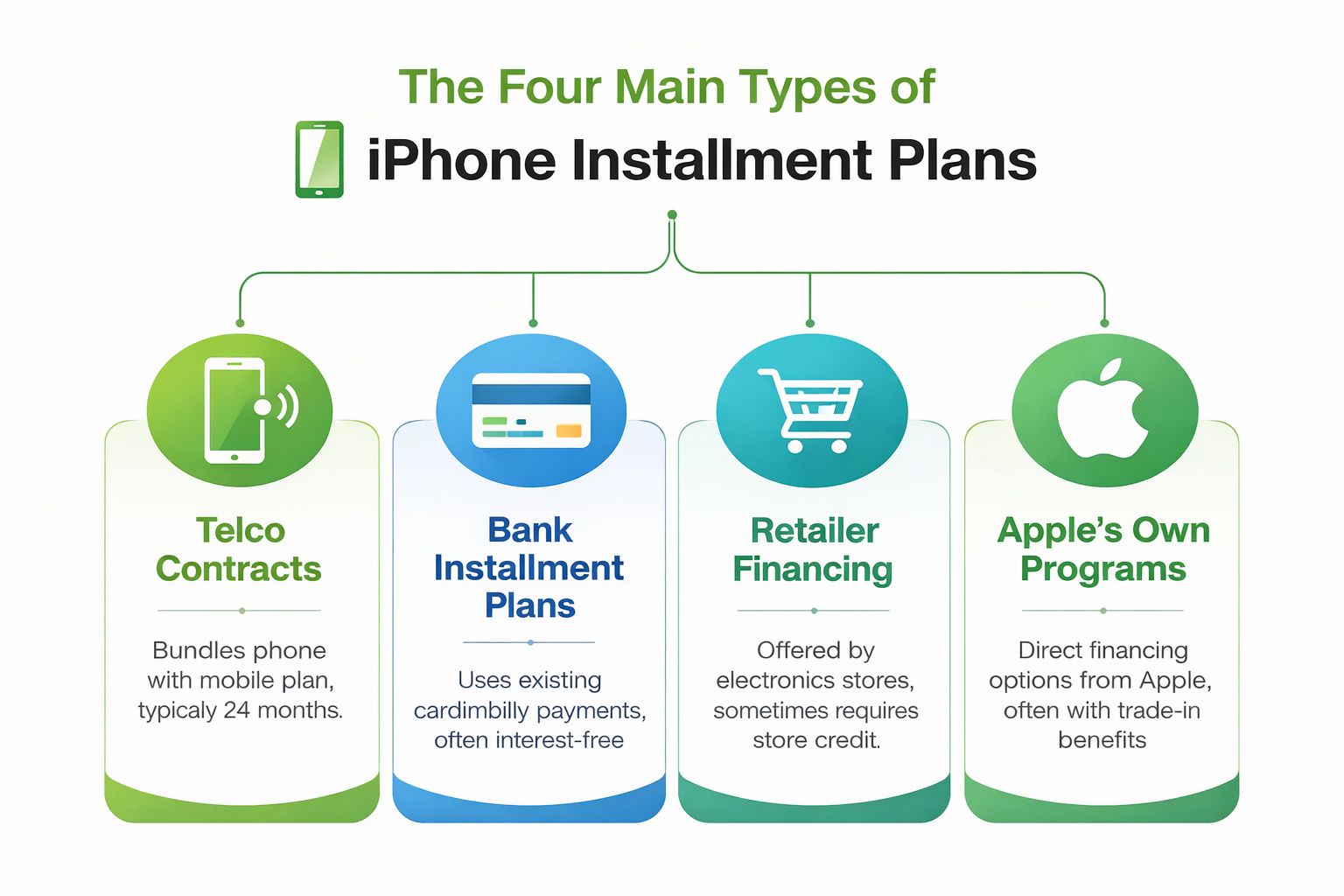
The Four Main Types of iPhone Installment Plans
The market looks messy until you sort it into four buckets. Once you do that, most choices become easier to evaluate.
A simple way to think about it is this. Some plans bundle the phone with another service. Some split the device price. Others are short-term checkout tools. And some sit in between.
Early on, it helps to get a visual overview.
Telco contracts
A telco contract is the bundled set meal. You take the phone and the mobile plan together, usually over a long contract period. This can work if you already want that exact mobile plan and would have paid for it anyway.
The downside is rigidity. Once the phone is tied to the line, you're no longer comparing the phone cost alone. You're comparing a package. That makes it harder to see what you're exactly paying for the device.
Bank credit card instalments
This is the cleanest version for many buyers. The retailer charges the device to an eligible credit card and the bank converts it into monthly payments. Apple Singapore offers 0% interest instalment financing with a minimum spend of S$500, including 12- or 24-month options, and Apple Pay can support instalment checkout with an eligible provider through the Wallet flow (Apple Singapore financing; Apple Support Singapore on Apple Pay instalments).
This route is usually strongest when you already have the right card and want the phone without being tied to a telco plan.
A broader point matters here too. Apple Singapore's launch of 0% instalment plans for up to 24 months, in partnership with banks such as UOB, gives buyers an alternative to traditional telco contracts without carrier lock-in (Apple Singapore business financing details).
BNPL services
Buy now pay later is the checkout shortcut. It's fast, familiar, and good for short repayment windows. But it's also more fragmented than many buyers realise.
Some merchants support one provider but not another. Some plans are fee-free, some aren't. If you want a wider perspective on how mobile-plan bundling differs across markets, Cashback Australia's mobile plan insights are useful because they show how easily plan pricing can obscure the actual cost of the device itself.
Short-term payment tools are convenient, but convenience and value aren't always the same thing.
Later in the buying process, many people discover that the “easy” option was only easy because they didn't compare the full structure.
Retailer and Apple direct financing
Retailer financing sits between general bank instalments and platform-specific checkout schemes. Some electronics retailers run their own instalment structure or partner with providers at checkout. Apple's own financing is direct and straightforward. Retailer-led options vary more, so the terms deserve closer reading.
Look for these differences before you assume two plans are equivalent:
- Merchant dependence: Some financing works only at selected stores.
- Tenure flexibility: Not every provider offers the same repayment length.
- Fees and conditions: Zero interest doesn't always mean zero extra cost in practice.
- Upgrade path: Some stores make trade-ins or later swaps easier than others.
For iPhone installment plans in Singapore, these are the four categories that matter most. The next step is figuring out which one is cheapest once the full cost is visible.
Cost Comparison Which Installment Plan Is Cheapest
The cheapest plan isn't always the one with the lowest monthly payment. That's the trap.
A low monthly figure can hide a longer commitment, added service costs, or a device bought at full new-retail pricing when a refurbished option would have lowered the total outlay immediately. That's why I always compare instalment plans using two lenses at the same time. First, what leaves your bank account each month. Second, what you pay in total by the end.
What the monthly number hides
BNPL is the easiest example. In Singapore, Grab PayLater can stretch payment over up to 4 months but adds a 4% transaction fee, while Atome offers a 3-month interest-free split with no extra cost, and both depend on merchant participation rather than universal availability. That structure differs from Apple's direct financing, which is generally cleaner for longer-term payment planning.
That difference matters because a short fee-bearing plan can cost more than a longer zero-interest plan, even if the checkout process feels simpler.
For a related look at how instalment structures affect buying decisions at retailers, this breakdown of the Courts instalment plan in Singapore is useful as a comparison point.
Side by side cost view
Here's a practical model using an example device price of S$1,800. Where exact programme-wide numbers aren't verified, the table stays qualitative rather than pretending to precision.
| Plan Type | Typical Tenure | Est. Monthly Cost | Total Cost (Device + Plan) | Key Considerations |
|---|---|---|---|---|
| Telco contract | Usually long-term | Lower visible device payment, plus mobile line charges | Higher overall outlay once the bundled mobile plan is included | Good only if you already want that exact postpaid plan and will fully use it |
| Bank 0% instalment | Medium to long-term | Device price split evenly across the approved tenure | Usually closest to the device price itself | Strong option for buyers with eligible cards who want clear repayment |
| BNPL | Short-term | Higher monthly payment because tenure is shorter | Can equal device price, or exceed it if fees apply | Best for short liquidity gaps, not ideal for larger long-term purchases |
| Retailer financing | Varies by store or partner | Depends on provider and checkout structure | Can be competitive, but terms differ widely | Read merchant-specific conditions closely |
| Apple direct financing | 12 or 24 months on eligible online purchases | Predictable monthly amount | Matches device price when used within the programme terms | Clean structure if you meet card and minimum spend requirements |
The pattern is consistent.
- Cheapest in pure financing terms: Bank-backed or Apple-backed 0% instalments usually come out strongest because they split the device price without adding obvious financing cost.
- Most misleading at first glance: Telco bundles often look affordable because the phone payment is blended into a broader bill.
- Most useful for a short gap: BNPL works when you need only a brief payment split and the merchant supports the right provider.
- Hardest to compare quickly: Retailer financing depends heavily on the specific store and partner arrangement.
Cost check: Don't ask only, “What's my monthly payment?” Ask, “What am I paying in total, what am I locked into, and what does this device still feel like when I'm halfway through the plan?”
That last question matters more than people think. If you're still paying for a phone that already feels like poor value, the financing structure wasn't really cheap. It only delayed the discomfort.
Eligibility and Required Documents
Most rejected applications don't fail because the buyer chose the wrong phone. They fail because the paperwork, card type, or identity checks don't match the provider's requirements.
The exact conditions vary, but the pattern is predictable. Telcos care about account eligibility and line commitments. Banks care about card compatibility and credit standing. BNPL providers care about account setup and merchant support. Some longer-tenure programmes also use digital identity checks.
What different providers usually check
For Apple's online financing in Singapore, the structure is clear. The purchase needs to meet the minimum spend requirement and be paid with a supported card or Apple Pay setup that works with instalment checkout. That's relatively straightforward compared with a telco line application.
For longer-tenure alternatives, some providers go further. Some refurbished-device financing programmes in Singapore offer up to 36-month 0% interest tenures and may require Singpass authentication during the application process.
A useful mindset here is to separate payment eligibility from device choice. You may qualify for one plan type and not another, even when buying the same iPhone.
What to prepare before you apply
These are the documents and checks worth lining up before you start comparing checkout options:
- Identity proof: NRIC or the relevant identification used by the retailer, bank, or telco.
- Card readiness: An eligible credit card matters for bank instalment plans and Apple-linked financing.
- Income support if requested: Some providers may ask for proof of income or account history, especially where a broader credit assessment applies.
- Digital verification access: Keep Singpass ready if the provider uses it for application or identity confirmation.
- Merchant compatibility: For BNPL, check whether the store supports your preferred provider before you get to payment.
If you're trying to understand the broader habits behind approval and borrowing discipline, this guide on how to build family credit gives a useful plain-English view of creditworthiness.
One practical mistake I see often is buyers deciding on the phone first and the payment route second. Reverse that. Check what you're eligible for, then shop within that lane. It saves time and avoids a lot of abandoned carts and in-store backtracking.
The Smart Alternative Trade-ins and Refurbished iPhones
Most instalment guides stop at one question. How do you pay for a new iPhone? That's too narrow.
A better question is this. What should you be paying for in the first place? If you finance a brand-new device at full price, the plan may be interest-free and still be poor value overall.
Why new isn't automatically cheaper
The missing piece is depreciation. New iPhones can lose 40% of their value in the first year, and a 2025 NUS study found that 72% of eco-conscious Singaporeans weren't aware that 0% instalment terms are also available for certified refurbished devices, with average savings of S$450 over 12 months compared with new models.
Those are the numbers many “0% instalment” conversations skip. You can have a technically cheap financing plan attached to an expensive purchasing decision.
Paying zero interest on a fast-depreciating device doesn't mean you got good value. It only means the financing itself was cheap.
That's where total cost of ownership becomes more useful than the monthly amount. The best financial move is often not the longest plan or the shortest plan. It's the plan attached to the device that gives you the most usable life for the lowest real outlay.
Where refurbished plans get interesting
Certified refurbished iPhones change the maths because the first owner has already absorbed the steepest drop in value. If the device has been properly checked, graded clearly, and backed by a warranty, you're financing a lower base cost rather than trying to justify full new-device pricing.
That's why buyers should compare these factors before defaulting to “brand new”:
- Depreciation exposure: A refurbished phone usually shields you from the sharpest early value drop.
- Entry cost: Lower purchase price means lower monthly repayments even before any special financing terms kick in.
- Sustainability: Keeping a good device in circulation for longer reduces waste and is often the more rational consumption choice.
- Warranty and grading: These are the real dividing lines. Refurbished only works when the seller is transparent about condition and support.
what to look out for before buying a refurbished phone
If you want a grounded checklist for vetting a used or refurbished device properly, this guide on what to look out for before buying a refurbished phone is worth reading before you commit.
One practical option in Singapore is myhalo, which offers professionally refurbished iPhones, clear grading, warranty-backed units, trade-in support, and 0% instalment options. That combination matters because it addresses the whole ownership cycle, not just the payment step.
For buyers who care about value, that's often the smarter route. You're not only asking how to finance an iPhone. You're choosing whether to finance the part of the iPhone's lifecycle that still offers good value.
Your Step by Step Application Checklist
A smooth application usually comes down to sequence. People get into trouble when they browse too broadly, compare too little, and sign too quickly.
This order works better because it removes the common points of friction before you reach checkout.
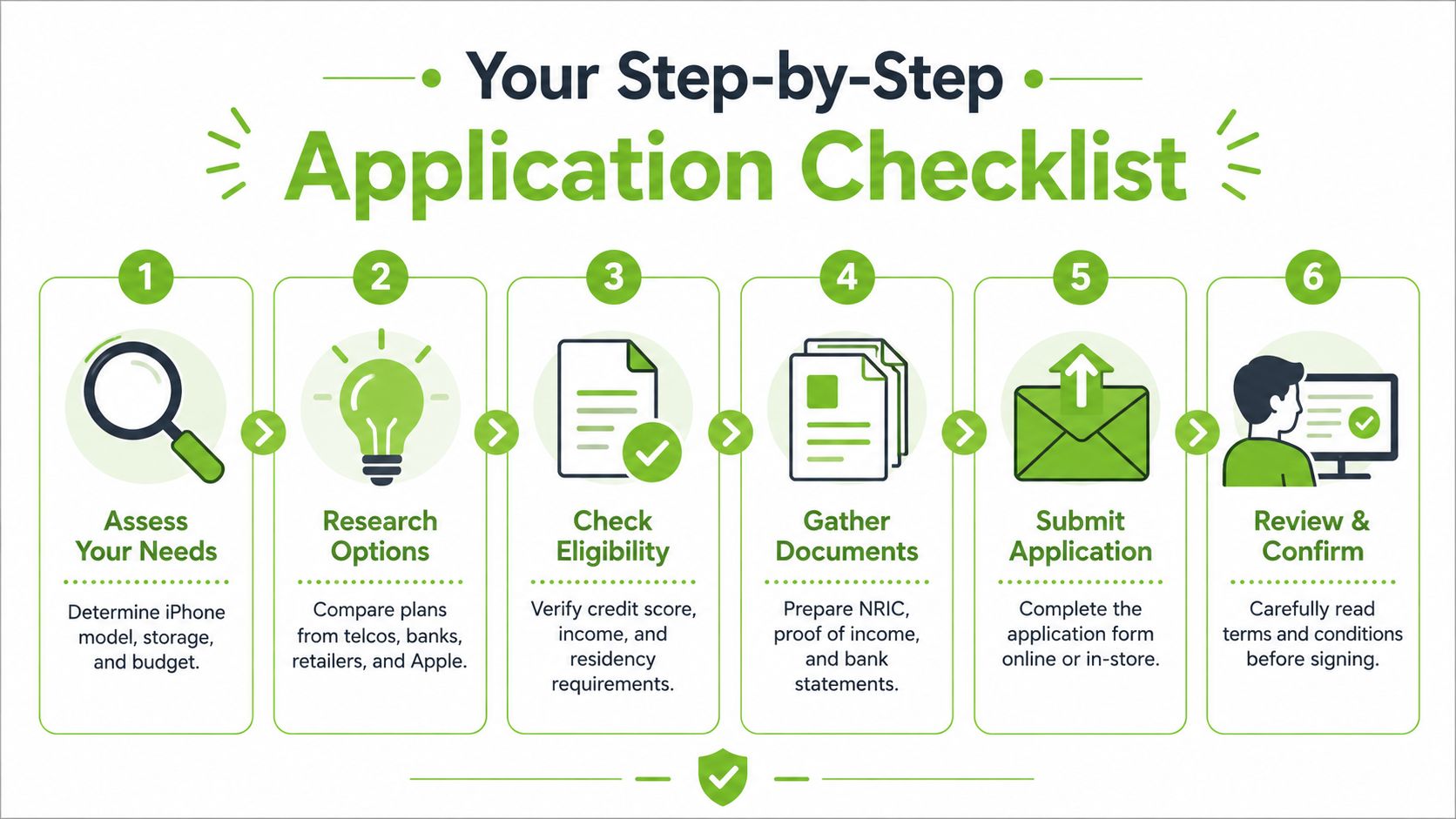
A practical order that works
-
Start with the device, not the hype
Pick the iPhone model, storage size, and condition that fit your actual use. If you don't shoot heavy video or store massive files locally, overspending on capacity doesn't help. -
Set a payment comfort zone
Decide what monthly amount feels safe before you browse plans. If the instalment only looks affordable in a perfect month, it isn't affordable enough. -
Choose your financing lane
Narrow it to telco, bank instalment, BNPL, or retailer financing. Mixing all four at once usually creates noise instead of clarity. -
Check eligibility before checkout
Confirm card support, merchant support, identity requirements, and any digital verification you'll need. That reduces failed applications and wasted time. -
Read the full terms
Focus on hidden fees, missed-payment treatment, lock-in periods, and whether early settlement is allowed. Short documents can still contain expensive surprises. -
Use trade-in or lower-cost device options where relevant
Reducing the financed amount often matters more than stretching the tenure.
myhalo instalment plan for mobiles and tablets
A dedicated option to review before applying is the myhalo instalment plan for mobiles and tablets, especially if you're comparing flexible payment paths against the full-price new-device route.
The best application checklist is the one that stops you from financing the wrong phone just because the checkout button was easy to press.
If you follow that order, you'll usually end up with a cleaner decision. Less impulse, more control.
Frequently Asked Questions About iPhone Installment Plans
A few issues always come up after buyers have narrowed their options. These are the ones that matter most in practice.
Can I repay early
Sometimes yes, sometimes no, and sometimes yes with conditions. Telcos, banks, and third-party financing partners don't always treat early settlement the same way. Before you sign, check whether early repayment is allowed and whether it changes any bundled benefits or contractual terms.
What if I miss a payment
That depends on who is financing the purchase. A missed telco payment may affect your service relationship. A missed bank or financing payment may trigger fees or account restrictions under that provider's terms. BNPL providers can also take action based on their repayment rules. Don't assume all missed payments are treated lightly just because the checkout felt simple.
Does an instalment plan affect my credit profile
It can, depending on the provider and how the arrangement is structured. The safest assumption is that any formal repayment obligation should be treated seriously. Pay on time, don't overextend, and avoid stacking multiple payment plans across devices and other purchases.
Is Apple financing better than BNPL
For longer-term iPhone purchases, often yes. Apple's direct 0% financing in Singapore requires a minimum spend of S$500 and offers 12- or 24-month online purchase options without hidden fees, which makes it more cost-effective for many buyers than short-term BNPL setups that may add transaction charges.
BNPL still has a place. It's useful when you need a short split and the merchant supports the provider you want. But for a larger iPhone purchase, a clean zero-interest instalment plan with a longer tenure is usually easier to live with.
For individuals searching for an iPhone installment plan Singapore option, the answer is this: choose the structure that keeps total cost clear, avoid paying full new-device pricing unless you need it, and compare refurbished ownership seriously before you decide.
If you want a practical way to compare new and professionally refurbished iPhones with instalment options, trade-ins, grading, and warranty support in one place, take a look at myhalo. It's a useful starting point if you care about total cost of ownership rather than just the lowest monthly number. """