





Fix iPhone Back Glass: DIY vs. Pro Repair in Singapore 2026
You drop your iPhone, hear the crunch, and turn it over to find spiderweb cracks across the back glass. The phone still powers on, the camera still opens, and the temptation is to ignore it for a few more days. That's usually when people in Singapore start weighing the same three options, patch it up themselves, send it to a repairer, or use the damage as the moment to upgrade.
The smartest choice depends on more than the repair bill. A cracked back can change resale value, warranty decisions, and how long the phone stays useful in daily work or study. For a lot of users, the right answer isn't just “fix iphone back glass”, it's choosing the option that protects the rest of the device's lifecycle with the least waste and the least regret.
Table of Contents
- The Unmistakable Crunch and What to Do Next
- Assessing the Damage and Understanding Your Options
- The DIY Route A Realistic Look at Home Repairs
- Professional Repair in Singapore Costs Timelines and Quality
- Warranty AppleCare+ and Making the Smartest Choice
- Beyond Repair Sustainable Alternatives for Your iPhone
The Unmistakable Crunch and What to Do Next
A cracked back glass usually starts with a simple moment, a phone slipping from a desk, a scooter ride, or a tile floor that seems to attract bad luck. The device may still work normally, which makes the damage easy to downplay. That's the mistake people make, because the critical decision begins the moment the phone lands.
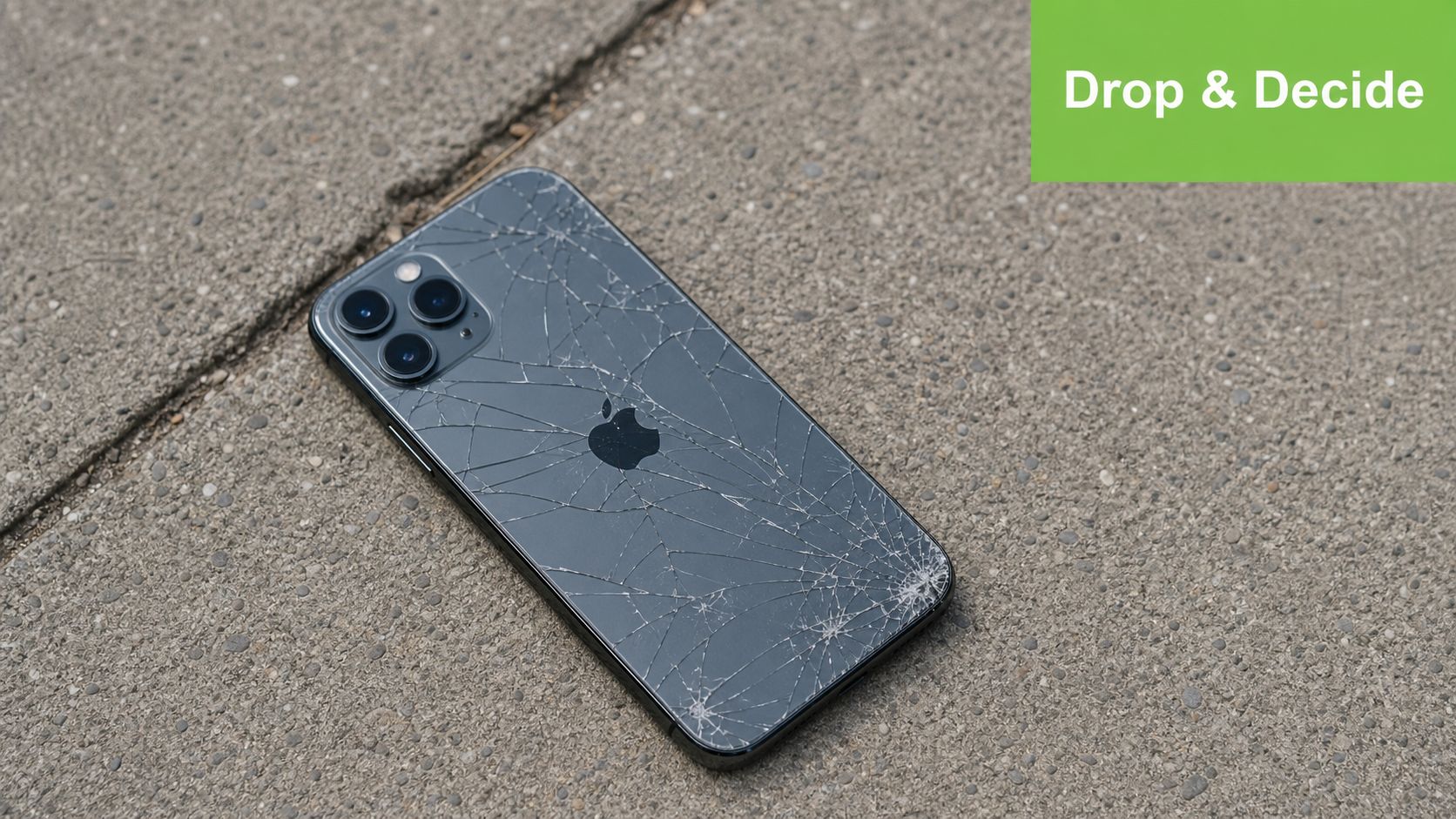
A practical repair decision comes down to three paths. You can attempt a DIY fix, you can send the phone for professional repair, or you can treat the crack as the point where upgrading makes more sense than restoring the old unit. The right answer changes with the model, the age of the phone, and whether the damage is only cosmetic or already affecting the frame, camera, or wireless charging.
Practical rule: if the phone still works but the back glass is splitting further, don't wait too long. The longer the crack sits, the harder it is to judge whether the damage is still just cosmetic.
For anyone trying to fix iPhone back glass in Singapore, the smartest first step is not buying parts. It's checking whether the phone is still structurally sound and whether the repair cost fits the rest of the device's value. That keeps you from spending money on a handset that should really be preserved, traded in, or replaced through a better lifecycle plan.
Assessing the Damage and Understanding Your Options
Start with the phone in your hand, not with a screwdriver. Look closely at the rear camera lenses, the flash, the frame corners, and the charging area. If the frame is bent, the camera glass is damaged, or wireless charging has become unreliable, the job is no longer a simple glass swap.
What to check before you choose a route
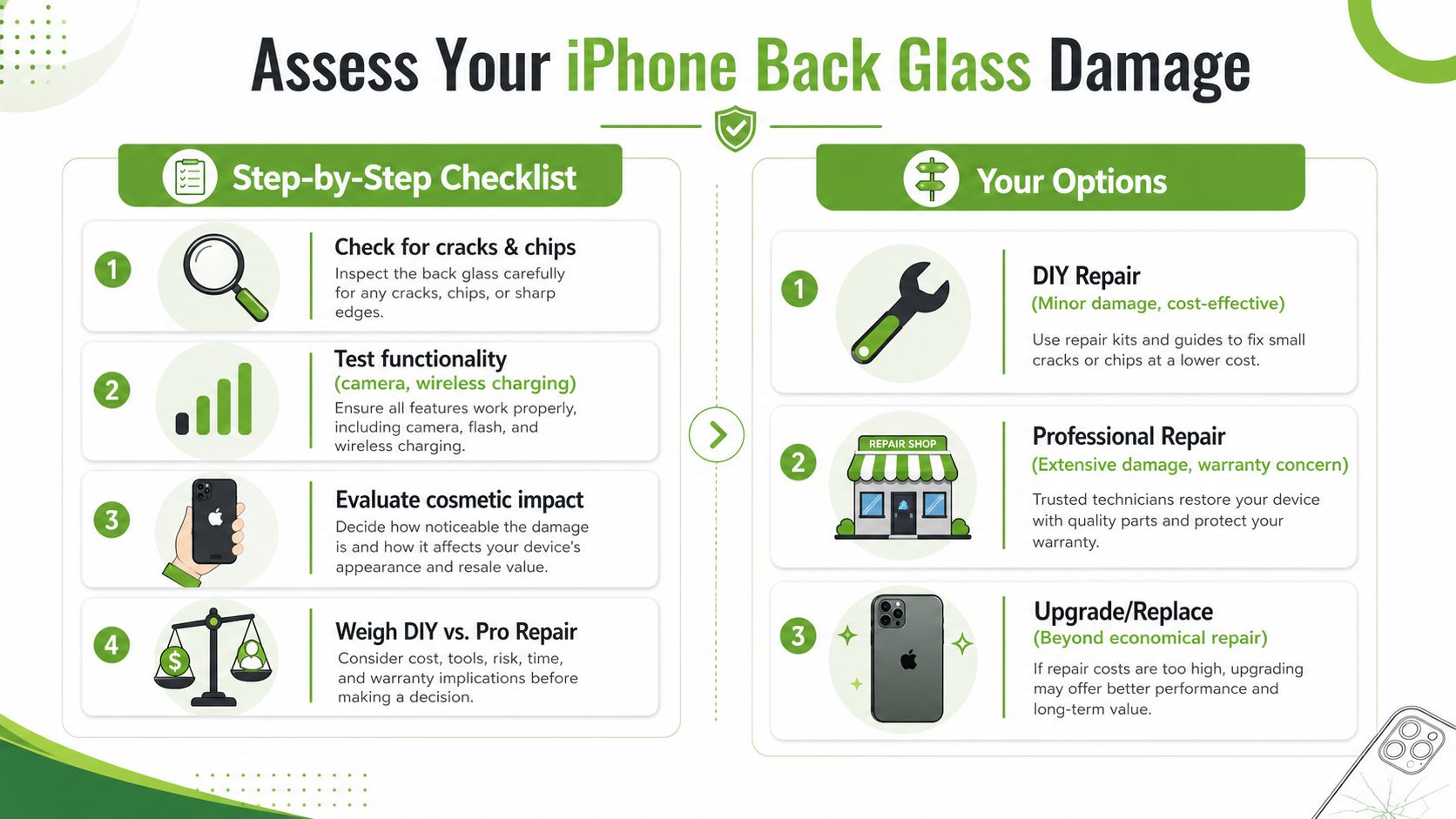
Use a quick checklist.
- Check for cracks and chips. Fine cracks are one thing, shattered sections with loose glass are another.
- Test functionality. Open the camera, place the phone on a wireless charger, and see whether it connects properly.
- Evaluate cosmetic impact. A visible crack on a working phone can still affect trade-in and resale interest.
- Weigh DIY versus pro repair. Skill, tools, and risk matter more than most online tutorials admit.
DIY Repair vs. Professional Service At a Glance
| Factor | DIY Repair | Professional Service |
|---|---|---|
| Cost | Lower upfront, but parts and tools add up | Higher upfront, clearer pricing |
| Time | Depends on your experience | Usually faster and more predictable |
| Risk | Higher chance of damaging internals | Lower risk when handled by trained technicians |
| Skill needed | Comfortable with delicate disassembly | Minimal from the customer side |
| Best for | Minor damage and confident users | Most owners, especially with newer models |
A useful way to think about it is this. DIY is a parts-and-risk decision. Professional repair is a service-and-outcome decision. If the phone is still a core work device, the second path often makes more sense because you're paying for predictability, not just labour.
For storage and transport after you've removed a damaged unit from use, it helps to protect loose parts properly. A practical supply like order anti-static packaging rolls from Storage & Removal Boxes Ltd. can reduce handling damage when devices or components need to be set aside before repair.
If the rear damage is isolated and you're still confident, you can keep reading the finer points. If not, the most efficient next step may be arranging a diagnosis through myhalo's screen repair guide, since the same diagnostic habits apply when a phone has more than one problem.
The DIY Route A Realistic Look at Home Repairs
The DIY route looks simple online because the videos usually skip the parts that go wrong. In practice, back glass replacement needs controlled heat, prying tools, careful part handling, and replacement adhesive that holds up reliably once the phone is reassembled. That's a very different job from peeling off a case.
Why the risk is higher than it looks
Modern iPhones are not forgiving when you open them carelessly. On newer models, the back glass is more tightly integrated with the housing, and the repair work can disturb wireless charging components or nearby internal parts if the technician, or the owner, applies pressure in the wrong place. That's why the process is very different from changing a battery or replacing a case shell.
Temporary fixes are a separate problem. In Singapore's humid climate, skins, liquid kits, glue, or tape can trap moisture instead of solving the issue. Local discussions note that this can accelerate battery corrosion and other internal damage, while also putting future trade-in value at risk and creating more e-waste if the phone is left unrepaired for too long. The key source of that concern is the humid environment, not the crack alone, which is why a quick cosmetic patch can become a false economy.
A cracked back that stays sealed with tape is not the same as a properly repaired phone. Moisture management matters just as much as appearance.
What DIY actually demands
You need the right heat control, a steady hand, and enough patience to separate broken glass without forcing the housing. You also need a safe way to store fragments and keep the device clean while it's open. If you're handling the phone at home, the physical repair is only half the job, the other half is making sure the device goes back together without introducing debris or stressing the internals.
That's why many owners treat DIY as a last resort rather than a first choice. If the phone is old, fragile, or still important for work, the risk of making the damage worse usually outweighs the savings. DIY can work for technically confident users, but it's not the forgiving shortcut many tutorials make it look like.
Professional Repair in Singapore Costs Timelines and Quality
Professional repair makes sense when you want a cleaner outcome and less guesswork. In Singapore, third-party shops often charge 20% to 30% less than authorised Apple service centres, and an iPhone 15 Pro back glass repair may cost S$90 to S$150 at an independent shop versus Apple's S$251.33 fee, with turnaround times of 1 to 2 hours according to local repair pricing summaries and service reports (terris.sg). That gap matters if you're balancing repair cost against remaining device value.
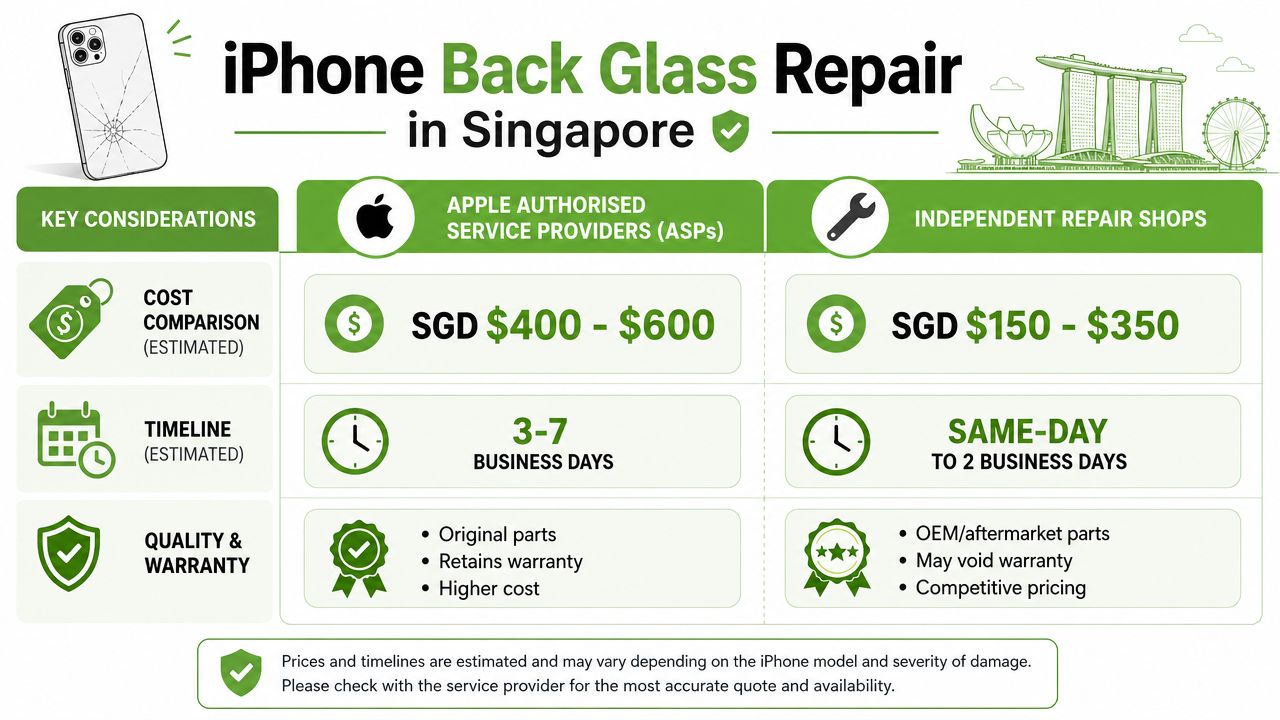
What separates a safe repair from a rushed one
For iPhone 12 and later, Singapore's professional repair ecosystem often uses laser separation, because the back glass is bonded more tightly to the housing. The method described for local shops includes a dual-scan protocol at 900 Hz on newer models, while iPhone 8 to 11 devices can use a simpler single scan approach (casemogulphonerepairs.com). That technical difference matters because it lowers the chance of damaging the wireless charging coil or the rear camera module during separation.
A good repair shop also checks the whole device, not just the cracked panel. That means examining the frame, testing the camera, confirming wireless charging, and looking for signs the impact reached other components. Shops that do this well are selling confidence, not just a replacement panel.
How independent repair fits into the decision
The core value of an independent repair is not only price. It's the combination of faster turnaround, lower cost, and the ability to keep a device in use rather than replacing it too early. If you're comparing services in Singapore, myhalo sits in that category as a repair and lifecycle provider, with 30-point quality checks, transparent device grading, and certified processes that are designed to keep devices working for longer.
Practical rule: if the repair cost is small relative to the phone's remaining value, professional repair is often the cleaner business decision.
That said, there are limits. If the frame is badly bent, the phone has multiple faults, or the model is already nearing replacement, a repair quote should be compared against the value of moving to a trade-in or a refurbished upgrade. For owners comparing options across categories, myhalo's mobile phone repair page is a useful starting point for understanding service pathways without overcommitting to a single fix.
Warranty AppleCare+ and Making the Smartest Choice
A cracked back glass can look like a simple repair, but the right decision depends on what the phone is covered for and how long you plan to keep it. Warranty changes the maths quickly. Under AppleCare+ in Singapore, the service fee for back glass damage is a fixed S$42, regardless of model, and out-of-warranty pricing can range from S$251 to over S$800 depending on the model and year (alab.sg).
When AppleCare+ makes the most sense
If the phone is covered and the back glass is damaged, using that coverage is usually the clearest choice. The fixed fee is easy to justify because it keeps the repair inside the manufacturer's support framework and gives you a predictable cost instead of a variable one. For business users and families managing several devices, that predictability can matter more than chasing a slightly cheaper quote.
When an independent repair is the better value
If the phone is out of warranty, the decision changes. Older devices, and phones that are already close to trade-in, often make more sense in a trusted independent shop because you are no longer paying to protect a warranty you do not have. A key issue is total cost of ownership. You are choosing not only between repair invoices, but between preserving useful life, protecting resale value, and deciding when a device should move out of active use.
A clean back glass repair can support resale presentation, especially if the rest of the device is in good condition. Buyers usually respond better to a phone that has been professionally repaired and tested than to one that still shows obvious damage or a DIY patch that raises questions about the rest of the hardware.
myhalo's role here is to help you preserve value, not just fix one part. That includes repair, data and device migration, trade-ins through myhalo's trade-in iPhone Singapore page, and graded refurbished devices through Certified ReLoved and Certified Surplus options. In a household or device fleet context, that kind of lifecycle planning can reduce wasteful replacements and keep working hardware in circulation longer. A broader view of reuse matters too, and the same logic shows up in waste-reduction tips for food storage, use what still has value, replace only when needed, and avoid throwing away working material too early.
Beyond Repair Sustainable Alternatives for Your iPhone
Not every cracked phone deserves another repair bill. If the device is older, already slow, or carrying multiple faults, the best financial outcome may be to trade it in and put the value toward a replacement that fits your needs better. That's especially true when the phone has already lost too much usable life to justify another round of parts and labour.
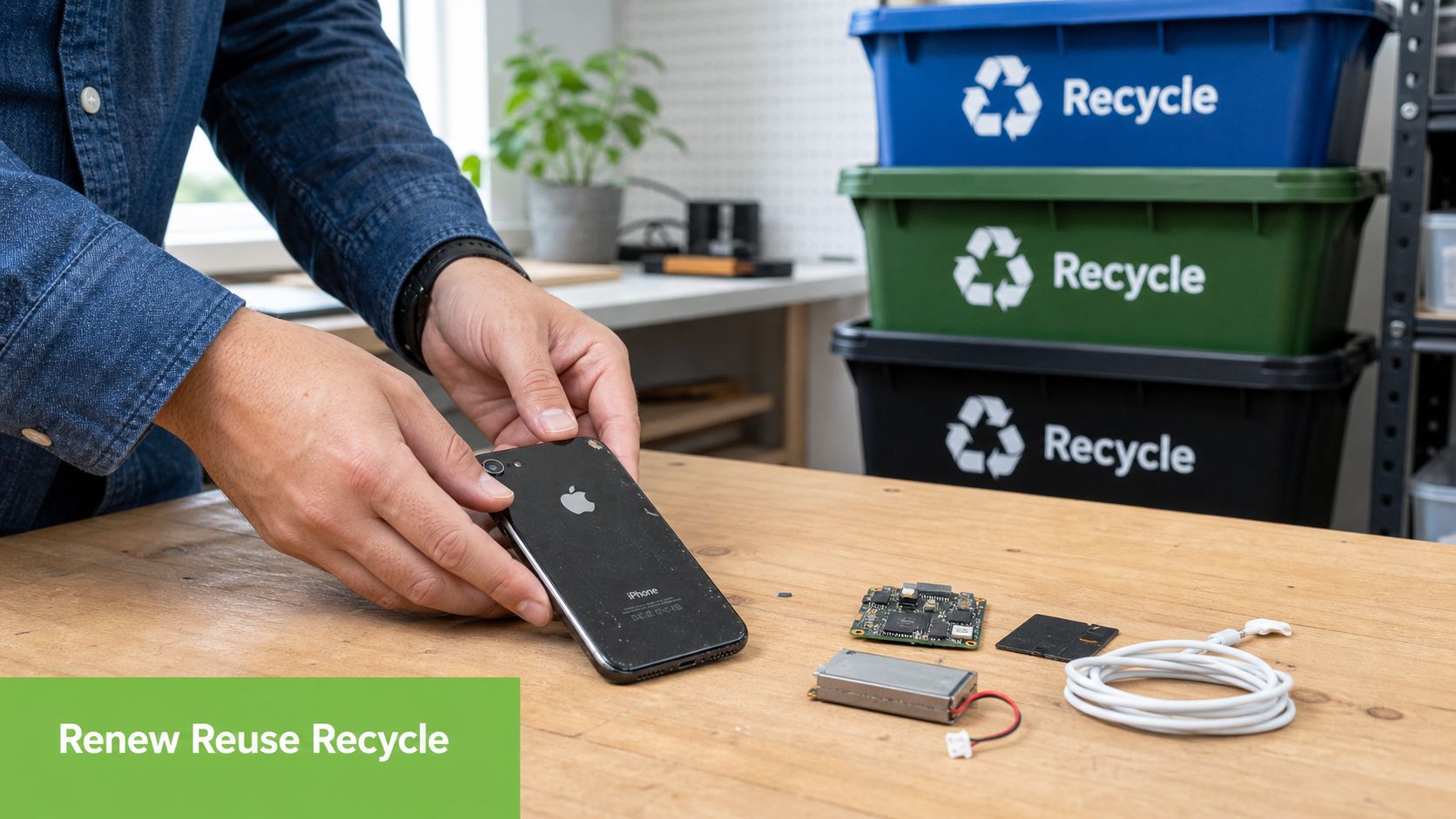
Think in device lifecycles, not single repairs
A cracked phone still has value if someone can recover, refurbish, or recycle it properly. That's why the better question is often not “should I throw it away?” but “which route keeps the most value in the system?” For many users, that means a trade-in followed by a Certified ReLoved device, or moving to a Certified Surplus unit when budget and performance need to stay balanced.
If you're weighing the broader sustainability angle, it helps to think the same way you would about other everyday products. A practical resource like waste-reduction tips for food storage from HYDAWAY shows the same principle in a different category, use what you have longer, replace only when needed, and avoid turning a manageable problem into unnecessary waste.
For iPhone owners in Singapore who want the numbers and the next step in one place, myhalo's trade-in guide is a useful reference before deciding whether to repair, trade in, or upgrade. That approach supports better spending, better reuse, and more sensible device ownership.
A cracked back doesn't have to become a rushed replacement. If you want a practical recommendation for your model, your repair budget, and your next step, contact myhalo for a device check, compare repair against trade-in value, and choose the option that protects both your wallet and your device's remaining life.