





Eco Friendly Gadgets: A Singaporean’s Guide to Smart Tech
You probably have one right now. An old phone in a drawer. A charging cable that fits nothing you own anymore. Maybe a laptop that still works, but only just, so you keep it as a backup. In Singapore, where people upgrade phones, tablets, laptops, and wearables regularly, that pile steadily grows.
That's why eco friendly gadgets matter. Not because “green” sounds nice on a label, but because every device has a full life story: how it was made, how much power it uses, how easy it is to repair, and what happens when you're done with it. When you understand that lifecycle, better buying decisions usually become better financial decisions too.
You can see that shift in consumer behaviour. A Deloitte survey in Singapore found that 60% of Gen Z and 79% of millennial Singaporeans are willing to pay a premium for sustainable products or services according to Kadence's summary of the Singapore sustainability trend. That doesn't mean everyone wants expensive gadgets. It means people increasingly want choices that make sense over time.
Table of Contents
- Beyond the Buzzword What Are Eco Friendly Gadgets
- The Four Pillars of a Truly Sustainable Gadget
- A Practical Guide to Buying Tech Sustainably
- Extend Your Gadget's Life and Maximise Its Value
- How to Spot Greenwashing and Read Labels Correctly
- Join Singapore's Circular Tech Economy with myhalo
Beyond the Buzzword What Are Eco Friendly Gadgets
The decision to buy a gadget often doesn't involve thinking about waste. Consumers buy a replacement iPhone because battery life has dropped, a tablet for school, or a laptop because work has outgrown an older machine. The environmental impact feels distant. The cost feels immediate.
That's why the phrase eco friendly gadgets often gets misunderstood. People hear it and assume it means bamboo accessories, solar chargers, or niche products for committed environmentalists. In practice, a more useful definition is simple. An eco friendly gadget is a device that delivers value with less waste across its whole life.
The drawer test
Open a typical household drawer and you'll find a map of unfinished device decisions. Old Samsung phones. A cracked iPad. Earbuds that still connect but no longer hold charge. None of these items are fully “gone”, yet they're no longer creating value either.
That's where a circular economy becomes practical. Instead of the old pattern of buy, use, discard, a circular approach asks a better question: can this device be repaired, reused, refreshed, resold, or recycled responsibly?
A gadget becomes more sustainable when more people can use it for longer, with less replacement and less waste.
For consumers, that often means stretching value from a device you already own. For SMEs, it can mean equipping staff with reliable refurbished laptops instead of buying every machine brand new. The environmental benefit matters, but so does cash flow, procurement flexibility, and lower replacement pressure.
Why this matters beyond electronics
People often understand sustainability more quickly when they see it in everyday categories. Coffee is a good example. If you're trying to reduce waste across daily routines, PureHQ solutions for greener coffee show the same principle at work: choose products and systems that reduce unnecessary disposal without making life harder.
The same logic applies to tech. A repaired MacBook, a professionally refurbished iPhone, or a properly graded surplus laptop often delivers more real-world value than a rushed upgrade.
Here's the key confusion to clear up. “Eco-friendly” doesn't automatically mean “new product with green branding”. In many cases, the smarter move is keeping a good device in use longer, then passing it into a second life when you no longer need it.
If you want a practical local view of how device reuse fits a lower-waste future, myhalo's zero e-waste perspective is useful because it frames sustainability as participation, not perfection.
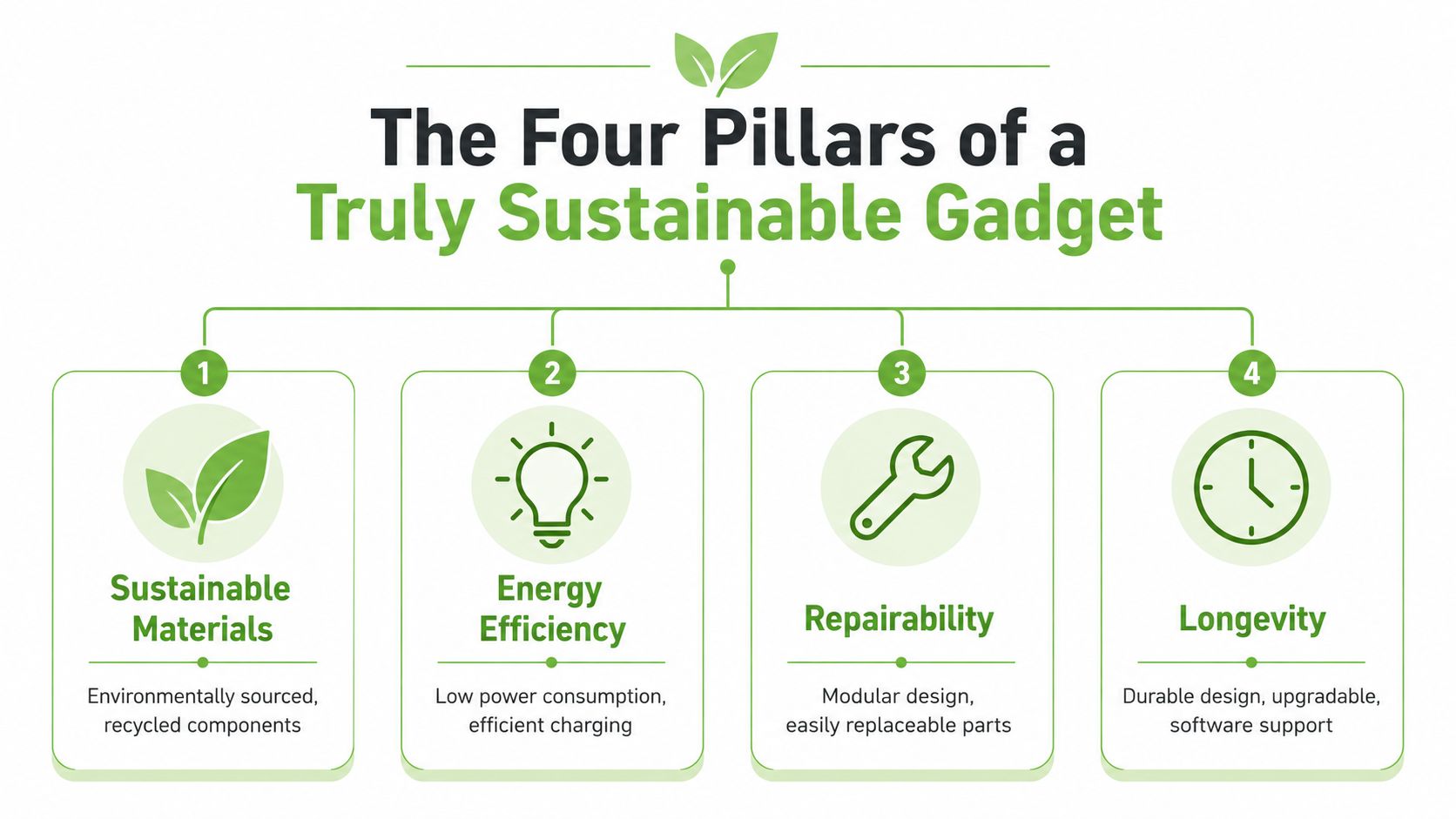
The Four Pillars of a Truly Sustainable Gadget
A gadget earns the label “sustainable” only if it keeps delivering value without creating avoidable waste. For buyers in Singapore, that is not just an environmental question. It is also a purchasing question. A device that lasts longer, uses less power, and stays repairable usually costs less across its full life.
That is why a simple four-part test works well: materials, energy efficiency, repairability, and longevity. If one pillar is weak, the “green” claim starts to wobble. A phone made with recycled aluminium still becomes a poor choice if the battery fails early and cannot be replaced at a sensible cost.
Materials matter before you switch it on
The environmental impact of a device starts long before first use. Metals, plastics, rare minerals, packaging, and transport all sit upstream. In plain terms, much of the cost to the planet is already “spent” before you open the box.
So what should you look for?
- Recycled content: Is the casing made with recycled plastic or recycled aluminium?
- Safer materials: Does the product avoid hazardous substances where possible?
- Packaging discipline: Is the packaging minimal and recyclable, or bulky and wasteful?
Many brands keep this information vague. That can be frustrating, but it also gives you a practical filter. Specific disclosures are more credible than broad promises. “Made with 100% recycled aluminium in the enclosure” tells you more than “designed for a greener future.”
Energy efficiency shapes daily running cost
Energy efficiency sounds like a technical detail. In practice, it affects your electricity bill, battery health, heat output, and how hard the device works to do basic tasks.
A simple example helps. Two laptops may feel similar in a shop, but the cooler, more efficient one often puts less stress on internal parts over time. Less heat usually means less wear. For a household with several devices, or an SME buying equipment in batches, small efficiency gains can add up into lower running costs and fewer replacement headaches.
A quick decision table helps:
| What to check | Why it matters |
|---|---|
| Charging method | More efficient charging can reduce wasted power |
| Heat during use | Excess heat often shortens component life |
| Recognised certification | Independent standards are more credible than self-claims |
| Power adapter quality | Better adapters waste less energy and stress batteries less |
A short visual explainer can help make these ideas less abstract.
Repairability protects value
Repairability is where sustainability becomes measurable in your wallet. If a worn battery, cracked screen, or faulty charging port can be fixed at a reasonable cost, you keep using the device instead of paying for a full replacement.
This is the point many buyers miss. A low purchase price can hide a high ownership cost. If parts are hard to find, labour is difficult, or the design forces technicians to replace whole assemblies for one small fault, the device loses value faster than expected. By contrast, a repairable phone or laptop gives you more decision points. Replace the battery. Swap the keyboard. Fix the port. Keep the machine working.
If you are comparing pre-owned devices, this guide on what to look out for before buying a refurbished phone is useful because it shows how condition, testing, and parts quality affect long-term value.
Practical rule: Before you buy, ask whether batteries, screens, keyboards, ports, and storage can be replaced without turning a small fault into a total write-off.
End of life should never mean end of value
The last pillar is longevity in the broadest sense. Can the device stay useful for years? Can it move to a second user? Can it be traded in, resold, refurbished, or dismantled responsibly?
Sustainable buying is smart economics. A gadget with resale potential costs you less in net terms because some value comes back at the end. A device with no repair path and no second-hand demand is more like a disposable expense.
Good sustainable tech keeps options open. It serves the first owner well, then remains useful enough for repair, reuse, refurbishment, or material recovery. That is what separates a product with a green message from one that holds value over time.
A Practical Guide to Buying Tech Sustainably
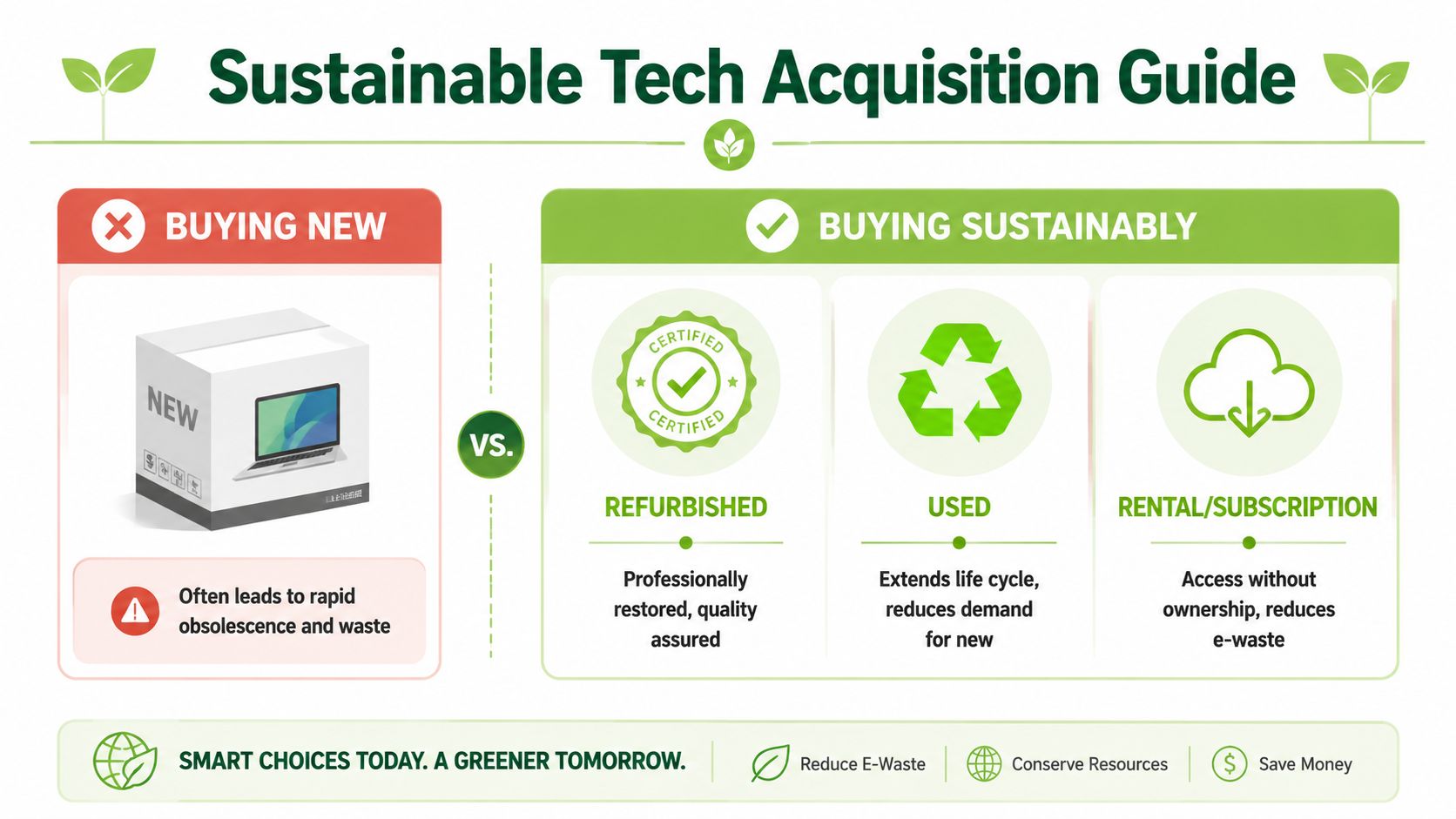
Many people still default to one rule: if you need tech, buy new. That rule is convenient, but it's often expensive and wasteful. A stronger rule is to buy based on total value across the device lifecycle.
For Singapore households, students, and SMEs, the smartest purchase often follows a sequence rather than a single decision.
Start with the option that preserves the most value
Use this order when you need a phone, tablet, or laptop:
-
Repair what you already own
If the issue is a battery, screen, keyboard, fan, or charging port, repair may preserve the most value. You avoid retraining yourself on a new device, moving data, and paying for performance you may not need. -
Consider professionally refurbished devices
Refurbished doesn't mean uncertain. Done properly, it means tested, restored, graded, and disclosed clearly. -
Look at surplus stock
Certified surplus devices can be a useful middle ground. These may include unused or lightly circulated units that still offer strong value without the full cost of current retail launches. -
Buy new only after filtering hard
If you must buy new, look for clear energy credentials, supportability, parts availability, and realistic longevity.
That order sounds conservative, but it's often the most efficient use of money.
What good refurbished and surplus buying looks like
The refurbished market isn't a fringe category anymore. It's becoming a more established procurement path. The Singapore refurbished electronics market is projected to grow at an 11.7% CAGR from 2026 to 2034 according to Dataintelo's market projection. Treated carefully, that projection signals a broader shift: people and organisations are recognising refurbishment as a resource-smart option, not a compromise.
A buyer should still be selective. Good refurbished buying depends on process, not labels alone.
Look for signs such as:
- Structured inspection: A defined quality process matters more than vague reassurances.
- Transparent grading: Clear cosmetic grading helps you match budget to expectations.
- Battery disclosure: On phones and tablets especially, battery health disclosure reduces guesswork.
- Warranty support: Even a modest warranty shows accountability.
- Data handling discipline: For business buyers, secure handling matters as much as device condition.
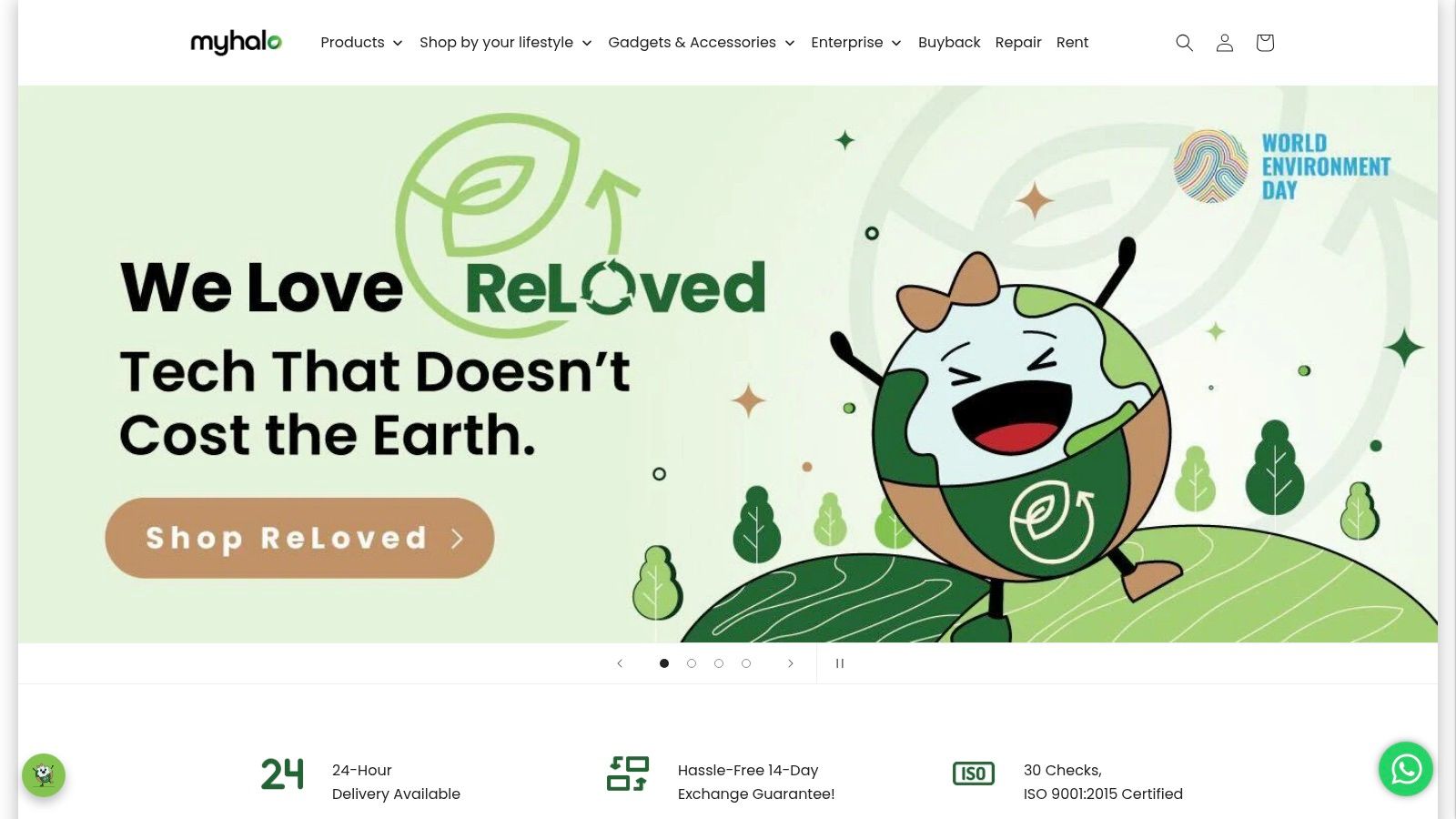
For example, lifecycle-focused programmes such as Certified ReLoved and Certified Surplus make sense when they're backed by process controls like 30-point quality checks, transparent device grading, and battery health disclosure. Standards also matter. Providers operating under ISO 9001 Certified quality systems and ISO 27001 Certified information security practices give buyers a clearer basis for trust.
If you're comparing refurbished phones, this checklist of what to look out for before buying a refurbished phone is a practical place to start because it focuses on condition, testing, and disclosure rather than hype.
Buying sustainably doesn't mean accepting lower standards. It means insisting on clearer standards before you spend.
Extend Your Gadget's Life and Maximise Its Value
The most sustainable device is often the one already on your desk. That's not a slogan. It's a financial habit. If a phone, tablet, or laptop can stay reliable for longer, you defer replacement and get more value from the money already spent.
That impact isn't abstract. Reusing one smartphone in Singapore saves approximately 72.4kg of CO₂e emissions, according to PC Dreams' reuse estimate. Even if you focus mainly on budget, lifecycle extension still matters because keeping a usable device in circulation reduces avoidable replacement pressure.
Small habits that prevent expensive problems
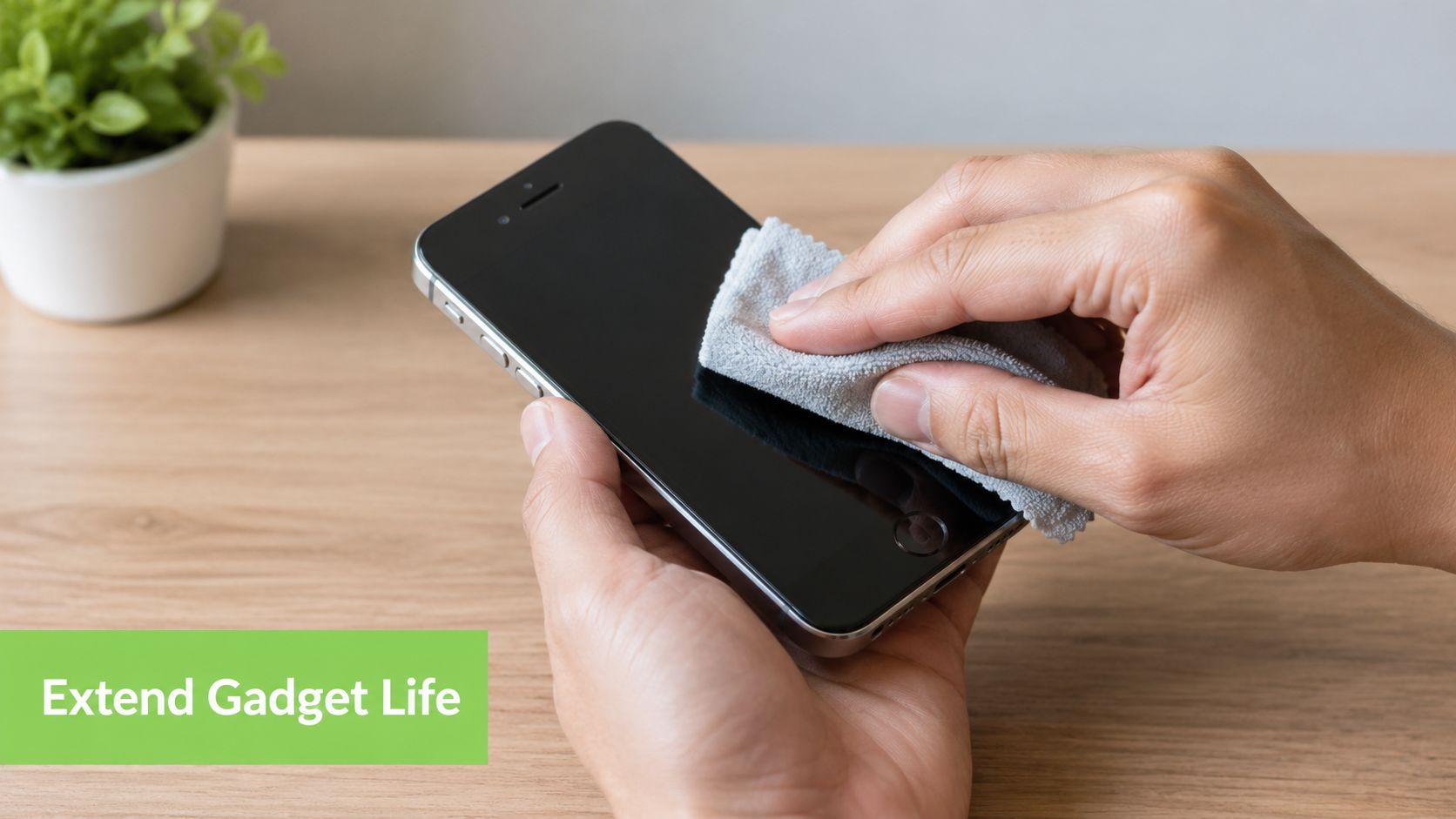
A lot of device decline comes from neglect rather than age. Dust blocks vents. Cables strain ports. Batteries stay under heat for too long. Small habits help.
Try these routines:
- Charge with care: Don't leave devices baking in direct sunlight or on hot car dashboards while charging.
- Clean gently: Use a soft microfibre cloth for screens and keep charging ports free of packed lint.
- Update sensibly: Security and system updates often improve stability, battery management, and app compatibility.
- Manage storage: Devices slow down when storage is nearly full, especially older phones and entry-level laptops.
- Use proper protection: A good case and sleeve prevent the kind of damage that turns a repairable device into a replacement decision.
For laptops, thermal care matters. If a fan sounds louder than usual, or the base gets hot during light work, don't ignore it. For tablets and phones, battery decline usually appears first through shorter daily endurance or unexpected shutdowns.
When to repair and when to pass it on
A sensible rule is to repair when the device still fits your needs after the fix. Replace only when the fix won't solve the problem, such as software incompatibility, repeated board-level faults, or performance that no longer supports your work.
For owners who aren't sure what's wrong, guided troubleshooting can save both time and money. That's where services such as RescueAdvise are useful, especially when the issue might be solvable without replacing the whole device. Advice, repair, reuse, and then responsible handoff is a stronger sequence than “upgrade first”.
If a device no longer suits you but still works, donation can be better than storage. This Goodwill donation guide is a helpful reference for preparing items properly before passing them on, especially if you need a simple checklist mindset for sorting usable electronics and accessories.
How to Spot Greenwashing and Read Labels Correctly
You are comparing two laptops in a Singapore store. One has a sticker that says “eco-friendly design.” The other says less, but lists certified standards, energy details, and what materials were changed. The first message feels good. The second gives you something you can check.
That difference matters because greenwashing often raises the price without improving the product's long-term value. If you want a gadget that is better for the environment and better for your budget, treat sustainability claims the way you would treat a warranty. Read the fine print, check who stands behind it, and ask what benefit you get over the years you plan to use the device.
What greenwashing looks like in electronics
Greenwashing in tech usually appears as broad environmental language attached to a very narrow improvement.
A brand might highlight recycled packaging, a paper manual, or a smaller charger box, then let that small change colour your view of the whole product. That is like judging a building by its paint while ignoring the structure underneath. For gadgets, the structure is what matters most. How long will it last? Can the battery be replaced? Are spare parts available? Will software support end too soon?
Watch for these warning signs:
- Vague claims: “Green,” “planet-friendly,” or “conscious” without a clear explanation
- Tiny feature, oversized promise: One recycled component used to suggest the whole device is sustainable
- Self-awarded proof: Brand-created badges with no outside standard
- Missing lifecycle details: No useful information on energy use, materials, repair, or disposal
- Silence on trade-offs: Marketing celebrates one improvement but avoids discussing limits or compromises
A simple rule helps here. The broader the claim, the stronger the evidence should be.
How to read labels without getting misled
Start by separating three different things that often get blended together.
Marketing language is what the brand wants you to remember.
Product specifications tell you what the device does.
Independent certification shows whether someone outside the brand checked part of the claim.
The third category is usually the most useful, but even then, read carefully. A label does not mean a gadget is perfect. It means a specific part of its environmental performance met a stated standard. That could relate to energy use, restricted hazardous substances, packaging, or other criteria. The key question is scope. What exactly was certified?
Use this quick filter when reading any eco claim:
| Question to ask | What a good answer looks like |
|---|---|
| Who set the standard? | An independent certification body, not the brand itself |
| What part of the product does it cover? | A clearly defined attribute such as energy efficiency or material restrictions |
| Can you verify it? | Public criteria, a listing, or a certificate number |
| Does it help you save money or extend use? | Lower running costs, easier repair, or stronger resale and trade-in value |
That last question is often missed. A sustainable gadget should not only sound responsible. It should also make economic sense. Lower power consumption can trim operating costs. Better durability can delay replacement. Stronger resale demand can improve outcomes if you later use a device trade-in programme in Singapore.
A better way to read the Singapore Green Label
In Singapore, the Singapore Green Labelling Scheme is one signal people often look for. As noted earlier, it is more useful than a vague “eco” badge because it points to defined criteria rather than pure marketing language.
Still, read it with precision. Ask:
- Is the label applied to the device itself or only to packaging or accessories?
- Does the product page explain what criteria were met?
- Are the environmental benefits specific and limited, or broad and flattering?
- Does the label support a purchase that will stay useful longer and cost less to run?
That last point brings the financial side back into focus. A certified device with poor repair options or short software support may still be a weak buy. A well-maintained refurbished device with transparent condition grading and a clear service path can sometimes be the smarter sustainability choice because it keeps a working product in circulation and avoids the cost of buying new too early.
Trust specific claims. Be cautious with polished slogans. The goal is not to find a perfect gadget. It is to choose one with clear evidence, realistic longevity, and value that holds up after the marketing is forgotten.
Join Singapore's Circular Tech Economy with myhalo
A circular tech economy only works when people can act on it easily. Advice has to be practical. Buying options have to be clear. Repairs need to feel accessible, not uncertain. Trade-ins must be straightforward enough that old devices don't just disappear into drawers.
That's where a lifecycle partner matters more than a simple shopfront.
A practical lifecycle model for people and businesses
For consumers, the circular route can look like this: ask questions before you buy, choose the right grade for your budget, maintain the device properly, repair when sensible, and then pass it into a second life through resale or trade-in.
For SMEs, the same approach supports resilience. Instead of treating IT as a cycle of periodic replacement, businesses can standardise around fit-for-purpose devices, controlled refurbishment, repair planning, secure data handling, and structured retirement.
A lifecycle-driven partner supports each stage with tangible tools:
- Certified ReLoved: Refurbished devices selected for value, usability, and continued service life.
- Certified Surplus: Cost-smart options for buyers who want reliable stock without defaulting to brand-new purchasing.
- RescueAdvise: Troubleshooting and recovery support that can prevent unnecessary replacement.
- mylo AI Assistant: A guided way to narrow choices based on use case rather than guesswork.
- Transparent grading and battery health disclosure: Clearer expectations before purchase.
- 30-point quality checks: A defined inspection process instead of vague reassurance.
- ISO 9001 Certified and ISO 27001 Certified operations: Useful confidence markers for quality and information security, especially for enterprise buyers.
Why a lifecycle partner matters more than a one time sale
The old buying model ends at checkout. The better model keeps working after that. It helps users maintain devices, compare repair against replacement, protect business continuity, and recover residual value at the end.
That's especially relevant in Singapore, where homes and businesses move quickly and storage space is limited. Devices need to stay useful, portable, and economically sensible. When they no longer fit, they should move into the next best channel with as little friction as possible.
If trade-ins are part of your upgrade plan, this Singapore trade-in guide is useful because it shows how old devices can re-enter circulation instead of becoming dead assets.
A mature circular economy doesn't ask people to be perfect. It gives them better defaults. Ask before replacing. Repair before discarding. Choose refurbished or surplus when it fits. Keep devices in service. Recover value at the end. That's how eco friendly gadgets stop being a buzzword and start becoming a practical ownership model.
If you want a simpler way to buy, maintain, repair, or trade in devices without wasting value, myhalo offers a practical lifecycle approach. You can explore Certified ReLoved and Certified Surplus devices, get support through RescueAdvise and the mylo AI Assistant, and choose options backed by transparent grading, battery health disclosure, 30-point quality checks, and ISO-certified processes.