




Refurbished iPhone SE 2020 Buying Guide for Singapore Buyers
A refurbished iPhone SE 2020 in Singapore can start near S$118 for a basic unit and reach S$209 for a new-battery, 128GB example marked 71% off the S$719 new price, so the price band is wide and condition explains most of it. If you're choosing one for a student, parent or SME, don't judge the listing by the headline price alone. Battery health, storage, grading, warranty and the quality of the inspection determine what you receive.
The iPhone SE 2020 still makes sense when you want a compact iPhone, Touch ID and familiar iOS experience without paying flagship prices. It makes less sense when you need a large display, 5G, strong battery endurance or the longest possible software life.
| Buyer situation | Sensible starting point | What to prioritise |
|---|---|---|
| Student or backup phone | Lower-cost ReEco or ReLoved Value unit | Function, battery disclosure and return terms |
| Parent buying a first iPhone for a teenager | ReLoved Premium | Clean condition, strong battery and warranty |
| SME issuing a field device | ReLoved Excellent | Consistent grading, inspection and support |
| Gift or daily primary phone | As-New | Near-new presentation and longer warranty |
Table of Contents
- Why the Refurbished iPhone SE 2020 Still Matters in 2026
- What the iPhone SE 2020 Actually Offers
- Refurbished Grade Tiers Explained Side by Side
- Refurbished Versus Brand-New iPhone SE 2020
- Singapore Buyer's Pre-Purchase Checklist
- Matching the Right Grade to the Right User
- Decision Summary and Common Questions
Why the Refurbished iPhone SE 2020 Still Matters in 2026
A student in Singapore may have a cracked Android phone and need something dependable before school starts. A parent may want to give a teenager an iPhone without committing to the price of a new model. An SME may need a compact handset for a delivery rider, site supervisor or shared business line. In each case, the refurbished iPhone SE 2020 appears because it solves a straightforward problem, access to iOS at a much lower upfront cost.
The model remains compact, with a 4.7-inch display, a physical-style Home button and Touch ID. That combination still suits people who prefer one-handed use or don't want a large phone. It also has Apple's A13 Bionic chip, which is capable of handling ordinary communication, navigation, banking, productivity and social apps in a way that remains practical for budget buyers.
Apple identifies the iPhone SE, 2nd generation as a 2020 model available in 64GB, 128GB and 256GB configurations. Verify the exact generation and storage before buying, because a listing that just says “iPhone SE” may refer to a different model. Apple's model-identification guide is the right reference for checking the device.
The price gap is useful, but incomplete
The Singapore price spread tells you something important. A low-priced unit may have more cosmetic wear, a smaller storage capacity, a less healthy battery or a shorter protection window. A higher-priced device may include a new battery, cleaner condition, better grading and clearer after-sales support.
That doesn't make the cheapest phone a bad purchase. It means you should match the grade to the job. A secondary handset used for calls and authentication can tolerate cosmetic marks. A phone bought as a gift should not be assessed by the same standard.
Refurbishment also gives the SE 2020 a practical place in Singapore's device lifecycle. Working phones can be inspected, repaired, reused and resold instead of being discarded at the first sign of an upgrade. The value is therefore not just the sticker price. It is the amount of useful work the handset can still perform for its next owner.
Practical rule: Treat a low price as an invitation to inspect the details, not as proof that you've found the best value.
What the iPhone SE 2020 Actually Offers
The iPhone SE 2020 is a value phone, not a miniature flagship. Its strengths are familiar software, a compact body, Touch ID and a chip that remains suitable for everyday tasks. Its weaknesses are equally clear, a small screen, modest battery capacity and a single rear camera.
The A13 Bionic handles messaging, email, maps, mobile banking, streaming, office apps and casual photography comfortably when the device is in good condition. A refurbished handset can feel slow if its storage is nearly full, its battery is heavily worn or it has an underlying hardware fault, so the chip alone doesn't tell you what the buyer will experience.
| Component | iPhone SE 2020 |
|---|---|
| Processor | A13 Bionic |
| Display | 4.7-inch Retina HD LCD |
| Rear camera | 12MP single-lens camera |
| Storage | 64GB, 128GB or 256GB |
| Biometric security | Touch ID |
| Battery type | Built-in rechargeable lithium-ion |
| Water resistance | IP67 |
| Mobile network | 4G, not 5G |
Display, storage and camera
The 4.7-inch Retina HD LCD has a 1334 × 750 resolution, which is sufficient for reading messages, checking maps and handling everyday apps. It won't give you the deep blacks or HDR presentation of an OLED phone, and the smaller viewing area can feel cramped for long documents, spreadsheets or video.
Storage needs a realistic assessment. 64GB is restrictive for someone who takes many photos, downloads videos or keeps large apps installed. 128GB is the sensible middle choice for most daily users, while 256GB suits people who want to keep the phone for longer without managing storage constantly. Apple lists all three capacities in its official model guide.
The single rear camera can handle ordinary daylight photographs and document scans, but buyers shouldn't expect the flexibility of a multi-camera phone. The IP67 rating offers a degree of dust and water resistance, but it isn't a reason to ignore liquid damage checks on a refurbished unit.
Battery expectations
Apple publishes up to 13 hours of video playback, up to 14 hours of talk time on 3G and up to 10 days of standby time for the model. These are controlled laboratory baselines, not a promise of the same result from a refurbished device. Apple's technical specifications provide the published figures.
The battery inside your particular handset matters more than the launch specification. A phone with a worn cell may need charging more often, even when every other component works properly. That is why a transparent battery-health disclosure is more valuable than vague wording such as “excellent battery”.
Refurbished Grade Tiers Explained Side by Side
A refurbished phone is a pre-owned device that has been assessed, processed and prepared for another period of use. It isn't automatically equivalent to a new phone, and “refurbished” doesn't describe one universal condition. The seller's grading system, inspection process, battery policy and warranty define the actual offer.
The clearest difference between grades is often battery condition, not a scratch on the frame. A clean-looking phone with a tired battery can be a worse daily purchase than a phone with light cosmetic wear and a healthier replacement cell.
myhalo presents its range through As-New, Certified ReLoved and Certified Surplus categories, with ReLoved devices divided into Premium, Excellent and Value grades. Its published process includes 30-point quality checks, transparent device grading and battery-health disclosure. Warranty terms differ by category, so read the individual product page before payment. This guide to what a refurbished phone means is useful if you're unfamiliar with the terminology.
| Grade | Condition | Battery health | Warranty | Best for |
|---|---|---|---|---|
| As-New | Near-new presentation | Disclosed on listing | 6 months | Gifts, primary phones and buyers prioritising presentation |
| ReLoved Premium | Highest ReLoved condition | Disclosed on listing | 30 days | Daily users who want the cleanest ReLoved option |
| ReLoved Excellent | Light signs of previous use | Disclosed on listing | 30 days | SMEs and regular users seeking a balance |
| ReLoved Value | More visible cosmetic wear | Disclosed on listing | 30 days | Budget buyers who prioritise function |
| ReEco | Functional device with cosmetic wear | Disclosed on listing | Confirm before purchase | Secondary phones, spares and very tight budgets |
The supplied Singapore listings show why prices can range from S$118 to S$209 for this model. One 128GB unit with a new battery is listed at S$209, while the new-price reference shown with it is S$719, a 71% discount. Those figures are not interchangeable offers. They represent different conditions, battery states and protection arrangements.
Don't assume that “Excellent” means the battery is excellent. Ask for the battery-health figure, whether the battery is original or replaced, what the warranty covers and how long you have to report a fault. The right grade is the one whose condition and protection match your use.
Refurbished Versus Brand-New iPhone SE 2020
The refurbished decision should be based on three questions. How healthy is the battery? How much useful software life do you need? What happens if the phone develops a fault after delivery?
Apple's Singapore repair information uses 80% battery capacity as the threshold below which battery service is covered at no extra charge under the stated service conditions. Apple's Singapore iPhone repair page gives buyers a concrete reference point. For a refurbished purchase, I prefer a disclosed battery comfortably above that threshold, with above 90% being the practical target for a primary phone when the seller provides that information.
A refurbished unit with a verified high battery reading can deliver nearly the same everyday experience as a sealed unit, because the processor, display size and operating system are the same model. The difference is age. A 2020 handset has already used part of its support and resale lifecycle, while a brand-new device begins with unused battery capacity and a longer ownership runway.
| Factor | Refurbished As-New | Brand-New |
|---|---|---|
| Upfront cost | Usually much lower than the original new-price reference | Higher |
| Battery | Health disclosed by seller, verify the figure | Unused battery |
| Cosmetic condition | Near-new presentation | Factory condition |
| Warranty | 6 months in the supplied myhalo range | Confirm with the seller and manufacturer |
| Software runway | Shorter because the model was introduced in 2020 | Same model, but less prior use |
| Best financial case | Buyers seeking value and lower cash outlay | Buyers prioritising unused condition |
The original new-price reference shown in the Singapore listing is S$719, while the refurbished examples span S$118 to S$209. That is a substantial difference in cash outlay, but don't call it a saving until you've priced the warranty, battery replacement risk and expected ownership period.
A buyer who spends less upfront may have room in the budget for one battery service during ownership and still spend less overall. That is a financial judgement, not a guaranteed outcome. The sensible comparison is total cost over the period you expect to keep the phone, with warranty length treated as part of the price.
For a broader Singapore buying framework, this guide to buying a second-hand iPhone is a useful companion.
Singapore Buyer's Pre-Purchase Checklist
A listing can look convincing and still leave important questions unanswered. Before paying, ask for evidence that the exact handset works, is not account-locked and comes with clearly stated protection.
Check the battery and identity
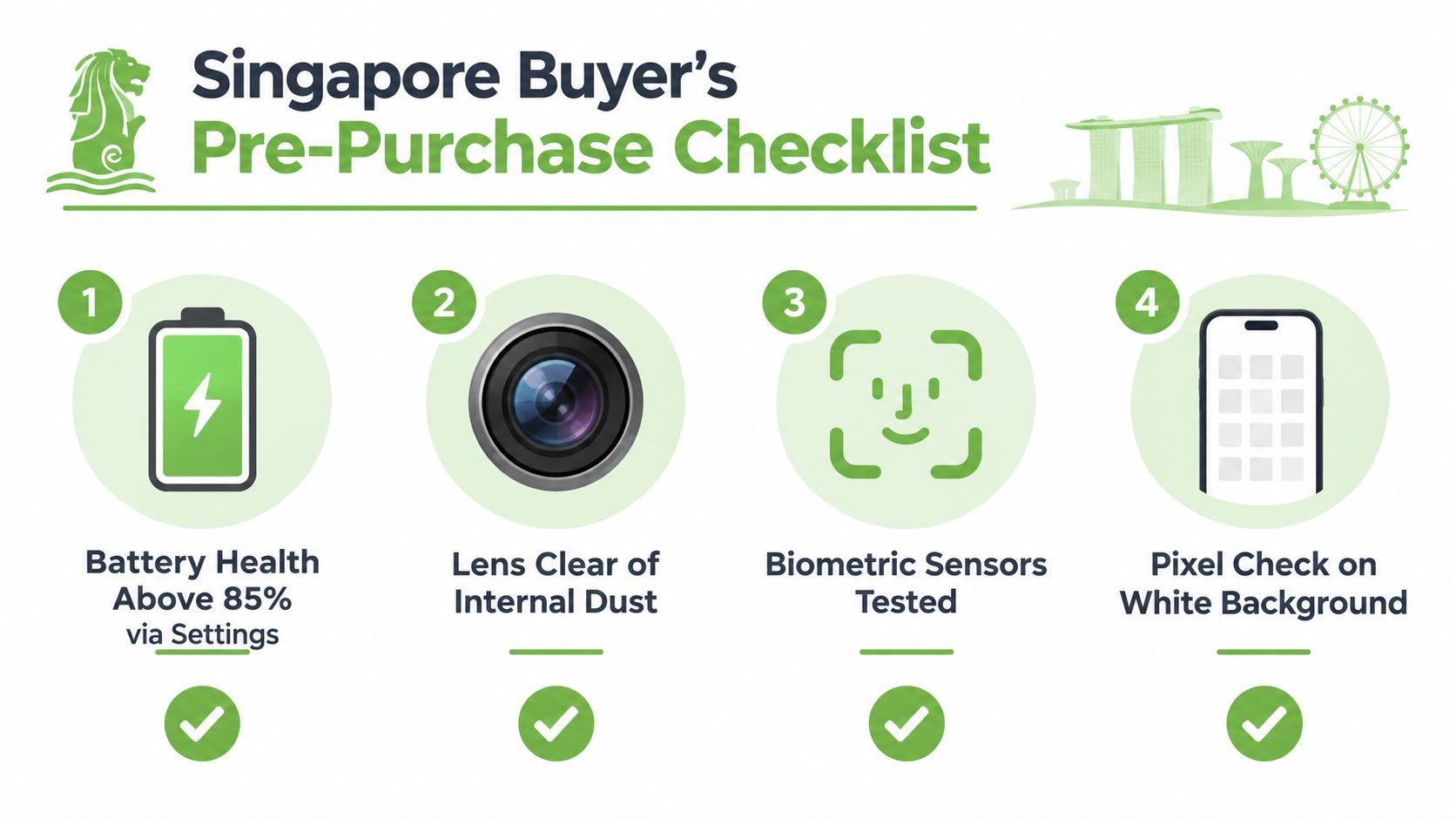
Open Settings, Battery, Battery Health and inspect the maximum capacity and any service warning. For a primary device, I would accept only a unit above 90% when the seller has made that threshold part of the offer. Apple's own service reference is 80%, so a phone close to that point has less battery headroom. Apple's Singapore repair guidance explains the official battery-service threshold.
Record the IMEI and serial number from the phone, not just the product photograph. Check the serial through Apple's coverage checker, and use the relevant local IMDA information where applicable. Confirm that the phone has been removed from the previous owner's Apple Account and that Activation Lock won't appear during setup. myhalo's IMEI verification guide explains the basic checking process.
Test the parts people overlook
- Touch ID: Register a finger and access the phone repeatedly. A Home button that clicks but won't authenticate is not fully functional.
- Lightning port: Connect a cable and check whether charging begins reliably. Loose connection or heavy debris can signal wear.
- Speakers and microphones: Play audio, make a call and record a voice memo. Distortion may indicate damage rather than dirt.
- Camera and display: Photograph a plain surface, inspect the lens for internal dust and check the screen on a white background for dead pixels or bright spots.
- Warranty and returns: Get the warranty duration, exclusions, return window and reporting process in writing before checkout.
- Data wiping: If you're trading in an old handset, require confirmation that the device will be erased using an ISO-aligned process. Keep your own backup and sign out of Apple Account before handover.
Online sellers deserve the same scrutiny as physical shops. Look for a real business identity, clear contact details, consistent policies and payment protections. Gini Help's scam spotting tips offers practical checks for assessing online-store risk.
Watch the following demonstration for a visual inspection approach before you buy:
Photograph the phone, packaging, serial details and visible condition when it arrives. Timestamped evidence is more useful in a dispute than a verbal account of what the device looked like on delivery.
Matching the Right Grade to the Right User
The right grade depends on what failure would cost you. A student using the SE 2020 as a backup can live with a marked frame. A parent giving the phone as a first iPhone should care more about presentation and battery confidence. An SME issuing several devices needs consistency, not just one attractive unit.
Students and secondary-phone users
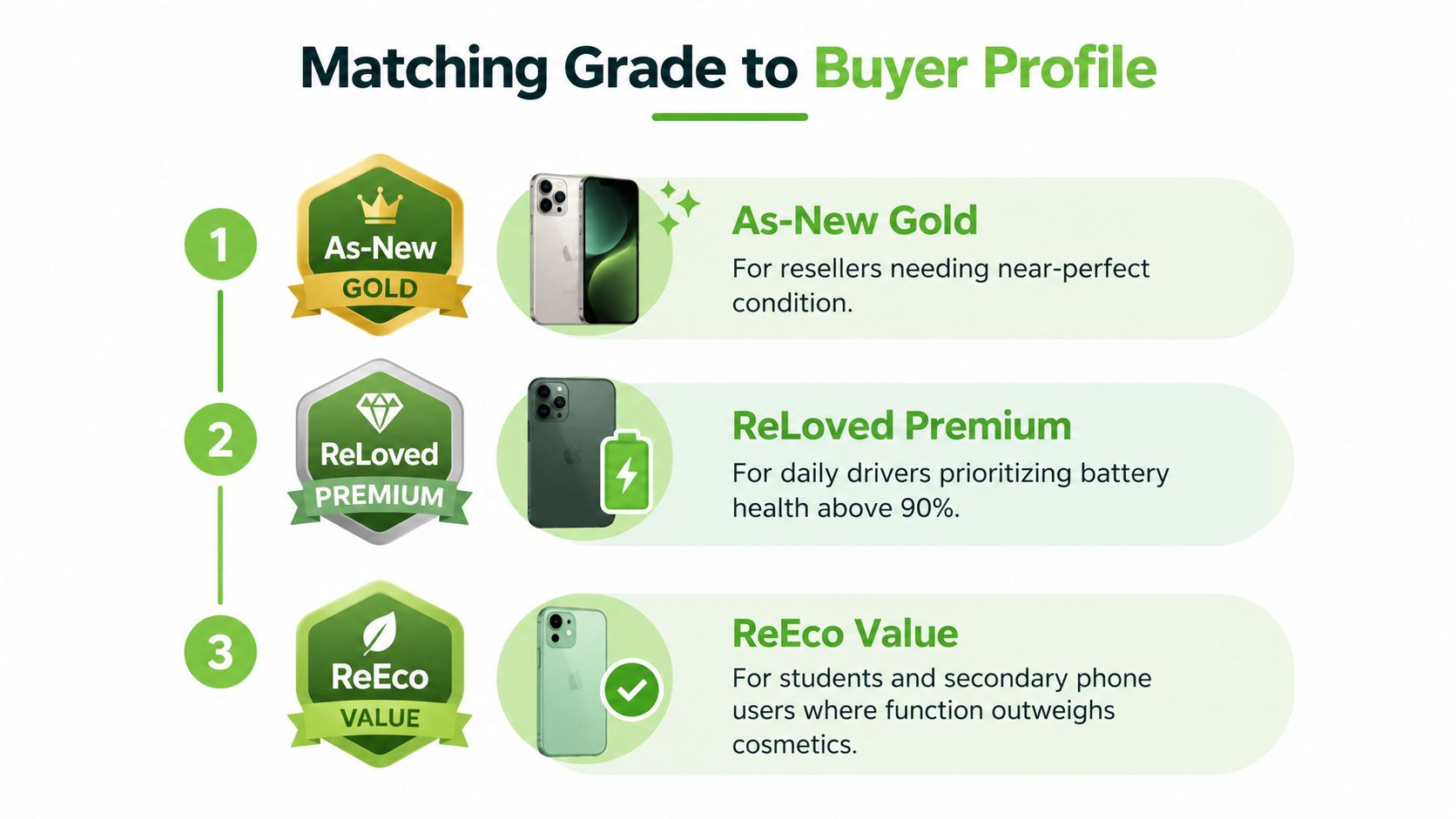
Choose ReEco or ReLoved Value when the phone's job is calls, messages, authentication, navigation or emergency use. Cosmetic wear is acceptable if the screen, camera, Touch ID, charging port and battery meet your requirements. Ask about warranty coverage before selecting ReEco, because functional condition doesn't automatically tell you how long support lasts.
Parents buying a first iPhone
Choose ReLoved Premium when you want a clean handset without paying for an As-New presentation. The important checks are a disclosed battery reading, a working Touch ID sensor, an intact display and a clear 30-day warranty. If the device is a gift, inspect it before wrapping it rather than discovering a fault after handover.
SMEs and field teams
Choose ReLoved Excellent when you need a practical balance between appearance and cost across several handsets. A consistent grade and documented 30-point quality check make asset allocation easier, while transparent serial and battery records support internal tracking. For business resilience, a repairable and reusable device can be more useful than replacing every handset whenever a minor fault appears.
Buyers who want near-new presentation
Choose As-New if packaging, appearance and a longer warranty matter more than achieving the lowest possible price. The supplied myhalo range lists a 6-month warranty for As-New devices. This is the sensible route for a gift, a customer-facing employee or a daily driver where you don't want cosmetic compromises.
My advice is simple. Choose battery disclosure and warranty clarity before choosing colour or minor marks. A device's grade should describe the risk you're accepting, not just how polished it looks in a photograph.
Decision Summary and Common Questions
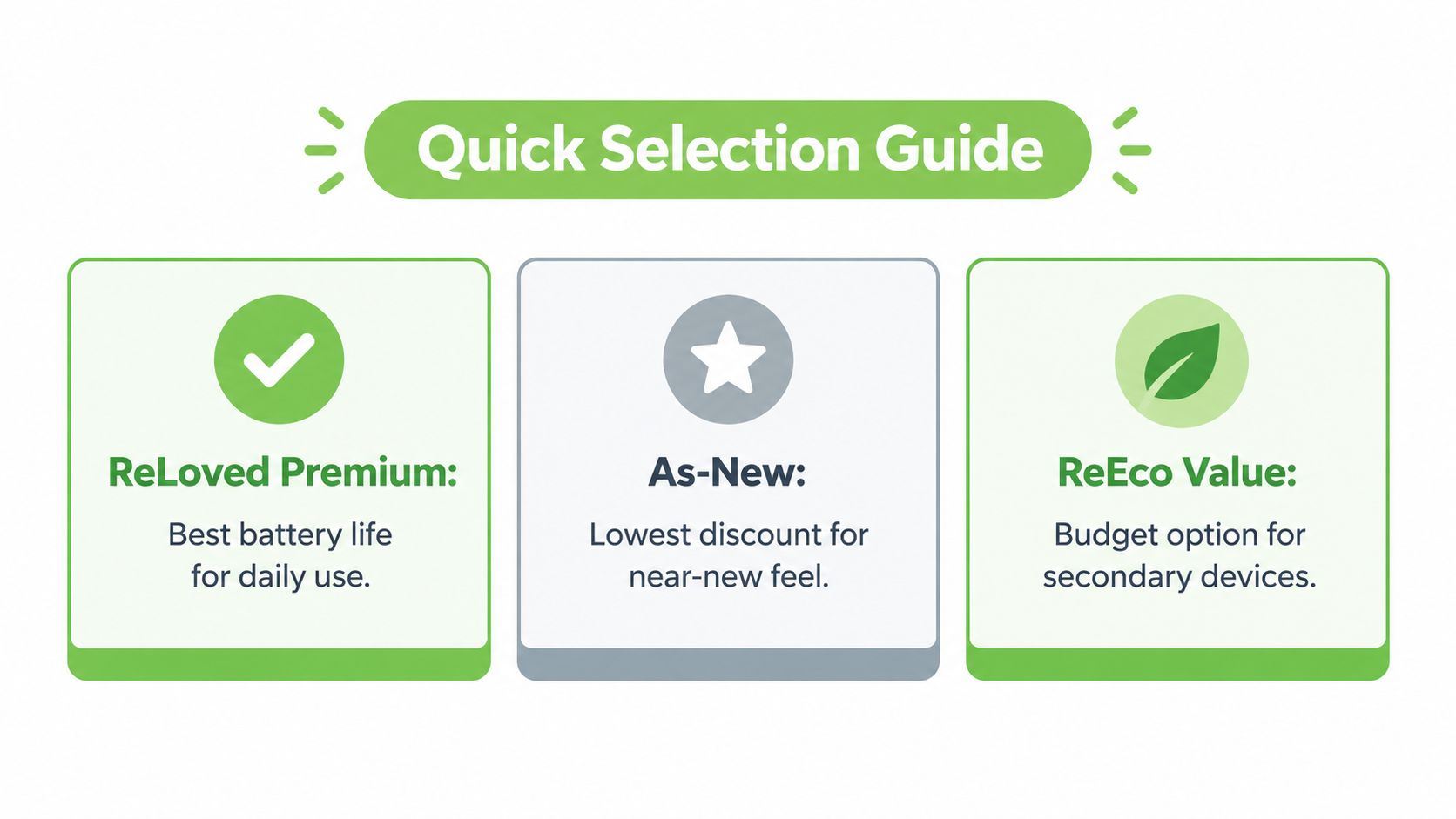
Choose ReLoved Premium when battery condition and a clean daily-use experience matter. Choose As-New when you want near-new presentation and the longer stated warranty. Choose ReEco for a secondary phone, corporate spare or tightly controlled budget, but confirm its warranty before paying.
Is 64GB enough?
It can be enough for calls, messaging, banking and light app use. Choose 128GB if you take regular photos, download media or want to avoid managing storage closely. The SE 2020 is available in 64GB, 128GB and 256GB, so don't accept a vague listing that doesn't identify the capacity.
How much software support remains?
No seller should promise an exact future support window for a model introduced in 2020. The A13 chip remains capable for ordinary use, but Apple's future compatibility decisions are the key uncertainty. If long-term software support is your main requirement, compare a newer refurbished iPhone before committing to the lowest SE 2020 price.
What should you do with your old phone?
Trade it in if it still has resale value, use a buyback route for a lower-cost next owner, or recycle it through an approved Singapore scheme. The NEA e-waste guidance advises consumers to repair equipment where feasible, reuse or donate working items, and recycle unwanted devices through approved channels. It specifically notes that mobile-phone battery recycling services are available.
A responsible lifecycle partner should help with more than a sale. myhalo supports repair, reuse, Certified ReLoved devices, Certified Surplus products, trade-ins and responsible recycling, alongside services such as RescueAdvise and the mylo AI Assistant. Its ISO 9001 and ISO 27001 certifications, transparent grading and 30-point quality checks are relevant when you want a documented process rather than an anonymous listing.
If you're comparing a refurbished iPhone SE 2020 in Singapore, review myhalo for Certified ReLoved, Certified Surplus and As-New devices with disclosed condition and warranty details. Bring your old handset into the same decision by considering repair, trade-in, reuse or responsible recycling, so your next phone delivers value beyond the purchase day.