





How to Sell Your Broken Phone in Singapore: A 2026 Guide
Your phone slips out of your hand, hits the floor, and the first thought usually isn't resale value. It's panic. Is the screen gone, will it still turn on, and have you just turned an expensive device into junk?
In Singapore, that broken phone usually still has a path forward. You may be able to repair it, trade it in, sell it for parts, or recycle it through a proper channel. The right move depends less on emotion and more on a few practical checks: what still works, what your data risk looks like, and whether the device is worth fixing before you sell your broken phone.
Table of Contents
Your Broken Phone Still Has Value
Your phone hits the floor, the screen blooms white, and the first instinct is to write it off. In Singapore, that is often the wrong call. A damaged phone can still carry value, but the value sits in different places. Sometimes it is in a straightforward resale after repair. Sometimes it is in trade-in. Sometimes it is only in parts recovery.
The key is to judge the device the way a buyer or technician would. They look at model demand, whether the board is likely intact, whether high-value parts such as the camera module or display can be recovered, and whether the repair cost makes sense against current resale prices. That is a more useful starting point than asking for a quote immediately.
This distinction is important because a broken handset is not automatically scrap.
A phone with shattered glass may still be worth keeping in the repair-or-trade-in conversation if the touch layer, Face ID, cameras, and charging all still work. A phone that does not power on can still have parts value, especially on newer models. The opposite is also true. A swollen battery, heavy liquid damage, or severe bend can push the device out of the resale route and closer to parts recovery or recycling.
For owners deciding what to do next, the practical question is simple. Which option leaves you with the best net result after cost, effort, and risk? That is the framework Singapore sellers should use. Repair only when the numbers still make sense. Trade in when speed and certainty matter more than squeezing out every dollar. Sell for parts when the phone has recoverable components but a normal resale is unrealistic.
If the damage is screen-related, checking a clear iPhone screen repair guide helps set expectations before you spend money. If the phone still turns on, review these essential digital security tips before handing it over or sending it out.
Practical rule: If the phone is identifiable, safe to handle, and not stripped of major components, there is usually some route to value. The right route depends on repair cost, device age, and how much hassle you are willing to take on.
First Steps Assess Damage and Secure Your Data
The first job isn't pricing. It's control. Before you try to sell your broken phone, work out what failed and make sure your personal data doesn't travel with the device.
Sort the damage before you chase a quote
Start with a quick triage. You don't need technician-level diagnosis. You need a clean description of the fault.
- Cosmetic damage: Cracked glass, chipped frame, scratched back, dented corners.
- Functional faults: Weak battery, intermittent charging, dead buttons, speaker issues, camera problems, touchscreen glitches.
- Major failure: Won't power on, obvious liquid damage, swelling battery, severe bending, or signs of internal failure.
This step matters because the selling route changes with the type of fault. A screen-only issue may still make repair-before-sale sensible. A dead phone usually goes in the opposite direction, towards specialist buyback, parts recovery, or formal recycling.
If you're not sure whether a repair is sensible, it helps to compare what a repair would involve first. For common display issues, this iPhone screen repair guide gives a useful reference point for what owners should check before spending money.
A vague description gets vague offers. A precise fault summary usually gets a cleaner, faster valuation.
Protect your accounts before the phone leaves your hands
In Singapore, the safest workflow follows official e-waste guidance. Mobile phones are regulated e-waste, and consumers are advised to use authorised collection channels. The practical sequence is set out in this Singapore e-waste guidance reference: back up data, remove accounts and SIM or SD card, factory reset if the phone still boots, then pass it to an approved collector or a repair or trade-in channel.
That sequence is worth following in order:
- Back up first. Photos, chat history, notes, authentication backups, and contact lists should be copied before you do anything destructive.
- Remove account locks. Sign out of Apple ID, Google, and any manufacturer account tied to activation lock.
- Take out removable items. Remove the SIM card and microSD card if your device uses one.
- Factory reset only after backup is confirmed. If the phone still powers on, erase it properly from settings.
For devices that still contain active apps, banking logins, and saved passwords, basic account hygiene matters as much as the device wipe. These essential digital security tips are a helpful refresher if you're trying to make sure nothing important gets left behind on a damaged phone.
If the handset is dead and you can't complete a reset locally, avoid informal disposal. Use a traceable repair, buyback, or authorised collection route instead.
What a Broken Phone Is Realistically Worth
Most disappointment happens because sellers guess too high. Broken-phone pricing isn't random, but it is blunt. Buyers are balancing repair cost, parts demand, model age, and the risk that a fault is worse than it looks.
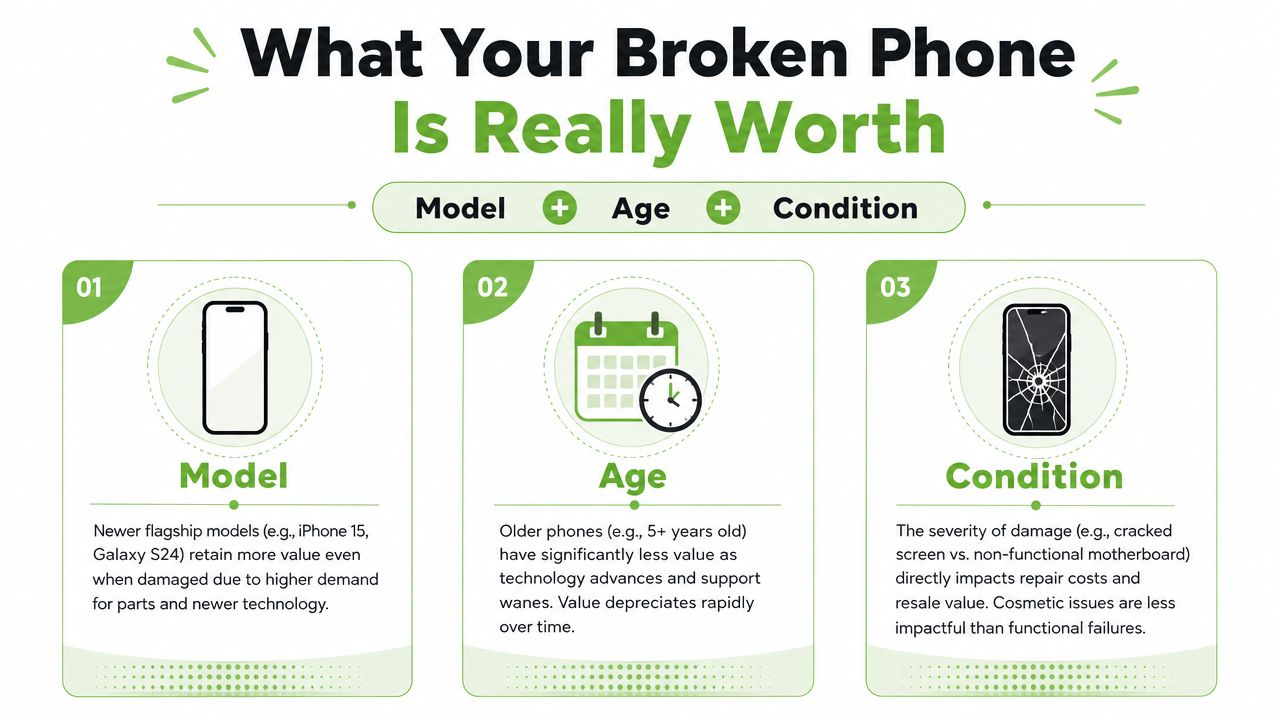
Three things decide the price
The fastest way to estimate a realistic outcome is this formula: Model + Age + Condition.
A newer flagship with a cracked display often keeps meaningful value because demand for parts and refurbishment is still there. An older budget model with board-level faults usually falls into a much lower bracket, even if the damage looks less dramatic from the outside.
Condition often outweighs your own sense of how "minor" the problem is. A clean body with a charging fault may be harder to place than a scruffy phone that still powers on and passes basic checks.
What the common value ranges actually mean
A practical benchmark comes from BankMyCell's broken phone value guidance. It states that phones with a cracked screen or frame typically fetch about 30% to 50% of a working phone's value, while totally faulty devices may still be worth about 10% to 20%. The same source also notes that more than 20% of phones sold through major marketplaces are broken or faulty in some way, which tells you this isn't an edge case. It's a normal transaction category.
That doesn't mean every cracked iPhone lands neatly in the higher range or every dead Android falls into the lower one. It means you should stop thinking in all-or-nothing terms. Damage reduces value. It doesn't automatically erase it.
A broken phone is usually priced as a recovery project, not as a failed possession. That mindset helps you judge offers more calmly.
A useful self-check is simple. Compare any offer you get against the value of doing nothing. Binning the phone gives you zero and creates a disposal problem. A modest but legitimate buyback offer can still be the better outcome.
Your Four Options Repair Trade-In Sell or Recycle
A broken phone creates one practical question. Which route gives you the best outcome after time, risk, and local repair cost are taken into account?
In Singapore, the answer usually comes down to four options. Repair it, trade it in, sell it for parts, or recycle it. The right choice depends less on emotion and more on three checks: what the fault is, what the repair will cost here, and how much effort you want to spend dealing with buyers.
A quick decision table
| Option | Best For... | Payout Potential | Effort Level |
|---|---|---|---|
| Repair first | Newer phones with a single fixable issue and strong resale demand | Higher if the repair bill stays below the added resale value | Medium |
| Trade-in | Sellers who want a fast, structured process with less back-and-forth | Moderate and predictable | Low |
| Sell for parts | Owners of popular models with usable components and time to manage enquiries | Sometimes good, but inconsistent | High |
| Recycle | Very old, unsafe, or uneconomical devices | Little to none | Low |
How to choose in practice
Repair first works when the fault is limited and the model still holds value in Singapore's second-hand market. A recent iPhone or Samsung with a cracked screen, weak battery, or charging port issue can still make sense to fix. The key is simple. If the repair cost is lower than the extra value you get by selling it as a working phone, repair is reasonable. If the numbers are close, skip it. Many owners lose money by repairing an older device that buyers still treat as dated.
Trade-in suits sellers who want certainty. You will usually get less than the top end of a private sale, but you avoid no-shows, last-minute bargaining, and arguments about whether a fault was "already there". For many Singaporeans, especially if the phone is damaged but still identifiable and complete, a structured phone trade-in option in Singapore is the cleaner decision.
Sell for parts can pay off, but only under the right conditions. This route tends to work better for in-demand models where buyers want specific components such as cameras, displays, housings, or donor boards. It also asks more from you. Expect detailed questions about power, biometrics, past repairs, Face ID or fingerprint function, battery health, and whether the phone has water exposure. If you cannot answer those clearly, parts buyers will price defensively or walk away.
Recycle is the correct choice when the phone has become a safety issue or has no realistic resale path. Swollen batteries, severe water damage, burned charging ports, and very old models often fall into this category. Recycling also makes sense when the effort of selling exceeds the likely return.
A simple decision rule helps. Repair if the fix is affordable and the model is still desirable. Trade in if you want speed and fewer complications. Sell for parts if the model is sought after and you do not mind the admin. Recycle if the device is unsafe or commercially finished.
A phone with low resale value and high handling risk should not be forced into a sale. Safe disposal is sometimes the smarter financial choice.
The Easiest Path Trade-In with myhalo
The smoothest route is to compare a repair estimate with a formal trade-in quote, then take the option that gives the better net result. That's a practical way to avoid sentimental pricing and avoid sinking money into a repair that doesn't pay you back.
Why getting two quotes matters
A useful rule from PayMore's advice on selling broken phones is to get at least two quotes: one from an authorised trade-in or buyback provider, and one from a repair or refurbishment shop. That works because damaged phones don't all create value in the same way. A specialist may see parts value where a general trade-in channel sees only risk. A repair shop may also tell you that a small fix enables a much better resale outcome.
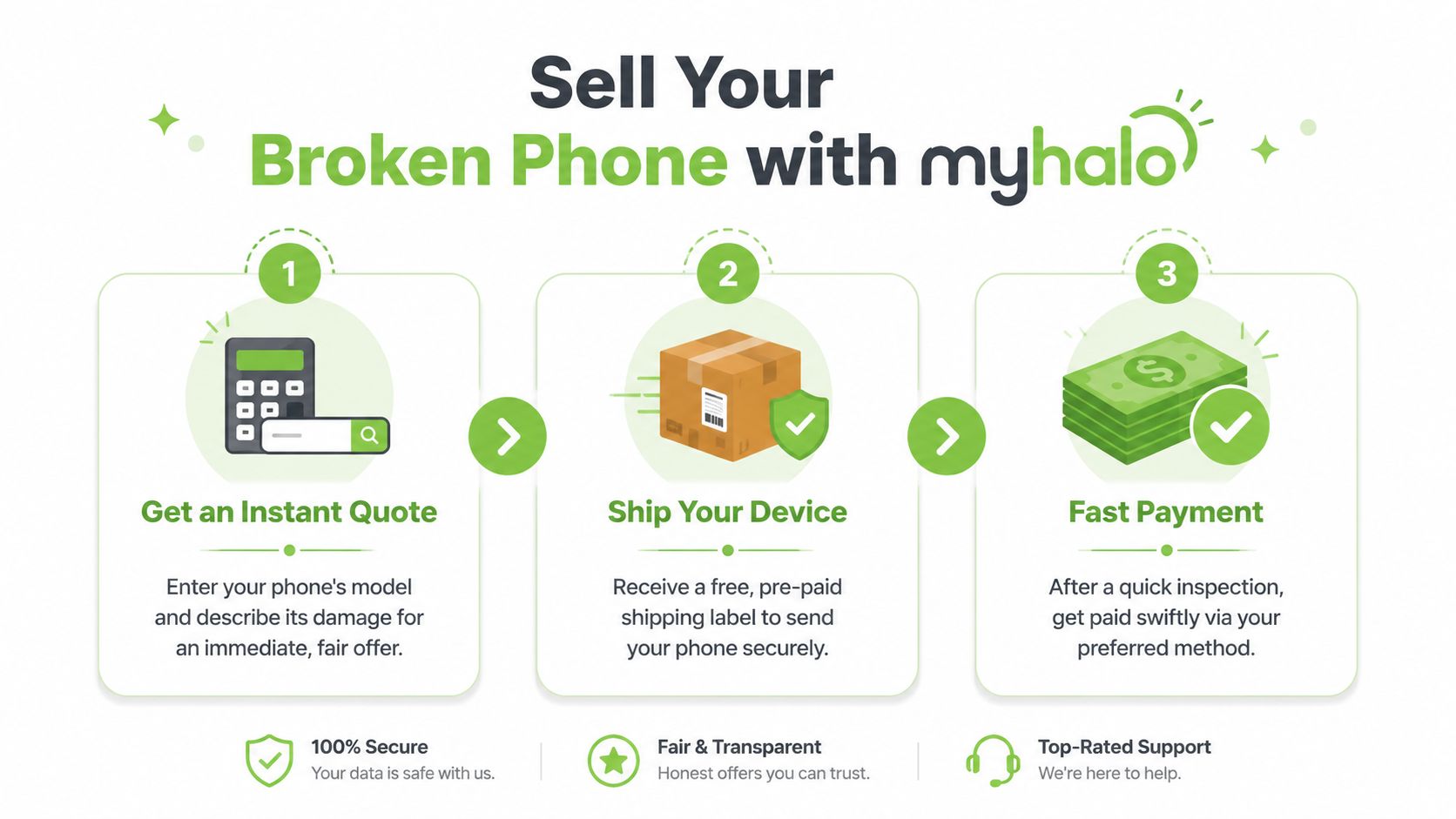
Structured trade-in offers a time-saving solution. In Singapore, one option is phone trade-in in Singapore through myhalo, alongside getting a separate repair assessment from another qualified provider. The point isn't brand loyalty. It's comparison discipline.
How the process usually works
A formal trade-in path is straightforward when done properly:
- Start with the exact model and condition. Be honest about cracks, battery behaviour, power issues, and prior repairs.
- Use the quote as a benchmark. Even if you don't accept it, the quote tells you what the market thinks the broken phone is worth in its current state.
- Compare against repair economics. Add the estimated repair spend to the time and hassle involved. Then ask whether the uplift in resale value is enough to justify it.
This is usually where owners get clarity. A recent flagship with one obvious issue may be worth repairing first. A dead mid-range phone often isn't. A heavily damaged handset with uncertain internals is commonly better sold into a channel that can test components, refurbish selectively, or recover modules.
Don't compare headline payout only. Compare net outcome after repair cost, time, risk, and effort.
That simple filter stops most bad decisions.
Finalising the Sale Packaging and Payment
The last stage is where avoidable problems show up. Phones get damaged further in transit, accessories get sent by mistake, and sellers accept messy payment arrangements that create disputes later.
Pack the device properly
Use a small sturdy box and pad the phone so it doesn't move around. If the screen is already cracked, prevent extra pressure on the display. If the battery shows swelling, heat, or any sign of instability, don't treat it like ordinary post and don't improvise.
For anyone shipping a device with a lithium battery, these international lithium battery shipping rules are a useful reference for understanding why couriers and buyers may have specific packaging or transport requirements.
Leave out accessories unless the buyer or trade-in channel specifically asks for them. Chargers, cases, SIM tools, and cables often add confusion rather than value.
Keep the handover clean and traceable
Use a documented channel. Save the quote, condition description, handover message, and payment confirmation. If identity verification is requested by a formal buyer, that's a normal part of preventing stolen-device trade.
This matters beyond convenience. Singapore generated about 20,000 tonnes of e-waste in 2021, and choosing a proper recovery channel over informal disposal helps with both data safety and environmental responsibility, according to the National Environment Agency's e-waste framework.
If you're comparing end-to-end sale routes, this guide to selling a used phone in Singapore is a practical checklist for the final handoff, especially if you want fewer surprises around condition and payment.
The main goal at this point is simple. No loose ends. No forgotten accounts. No unclear payment method. Once you've done the earlier triage well, finalising the sale should feel routine.
If you've got a damaged device and want a clean next step, myhalo offers a practical route to compare trade-in and repair outcomes so you can decide whether to fix it, sell it, or move it into a proper recovery channel without leaving it in the drawer.