





Quality Assurance Testing: A Guide for Smart Tech Choices
You're comparing a refurbished laptop, a smartphone, and a brand-new set of options that all look fine in the listing. The photos are clean, the price looks sensible, and the seller says everything has been checked. The essential question is simpler and harder at the same time, how do you know the device will still be reliable after a week of normal use?
That's where quality assurance testing earns its place. In plain terms, it's the discipline that turns guesswork into a repeatable process, so a buyer, a repair team, or an SME can judge a device on more than surface appearance. In Singapore, that matters because quality work sits inside a larger assurance economy, from software delivery to regulated inspection activity, and buyers increasingly treat quality as part of the business case, not an afterthought Singapore's quality assurance testing market overview.
Table of Contents
- Why Quality Assurance Matters for Your Next Device
- Understanding What Quality Assurance Really Means
- The Main Types of QA Testing Explained
- A Five Step Guide to the QA Process
- How QA Creates Value in Refurbished Technology
- Beyond Testing A Commitment to the Full Device Lifecycle
Why Quality Assurance Matters for Your Next Device
A device can power on, pass a quick glance test, and still disappoint the moment it meets daily use. The battery may drain too fast, storage may slow down, or ports may act up after a few days. Quality assurance testing closes that gap between a machine that looks fine and one that stays dependable in real life.
The trust gap in refurbished tech
Refurbished electronics force a simple choice. You save money up front, but you also accept more uncertainty about reliability, support, and hidden faults. A proper QA process lowers that uncertainty by checking how the unit behaves under the kinds of use buyers actually care about, not just whether the screen turns on.
That is why QA carries more weight than a technical label. It shows the device has gone through a controlled inspection path, with results that can be reviewed, compared, and repeated. For a student, a parent, or an SME equipping staff with everyday work devices, that consistency makes the purchase easier to defend.
Practical rule: if the seller can only say “it works”, you still do not know enough.
The same idea shows up in certified refurbishment workflows. A company using Ryware's QA solutions can treat inspection as a repeatable process instead of a one-off judgment call, which is closer to how reliable hardware should be handled. That matters in Singapore, where buyers expect refurbished devices to feel dependable enough for work, study, and day-to-day use.
For buyers, the benefit is fewer surprises after purchase. For businesses, the benefit is steadier uptime, fewer replacement costs, and better planning around device lifecycle decisions.
Understanding What Quality Assurance Really Means
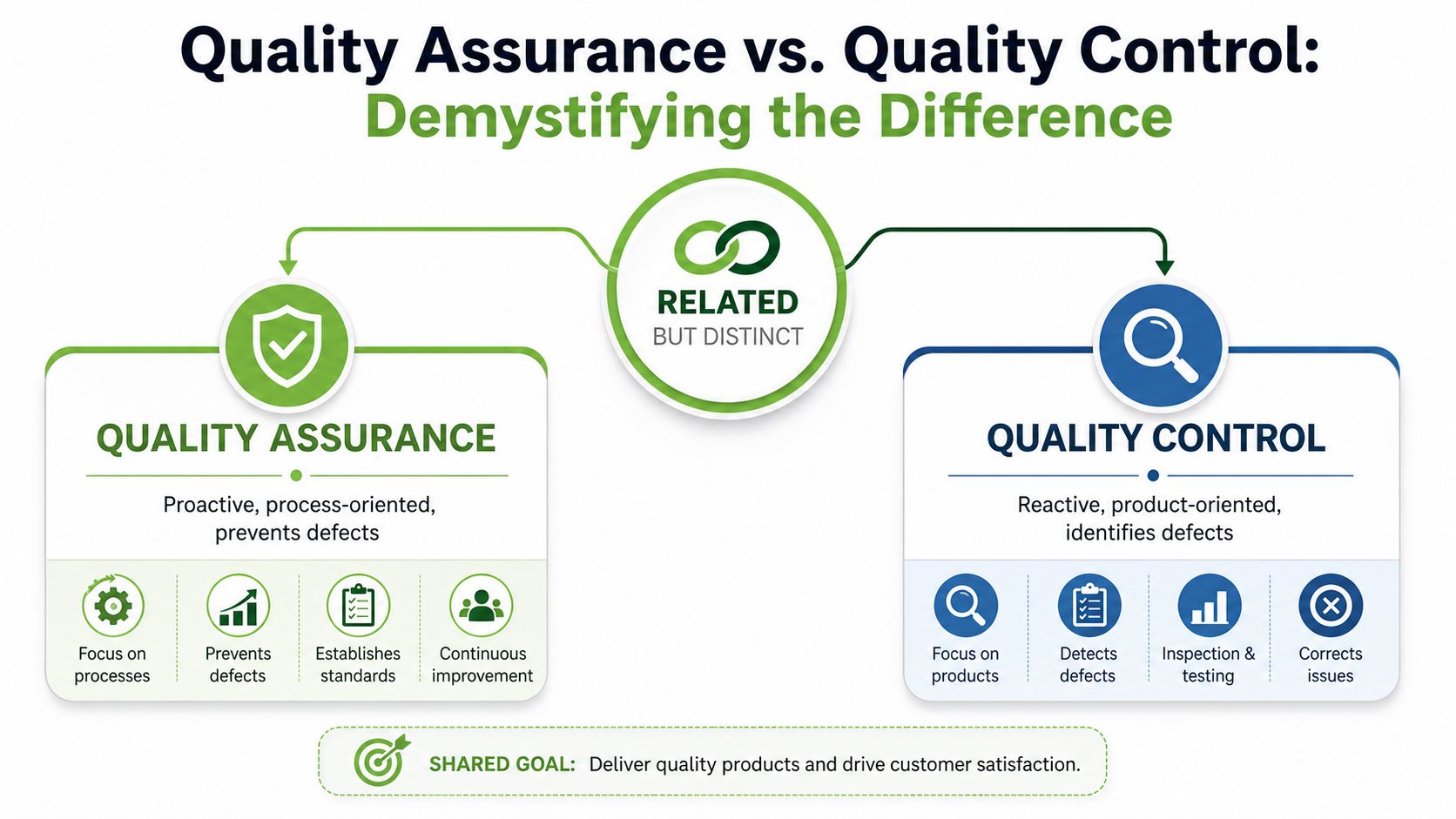
A lot of people use “testing” and “quality” as if they mean the same thing. They don't. Quality assurance is the work you set up before and during production to reduce the chance of defects, while testing is the act of checking whether the result meets the standard you need.
Recipe versus tasting the cake
A simple kitchen example makes the difference clear. QA is the recipe, the ingredient list, the oven temperature, and the discipline of following the same method every time. QC, or quality control, is tasting the cake at the end to see whether it turned out right. Both matter, but they solve different problems.
That distinction matters because many failures start before the final check. If the process is sloppy, end-stage testing can catch defects, but it cannot fully undo them. In a device context, that means a phone can pass a quick visual check and still fail later because the battery health, storage condition, or repair history was not handled properly.
Why process matters more than heroics
A strong QA process makes quality less dependent on luck or one person's memory. It creates a repeatable way to identify risk, record findings, and decide whether a unit should move forward. That same approach matters in Singapore's refurbished device market, where buyers want more than a quick power-on check. They want a device that feels dependable for work, study, and daily use.
The same idea appears in certified refurbishment workflows. A company using Ryware's QA solutions can treat inspection as a repeatable process instead of a one-off judgment call, which is closer to how reliable hardware should be handled. That matters because a controlled process gives buyers more confidence that the device has been checked with the same care each time.
Singapore's quality management culture also reflects a structured standards environment. The shift from Singapore Standard on Quality Control 1 to Singapore Standards on Quality Management shows that assurance practice keeps modernising rather than staying fixed in one place Singapore standards and QA context. QA work also depends on specialised people who understand how to spot faults, document outcomes, and keep a process consistent. Industry salary estimates for QA and testing roles suggest that this expertise is valued as skilled work, not casual checking Singapore QA role estimates.
For a buyer, the benefit is fewer surprises after purchase. For a business, the benefit is steadier uptime, fewer replacement costs, and better planning around device lifecycle decisions.
The Main Types of QA Testing Explained
Different checks answer different questions. A good QA programme doesn't rely on one method only, because no single test tells the whole story of a smartphone, laptop, or app.
Manual testing and automated testing
Manual testing is the hands-on part. A tester taps app icons, checks whether the camera opens smoothly, listens for speaker distortion, and looks for awkward behaviour that a script might miss. It's especially useful for usability, because a human notices when a device feels laggy or awkward even if it technically “passes”.
Automated testing uses scripts to repeat the same checks in a consistent way. On a smartphone, that might mean running a scripted camera check, verifying app launches, or confirming that a feature still works after a software update. Automation is valuable when the same test must be repeated many times without fatigue.
Regression testing and acceptance testing
Regression testing asks a practical question, did a new change break something that already worked? If a phone update fixes battery reporting but accidentally disables Bluetooth pairing, regression testing is what helps catch that. It's a back-check, not a first-check.
Acceptance testing is the final reality check against user needs. If a team is buying phones for staff, acceptance testing confirms the device meets the agreed requirement, whether that's battery life for field work, smooth app access, or reliable login behaviour.
Small but useful distinction: automated tests are efficient, but they don't replace human judgement.
| Testing type | What it's best at | Easy example |
|---|---|---|
| Manual testing | Real-world feel and usability | Tapping through apps by hand |
| Automated testing | Repetition and consistency | Running scripted camera checks |
| Regression testing | Protecting existing features | Checking Bluetooth after an update |
| Acceptance testing | Matching user requirements | Confirming the phone meets staff needs |
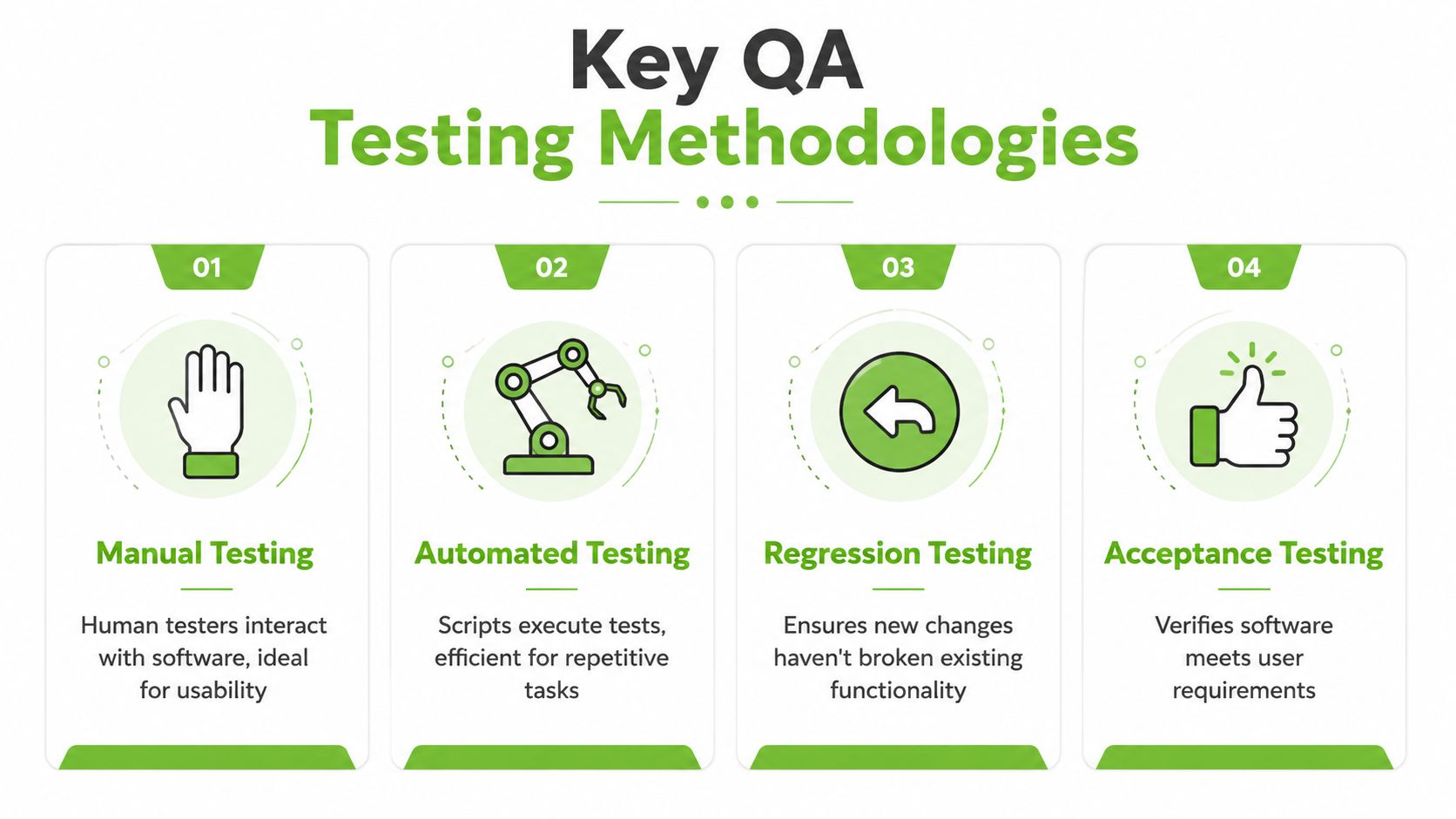
The practical lesson is that each type catches a different kind of risk. Manual testing catches awkward behaviour. Automation catches repeatable faults. Regression protects what was already working. Acceptance confirms the device is fit for the person who will use it.
A Five Step Guide to the QA Process
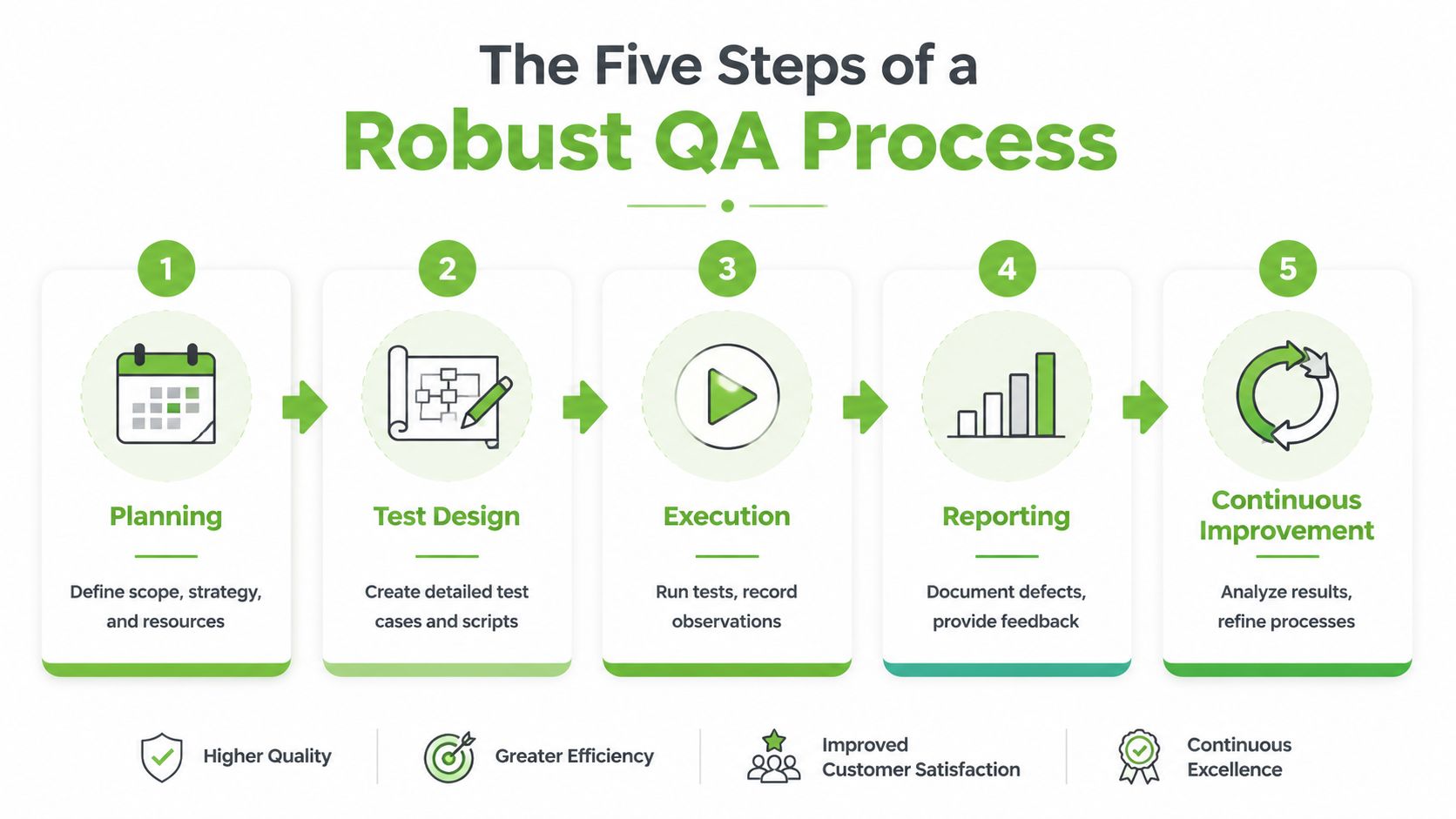
A good QA process follows a clear sequence, because quality is easier to check when each stage has a specific job. That sequence matters even more when a refurbished laptop is being prepared for resale or redeployment, since a hidden fault can turn a fair-looking device into poor value.
Planning and test design
Planning starts with a simple question, what matters most for this device? For a laptop, that may include battery wear, keyboard response, storage condition, display quality, and whether prior data was erased properly. Test design then turns that scope into a checklist and a test method, so the team is not relying on memory or improvisation.
If you want a clean way to organise that work, creating an effective testing plan is a sensible starting point. Good planning defines the scope first, because vague testing usually leads to uneven results later.
Execution, reporting, and improvement
Execution is where the checks happen. In a refurbishment setting, that could mean powering on the device, running component checks, and recording what passed or failed. Reporting then turns those observations into something a buyer or manager can understand, often a written result that shows condition, limitations, and next steps.
The final step is continuous improvement. If a batch keeps failing on the same component, the process needs adjustment, not just more logging. That is how QA stops being a one-time gate and becomes a learning system.
The same discipline shows up in physical goods too. A formal quality-check routine for refurbished electronics, such as the one described on MyHalo's quality checks page, gives buyers a clearer picture of what has been tested and why the device can be trusted.
For formal Singapore projects, the standard can be stricter still. The LTA engineering materials specification says quality assurance testing must, unless otherwise accepted, be carried out by a SAC-SINGLAS accredited or approved laboratory LTA engineering materials specification. That matters because accreditation strengthens the defensibility of results when acceptance, audit, or certification is on the line.
Good QA makes the next decision easier, not harder.
How QA Creates Value in Refurbished Technology
Refurbished tech only feels like good value when the checks behind it are serious. A cosmetic grade by itself doesn't tell you whether the battery is tired, the storage is degrading, or the device was handled properly after repair. That's why genuine value is found in the inspection method, the reporting, and the consistency of the process.
What a trustworthy inspection should cover
A high-trust programme for refurbished IT assets in Singapore needs to verify both physical functionality and compliance. That means checking CPU behaviour, RAM, storage health, display condition, ports, battery performance, wireless connectivity, data erasure, chain of custody, and regulatory status where relevant Singapore refurbished asset inspection requirements. A device can still pass a basic power-on check and later fail because one hidden component was never tested.
Structured refurbishment offers a distinct advantage over casual reselling. A full inspection report gives the buyer something concrete to rely on, and it gives the seller a repeatable standard instead of an opinion. For SMEs, that can make device planning much easier because the grade is tied to actual checks, not marketing language.
How grading becomes useful to the buyer
Transparent grading only works when the testing behind it is transparent too. Labels such as As-New, Certified ReLoved, and ReEco are useful only if they reflect clear differences in condition, function, and disclosure. Battery health disclosure is especially important, because battery wear affects day-to-day usability more quickly than many buyers expect.
The business value is bigger than the device price. Better QA can support cost savings, improve planning for device replacement, and reduce avoidable downtime. It also helps extend useful life, which means better resource use without forcing a compromise on reliability.
For buyers who want to think more carefully before choosing a refurbished phone, things to look out for before buying a refurbished phone is a practical reference point. The key idea is the same regardless of model or brand, the better the inspection, the more confident the purchase.
Beyond Testing A Commitment to the Full Device Lifecycle
A device that passes QA is not the end of the story. It is the point where the device is ready for the next useful stage, whether that means repair, reuse, resale, redeployment, or responsible recycling. That broader view is what turns testing into business value, because a well-checked device can keep serving another user instead of being thrown away before its time.
Quality assurance works like a checkpoint at each handoff in the device lifecycle. The same discipline that verifies software behavior also supports hardware decisions, such as confirming whether a laptop still has dependable performance, whether its condition matches its grade, and whether it is fit for another round of use. For refurbished electronics in Singapore, that connection matters because buyers are not only paying for a device, they are paying for confidence in how the device was examined.
Repair, reuse, and second life
Repair makes sense when replacing hardware would waste useful value. Reuse makes sense when a device still performs well after testing and verification. For businesses, that can turn asset disposition into a structured process instead of a rushed disposal decision, especially when equipment can be given a second life through resale or charity.
myhalo's corporate IT asset disposition process shows how that idea works in practice. Its ISO 9001-certified workflow uses a 30-point check to confirm device condition before a unit moves into the next stage, so the decision is based on inspection rather than assumption. The company also says a laptop successfully given a second life avoids myhalo corporate IT asset disposition and provides a Sustainability Impact Report to quantify the effect. That kind of reporting matters because it connects lifecycle decisions to measurable business outcomes, not just good intentions.
For a non-technical manager, the value is easy to understand. A standardised check prevents a device from being treated as “good enough” on guesswork alone. It also helps protect value for money, because a verified device is less likely to become a hidden cost after purchase.
Trust, resilience, and smarter resource use
The larger lesson is that QA is really about trust under uncertainty. Buyers want to know a device will work. Managers want to know the purchase was sensible. Operations teams want fewer surprises. Good testing supports all three.
myhalo's process shows how software QA ideas translate into hardware quality checks. A 30-point inspection covers the practical questions that matter most after a device changes hands, such as whether core functions still work, whether the physical condition matches the promised grade, and whether the device is fit for continued use. That is the hardware version of test coverage, because it reduces the chance that a problem slips through because no one checked that part of the device. It also explains why ISO 9001 matters here. The certification points to a repeatable quality system, so the buyer is not relying on a one-off judgment.
If you are thinking about device protection and longer service life, myhalo protects is one example of how lifecycle support can continue after the sale. In practical terms, that means a device can stay useful for longer instead of being treated as finished the moment ownership changes. That kind of support fits the same QA mindset, because the goal is not only to pass a test, but to keep the device reliable over time.
Quality assurance testing is most valuable when it helps people make better decisions with less waste and less uncertainty. If you are choosing devices for home, study, or business use in Singapore, talk to myhalo about options that combine transparent grading, repair support, certified refurbished devices, and a longer-term approach to device value.