




Buy Now Pay Later: A Singaporean's Guide for 2026
You're at checkout for a refurbished iPhone, a student laptop, or a replacement MacBook for work. The price is reasonable, but paying the full amount today still stings. Then you see a button that promises 0% instalments and a much smaller payment now. That's the moment when buy now pay later feels less like finance and more like relief.
That convenience is exactly why BNPL has become normal in Singapore. By the end of 2024, BNPL was used in about 28% of all online shopping transactions in Singapore, up from 24% in 2023, and 63% of users were Gen Z and young Millennials (Singapore BNPL usage snapshot). For tech buyers, that matters because phones, tablets, laptops, and accessories sit in the sweet spot where instalments feel manageable.
The catch is simple. BNPL is easy to start, but it still creates a repayment obligation. If you only focus on the “0% interest” line, you can miss the parts that affect your wallet later, especially late fees, stacking multiple plans, and damage to your credit record. Used carefully, BNPL can help you spread the cost of a needed device. Used casually, it can turn a small purchase into a messy debt problem.
Table of Contents
- What Is Buy Now Pay Later
- How BNPL Works in Singapore
- BNPL vs Credit Card Instalments
- The Hidden Costs and Risks You Must Know
- Will BNPL Hurt Your Singapore Credit Score
- How to Use BNPL for Smart Tech Purchases at myhalo
- Your Checklist and FAQs for Safe BNPL Use
What Is Buy Now Pay Later
You spot a new laptop at checkout. The monthly amount looks manageable, so the total price feels less heavy than it did five minutes earlier. That is the appeal of buy now pay later.
Buy now pay later is a short-term payment arrangement that lets you receive an item now and split the cost into smaller scheduled payments. In practice, it is financing built into the checkout flow, usually with fast approval and automatic deductions later.
That setup is easy to mistake for a simple payment convenience, especially when the screen highlights 0% interest. For tech buyers in Singapore, the more useful way to read BNPL is this: you are still taking on a repayment obligation, just in smaller pieces. Your wallet feels the purchase over time instead of all at once.
BNPL has become common enough that many shoppers treat it like a normal way to pay for phones, tablets, accessories, and work devices. That familiarity can lower your guard. A payment method that feels routine can still create problems if you miss a due date or stack too many purchases across different apps.
Why it feels attractive
Small instalments change how your brain reads the price.
A $1,200 device can feel very different when it is shown as several smaller payments. It is a bit like carrying four shopping bags instead of one heavy box. The total weight stays the same, but the strain feels easier to handle in the moment. For someone replacing a damaged phone or buying a laptop for school or work, that timing can be useful.
A good rule is simple:
Practical rule: Use BNPL when you already have the money set aside and want flexibility in timing. If the instalments are the only reason the purchase feels affordable, stop and review the decision.
Where confusion starts
Many shoppers blend three ideas together, and that is where mistakes happen:
- Interest-free means you may avoid standard interest charges if you pay on time.
- Cost-free does not always apply, because late fees or other charges can still appear.
- Risk-free definitely does not apply, because missed payments can affect your finances beyond the original purchase.
For Singaporean tech buyers, this distinction matters most with gadgets because they are easy to justify. A new phone can feel necessary. A tablet for study can sound productive. Noise-cancelling headphones can seem minor enough to add on. BNPL makes each decision feel smaller, but your bank balance still absorbs the full amount, and late payment penalties can turn a manageable purchase into an expensive one.
The safest way to view BNPL is as a repayment contract with a friendlier interface. The app may look light and simple. The obligation is still real.
How BNPL Works in Singapore
A good way to think about BNPL is this. It's a digital lay-by with instant delivery. You don't wait until the last payment to get the product. A finance provider pays the merchant, and you repay the provider in scheduled chunks.
The usual payment flow
Here's what normally happens during a BNPL purchase in Singapore:
-
You choose BNPL at checkout
Instead of paying by card or bank transfer, you select a BNPL option such as Atome or GrabPay Later. -
The provider reviews your request
Approval is usually quick. From the shopper's side, it can feel almost instant. -
You make the first payment
Depending on the plan, you may pay part of the purchase amount upfront. -
You receive the item
The merchant gets paid according to its arrangement with the provider, and your order is processed. -
The remaining payments are auto-deducted later
Future instalments are collected on the agreed schedule.
Who's involved behind the scenes
There are three moving parts in every BNPL transaction:
- You, the buyer take on the repayment obligation.
- The merchant sells the item and offers BNPL at checkout.
- The BNPL provider handles approval, repayment collection, and account rules.
If there's a missed payment, your issue usually sits with the financing provider's terms, not just the store order page.
Why approval feels so fast
Singapore's BNPL ecosystem is built for speed. Providers increasingly use real-time underwriting and automated checks rather than a slow traditional loan process. From a user perspective, that's convenient. From a budgeting perspective, that speed can lower your guard.
Fast approval doesn't mean a purchase is affordable. It only means the system allowed the transaction.
The terms that deserve your attention
A few phrases at checkout sound harmless but deserve a second look:
- 0% interest means you may avoid standard interest if you follow the schedule exactly.
- Instalments means each future payment is a fixed obligation, not an optional reminder.
- Late fee policy tells you what happens when a deduction fails or you miss a due date.
- Account restrictions can apply if payments are overdue.
The safest mindset is to treat BNPL exactly like a short loan. If the next instalment date clashes with rent, bills, or a card payment, the “easy” checkout can stop feeling easy very quickly.
BNPL vs Credit Card Instalments
You are at checkout for a new phone. The BNPL button says you can split the cost into a few smaller payments. Your credit card offers a 0% instalment plan too. Both seem cheap today. The difference shows up over the next few months, when those payments start competing with rent, bills, and the rest of your card balance.
That is why this comparison matters for tech buyers in Singapore. BNPL is marketed as simple, but simple at checkout does not always mean lower risk. Credit card instalments can look more formal and harder to set up, yet they sit inside a credit system that many buyers already understand better.
The core difference
BNPL is usually a short, checkout-level payment plan. It is built to get you approved fast and move you through the purchase with as little friction as possible.
A credit card instalment plan sits inside your existing card account. That account already has a credit limit, statement dates, minimum payments, and a repayment history. In other words, BNPL is often a standalone lane. A card instalment plan is one lane inside a larger highway.
That difference matters because the risks show up in different places.
With BNPL, the danger is often behavioural. Fast approval can make a mid-range gadget feel harmless, even when several small instalments stack up across different apps. With credit card instalments, the danger is often account spillover. If you do not manage the rest of your card balance carefully, a purchase that looked controlled can sit beside interest-bearing debt.
BNPL vs Credit Card Instalments at a Glance
| Feature | Buy Now, Pay Later (BNPL) | Credit Card 0% Instalment Plan |
|---|---|---|
| How it feels at checkout | Fast, app-like, often added directly on the store page | Usually offered through your existing card or bank |
| Best fit | Short-term tech buys with a clear payoff plan | Larger purchases for cardholders who already manage monthly statements well |
| Approval model | Quick checks, often focused on the transaction | Based on your card account, limit, and issuer rules |
| Where the debt sits | Often outside your main card account | Inside your credit card relationship |
| Repayment pattern | Fixed deductions on scheduled dates | Fixed instalments, but still tied to your card billing system |
| If you miss a payment | Late fees, account restrictions, or provider blocks may apply | Card fees, finance charges on other balances, or card-level consequences may apply |
| Main appeal | Clarity and speed | Familiar billing and one place to track payments |
What this means for your wallet
For a smaller purchase, BNPL can feel cleaner. You see four payments of a fixed amount and know what is coming. That helps with cash flow, especially if you are replacing a phone or buying a tablet for work.
But clarity is not the same as safety.
If you use two or three BNPL plans at once, the due dates can end up scattered across the month. That is how buyers lose track. A credit card instalment plan usually keeps the purchase under one statement cycle, which some people find easier to monitor. On the other hand, if you also carry a revolving card balance, your card account can become more expensive overall even if the instalment portion is 0%.
Which one fits a tech purchase better
Use BNPL for a necessary device when all of these are true: the repayment period is short, each instalment fits your monthly budget comfortably, and you can keep the payment dates in one calendar.
Use a credit card instalment plan when you already treat your card like a tool, not extra income. If you regularly pay on time, understand your statement, and want all borrowing in one place, that structure may be easier to control. If you are comparing options for Apple devices, this iPhone instalment plan guide shows how shoppers often weigh payment structure against total affordability.
One more point gets missed. Late payment rules can differ sharply between providers, and that can change the actual cost of a "0% interest" purchase. For a useful outside perspective on how late fee policies affect repayment behaviour, see this guidance for finance leaders.
Choose the option you can finish on time without juggling dates, fees, or other debt. The smallest first payment is not the same as the lowest financial risk.
The Hidden Costs and Risks You Must Know
The marketing message for BNPL is tidy. Split the payment. Pay no interest. Move on.
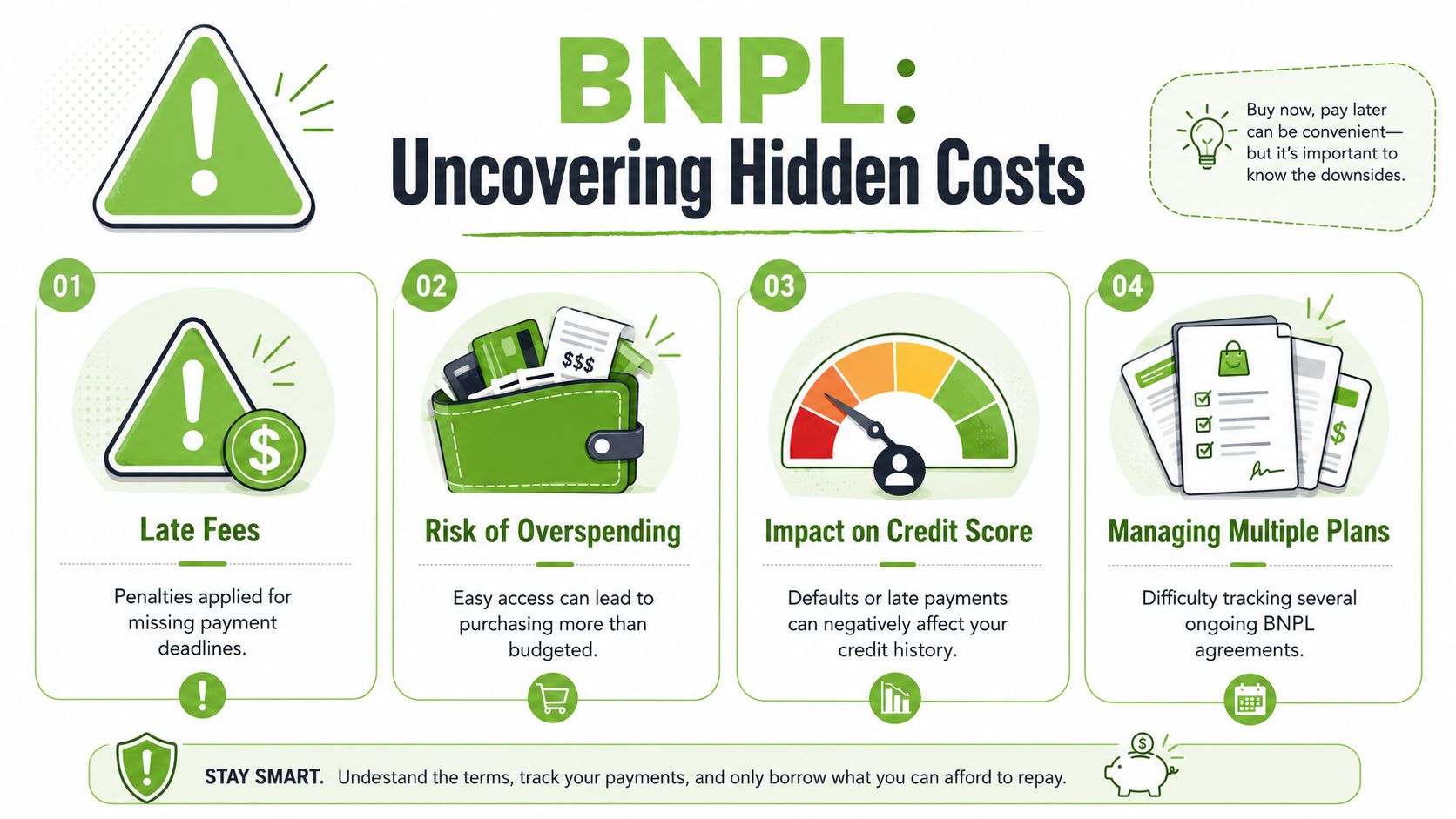
Real life is less tidy. In Singapore, regulators have linked easy BNPL access to a flypaper effect, where households allocate up to 12% more of their disposable income to retail electronics, and merchants often absorb higher fees of 4% to 8% per transaction compared with 1.5% to 3% for credit cards. Those costs don't always show up as a line item to the shopper, but they're part of the reason “0% interest” doesn't mean the transaction is costless.
Why 0% doesn't mean cost-free
Someone always pays for convenience.
Sometimes it's the merchant through higher processing fees. Sometimes it's the shopper through penalties after a missed payment. Sometimes it's both. If you're buying a budget laptop or refurbished phone because you're trying to spend wisely, that distinction matters. A plan that helps cash flow can still hurt your total finances if the schedule is tight and you slip.
People often underestimate late fees. A missed instalment may look small on day one, but it can trigger account restrictions and additional charges. For teams that manage receivables and penalties more broadly, this kind of guidance for finance leaders is useful because it shows how late fee policies shape behaviour and cash flow.
How small misses become expensive habits
The actual danger is rarely one large disaster. It's a string of small decisions:
- You add one more plan because the monthly amount seems low.
- You forget a due date because the instalment isn't part of your main card statement.
- You justify an upgrade because the first payment looks harmless.
- You stack obligations across apps and lose track of the total.
That's why BNPL works well only when you track it actively. If you already carry several monthly commitments, even a simple gadget purchase can become one more fixed deduction waiting in the background.
A similar issue comes up when shoppers compare point-of-sale financing options in physical retail and large format stores. This guide to store-style instalment plans helps show why the payment format can look manageable while the repayment discipline still falls entirely on the buyer.
Key takeaway: BNPL reduces upfront pain. It doesn't reduce the need for discipline.
If you want a clean rule, use BNPL only when the item is necessary, the instalment dates are already budgeted, and you could still cover the balance if your cash flow got tighter next month.
Will BNPL Hurt Your Singapore Credit Score
A lot of people still assume BNPL is too small or too informal to matter to their credit file. That belief causes trouble.
The myth that causes trouble
The common myth goes like this: “There wasn't a big credit card application, so this won't affect my credit score.” That's not a safe assumption anymore.
A 2025 Monetary Authority of Singapore study found that 57% of BNPL users believed their credit score was unaffected, but 34% later faced rejected loan applications due to undisclosed BNPL debt on their credit report. The same data noted that a single late payment can reduce a score by 15 to 20 points. There's a direct lesson in that. BNPL might feel lighter than a traditional loan, but lenders can still treat it as part of your real financial obligations.
If you want a broader consumer-friendly explainer on the relationship between instalment apps and borrowing history, this guide to BNPL and credit offers a useful outside perspective.
What late payment can affect later
Think about your credit profile like a school report card for repayment behaviour. A missed BNPL instalment may not feel dramatic when you're only looking at a phone accessory or a tablet upgrade. But future lenders don't judge the emotional story behind the purchase. They look at whether you borrowed and whether you paid on time.
That can matter when you later apply for:
- A home loan, where lenders review your overall obligations
- A car loan, where repayment consistency matters
- A business facility, if you're buying devices for a small team
- Another device financing plan, where previous payment behaviour shapes risk
BNPL debt is still debt. The amount may be small, but the repayment record can carry forward.
There's another subtle problem. BNPL can create “invisible debt” in your own head. Because the purchase was split into easy instalments, you may stop thinking of it as an active liability. But lenders and credit systems don't think that way. They care whether you have obligations outstanding and whether you've managed them properly.
The safest assumption is simple. If you'd be uncomfortable seeing the repayment history attached to your name on a future loan review, don't proceed casually.
How to Use BNPL for Smart Tech Purchases at myhalo
Your laptop dies three days before a project deadline. You need a replacement fast, but paying the full amount in one shot would wipe out this month's budget. That is the kind of situation where BNPL can help. The key is to use it as a payment schedule, not as permission to spend more.

A smart tech purchase starts with the device itself, not the instalment button. At myhalo, that often means comparing new and professionally refurbished options first, checking whether a trade-in lowers your out-of-pocket cost, and only then deciding if splitting payments helps your cash flow. That order protects your wallet because the actual trap is not the headline "0% interest". It is choosing a pricier device because the monthly number looks small.
Use this quick filter before checkout.
-
Would I buy this exact device if BNPL did not exist?
If the answer is no, the instalments may be driving the decision. -
Is the device solving a real problem this month?
A failing work phone is different from upgrading for a slightly better camera. -
Can I reduce the total cost before financing anything?
Refurbished stock, trade-ins, or a lower storage tier often save more than any instalment plan. -
Will all future instalments fit after my fixed bills and savings?
Check the full series of payments, not just the first one.
Here is a simple way to think about it. Buying tech with BNPL works like carrying groceries in smaller bags. The weight is still the same. If the total cost is already too heavy for your budget, splitting it into parts does not make it affordable. It only delays when the strain hits.
For most buyers, the safer sequence is:
- Pick the lowest-cost device that still does the job well.
- Apply any trade-in or savings opportunity.
- Read the instalment dates and late fee terms carefully.
- Confirm how refunds and outstanding payments are handled under the store's partial payment and refund policy.
- Use BNPL only if the repayment schedule fits comfortably inside your normal month.
One more point matters for Singapore tech buyers. Expensive gadgets can make small late fees feel harmless, especially when each instalment looks manageable on its own. That is how people get caught. A missed payment on a phone, tablet, or laptop purchase can cost more than expected and may create problems beyond the checkout screen, especially if you are juggling other instalment plans at the same time.
Used well, BNPL helps you smooth timing. Used carelessly, it makes a routine tech upgrade more expensive and harder to manage.
Your Checklist and FAQs for Safe BNPL Use
Safe BNPL use isn't complicated. It just requires honesty before checkout and discipline after it.
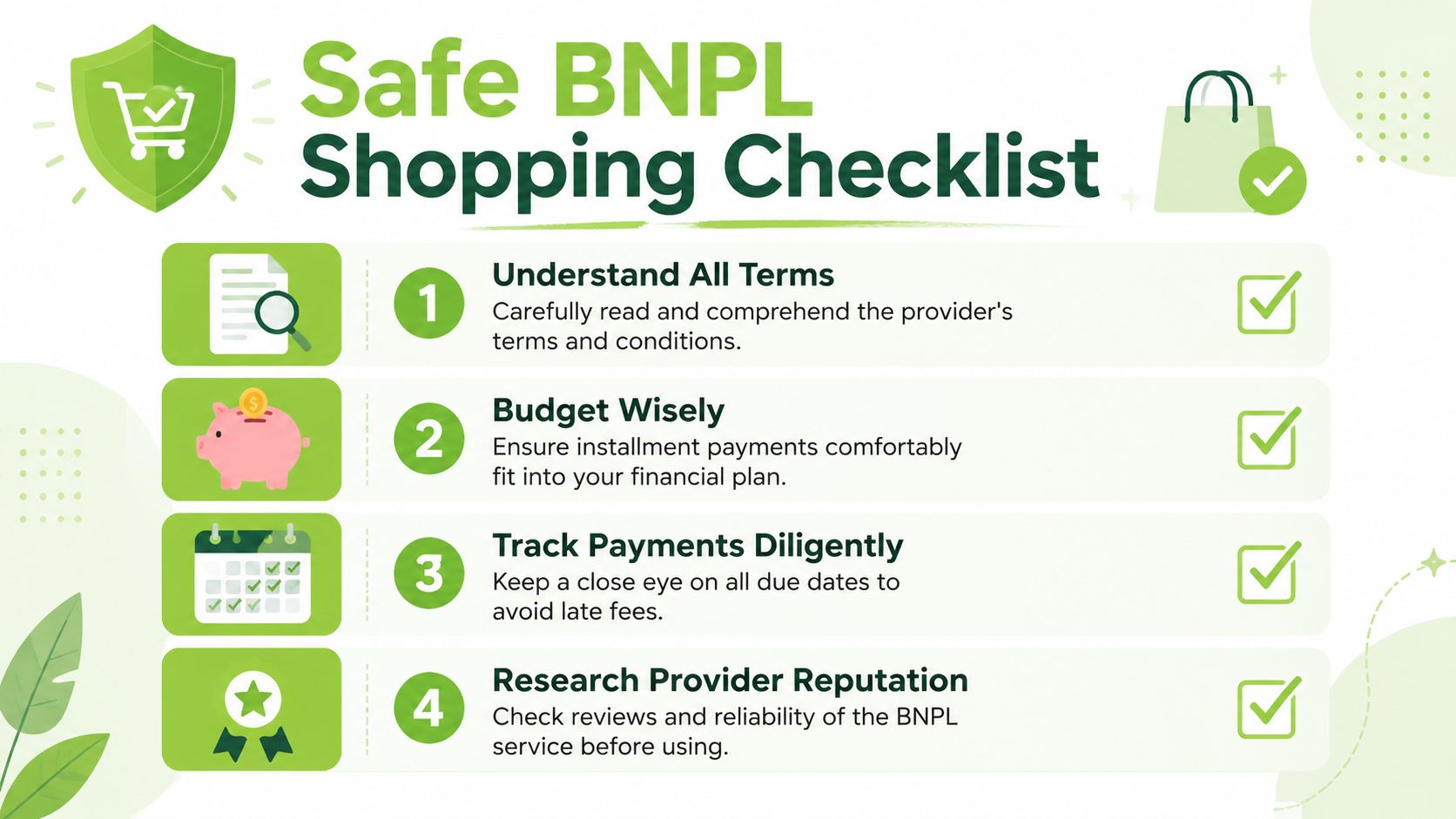
A quick safety checklist
Use this before every BNPL purchase:
-
Understand all terms
Read the repayment schedule, late fee policy, and what happens after a failed payment. -
Budget for the full series, not the first payment
The first instalment is the easiest one. The later ones are the test. -
Track due dates outside the app
Put them in your calendar or budgeting tool. Don't rely on memory. -
Check whether you're stacking plans
One plan can be manageable. Several plans can blur into one monthly burden. -
Know the return and refund process
If you're buying tech online, you need to understand how refunds interact with outstanding instalments. This is especially important when a store has a partial payment policy.
FAQs
Does BNPL make sense for affordable tech?
Yes, if the purchase is necessary, the repayments fit your budget, and you've read the fee rules carefully.
Is BNPL safer than a credit card?
Not automatically. It can feel simpler, but simplicity at checkout doesn't remove repayment risk.
What if I forget a payment?
That depends on the provider's policy, but missed payments can lead to fees, restrictions, and possible credit consequences.
Should I use BNPL for accessories too?
Usually only if you're bundling them with a necessary device purchase and the total remains comfortable. Financing impulse add-ons is where discipline tends to slip.
What's the best mindset to have?
Treat BNPL like a short loan, not like a discount.
If you're comparing device cost, trade-in value, and instalment flexibility before you buy, browse myhalo and evaluate the total purchase, not just the first payment. That's the simplest way to keep buy now pay later useful instead of expensive.