





Mobile Price in Singapore 2026: Find Your Best Deal
Mobile phones in Singapore range from S$129 for entry-level 4G models to over S$2,000 for premium flagships, and most buyers land between S$300 and S$800 for a mid-range 5G device. Whatever price you see, remember that a 9% GST is added at checkout, so the actual buying decision isn't just sticker price.
That's where many shoppers get stuck. You compare an iPhone, a Samsung Galaxy, a Pixel, and a refurbished option, and suddenly the “cheapest” choice isn't obviously the smartest one anymore. For students, families, and SMEs, the better question is usually not “What's the lowest mobile price in Singapore?” but “What will this phone cost me over the full time I own it?”
A sensible phone purchase includes device condition, expected lifespan, repairability, trade-in potential, battery health, and whether the seller is transparent about what you're getting. That lifecycle view matters even more in Singapore, where phone ownership is already firmly established in daily work and personal life.
Table of Contents
Understanding Mobile Phone Prices in Singapore
You check a phone online for S$699, walk into a mall kiosk and see a similar model at S$829, then find another listing marked open-box or refurbished at a much lower price. The spread looks confusing until you ask a better question: what will this phone really cost over the time you own it?
In Singapore, the smart way to read mobile price is to look past the sticker. GST affects the final bill, seller support affects your risk, and the device's later resale or trade-in value affects what you spent. A cheaper phone can cost more over two years if it needs an early battery replacement, has weak resale demand, or comes with poor warranty support.
The listed price also hides details that matter in daily use. Condition, battery health, storage tier, regional set status, repairability, and software support all change the effective value of the deal. Buyers who compare only by brand or launch price usually miss those costs.
A practical comparison should cover four checks first:
- Condition: Is it brand new, open-box, certified refurbished, or used?
- Ownership cost: Will you likely spend on repairs, battery replacement, or accessories sooner than expected?
- Exit value: Does the model hold enough trade-in or resale value to lower your next upgrade cost?
- Seller support: Is there a clear warranty, exchange policy, and disclosure of device health?
This is the difference between buying a cheap phone and buying a phone cheaply.
Singapore is a mature smartphone market, so price gaps often come from lifecycle position rather than raw hardware alone. A one-year-old flagship, a current mid-range model, and a certified refurbished premium phone can sit close together on price while offering very different long-term value. That is why I advise buyers to compare total cost of ownership first, then compare retail price.
If you are weighing lower-cost options, it helps to review what to check before buying a refurbished phone in Singapore. A careful inspection of warranty terms, battery condition, and grading standards usually tells you more than the headline discount.
New As-New ReLoved or ReEco Which Is Right for You
A lot of price confusion disappears once you sort phones by condition instead of by brand alone. That's often the missing step.
Why sticker price alone misleads
A factory-sealed phone will usually cost more because you're paying for untouched condition and the newest retail channel. An as-new phone can deliver nearly the same experience if it's open-box or minimally handled, especially for buyers who want a premium feel without paying the highest premium.
Certified refurbished sits in a more practical middle ground. In Singapore, professionally refurbished smartphones such as the Samsung Galaxy S24 Ultra can cost approximately 40 to 50% less than their brand-new equivalents, with 14-day hassle-free exchange and warranty protection available through certified programmes, based on this refurbished Samsung collection in Singapore.
That's a meaningful difference for anyone who wants higher-tier hardware without stretching the budget.
Comparing Device Conditions at a Glance
| Condition | Description | Typical Savings | Best For |
|---|---|---|---|
| Brand New | Factory sealed, untouched retail unit | Lowest savings | Buyers who want the latest release and sealed packaging |
| As-New | Open-box or near-flawless device with minimal signs of handling | Some savings versus sealed retail | Buyers who want close to new condition without paying full retail |
| Certified ReLoved | Professionally refurbished device with transparent grading, battery health disclosure, and 30-point quality checks | Often the strongest value for performance per dollar | Students, families, professionals, and SMEs balancing reliability with budget |
| ReEco | Fully functional device with visible cosmetic wear | Maximum upfront savings | Buyers who prioritise function over appearance |
How to choose the right condition
Pick Brand New if you want first-use ownership, the latest launch window, or you're buying for a role where sealed stock matters for policy reasons.
Choose As-New when appearance matters almost as much as price. This is often a sensible category for gifts, first-job buyers, or anyone who wants the “new phone feel” without insisting on factory seal.
Certified ReLoved is usually where long-term value gets interesting. With transparent device grading, battery health disclosure, and 30-point quality checks, a properly refurbished device stops being a gamble and becomes a purchasing strategy. If the refurbishment workflow is tied to ISO 9001 Certified quality processes and the seller also handles data with ISO 27001 Certified discipline, that matters for SMEs and anyone carrying sensitive personal or business information.
ReEco suits buyers who care more about function than cosmetics. If your phone spends most of its life in a case, a few marks on the housing may be an easy trade-off for better value.
For anyone considering refurbished, it helps to review these things to look out for before buying a refurbished phone. A certified refurbished device and an ordinary second-hand listing aren't the same thing, and treating them as equal is where many bad purchases start.
Cosmetic wear affects appearance. It doesn't automatically tell you anything about functional reliability. Poor inspection does.
What Really Determines a Mobile Phone's Price Tag
Some buyers assume price comes down to brand alone. Brand matters, but it's only one layer.
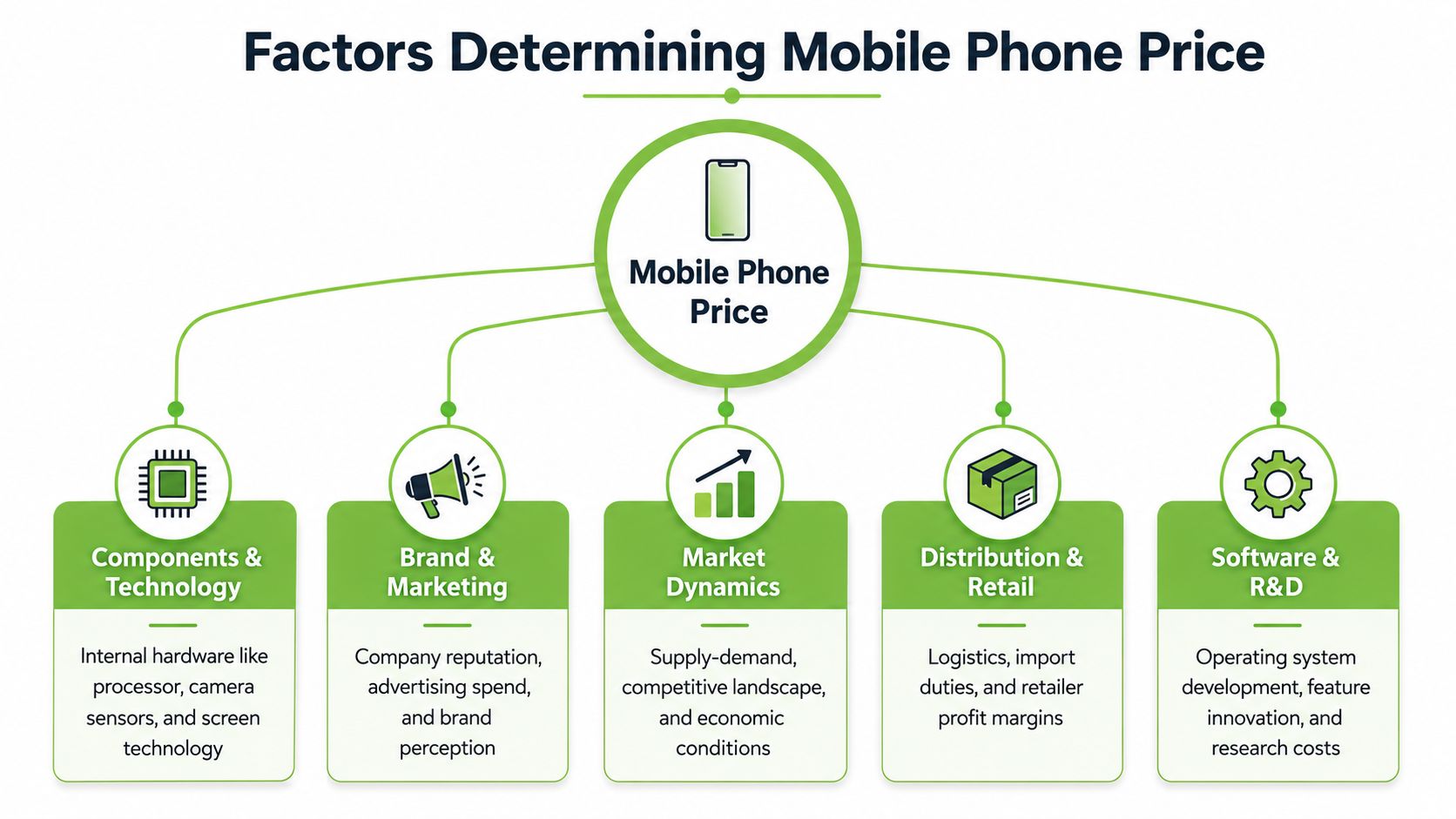
The biggest price drivers
The first driver is internal hardware. A newer processor, more storage, better camera sensors, and higher-end display technology all push pricing upwards. It's comparable to choosing a laptop for office work versus video editing. Both are computers, but one needs stronger internal parts.
The second driver is component cost volatility. In Singapore, smartphone average selling price rose 14% in 2026 to a record SGD 523, driven by a 14% increase in memory costs and brand moves towards higher-margin flagship models, according to this Singapore smartphone pricing report. When memory becomes more expensive, buyers feel it at retail.
The third factor is positioning within a brand's line-up. Entry models are designed for affordability. Mid-range models focus on balance. Flagships are priced around premium materials, top cameras, more storage options, and faster chips.
Why older models can still be smart buys
A newer release often nudges the previous generation into a better value bracket. That doesn't make the older phone outdated. It often means you're buying mature hardware at a more reasonable point in its lifecycle.
Here's the practical way to read a spec sheet:
- Processor generation: Newer chips usually help with speed, battery efficiency, and software longevity.
- RAM and storage: More memory helps with multitasking. More storage matters if you keep photos, videos, and business files locally.
- Display and camera system: These are often the features that separate a pleasant everyday phone from a premium one.
- Software support runway: A phone with ongoing updates tends to hold value better and stay safer to use longer.
If you won't use advanced zoom, ultra-high storage, or folding features, don't pay flagship money for them.
Retail and distribution costs also affect the final figure. Import handling, channel margins, bundled promotions, and local support all shape what ends up on the shelf. That's why the same buyer can look at several options and see sharply different prices for devices that appear similar on the surface.
How Much to Budget for Popular Phone Brands in 2026
A buyer walks into a shop expecting to spend S$1,000, then leaves wondering why one phone at that price feels expensive and another feels sensible. Brand plays a big part in that reaction. In Singapore, the smarter approach is to set a budget by ownership pattern, not just by logo.
Apple expectations
Apple usually sits in the premium bracket, and the primary question is not whether an iPhone costs more upfront. It often does. The better question is how long you plan to keep it, what resale value you can recover later, and whether paying more now reduces your upgrade cost over two or three years.
That changes the budget conversation. A new iPhone suits buyers who want long software support, strong accessory availability, and predictable trade-in demand. Buyers who want the same ecosystem without paying launch pricing should look closely at previous-generation devices and certified refurbished stock.
For shoppers comparing more affordable options before deciding whether to stretch for Apple, this guide to cheap mobile phones in Singapore helps map out the lower and middle parts of the market.
Samsung, Google and value-focused brands
Samsung gives buyers the widest spread. Galaxy A-series models cover practical day-to-day use at lower budgets. S-series phones and foldables move into premium pricing fast, but they also give more room to choose features selectively instead of paying flagship rates by default.
Google Pixel usually fits buyers who care about camera quality, clean Android software, and a simpler product range. The trade-off is that Pixel often sits closer to upper mid-range or premium Android pricing, so value depends on whether you will make use of those camera and software strengths.
Xiaomi, Oppo, and similar brands often make the most sense for buyers who want strong paper specs for the money. Bigger batteries, larger displays, and generous storage are common draws. The trade-off can be lower resale value, different software preferences, or a shorter comfort window before you start thinking about the next upgrade.
A practical budget framework looks like this:
- Entry budget: Good for calls, messaging, streaming, school use, and light work tasks. Plan for fewer camera strengths and a shorter ideal ownership cycle.
- Mid-range budget: Usually the strongest value point for Singapore buyers. Performance, battery life, storage, and repair economics often stay in balance in this range.
- Premium budget: Worth it only if you will benefit from better cameras, more storage, higher-end displays, stronger chipsets, or niche hardware such as foldables.
The smartest budget is the one that matches the full device lifecycle. Purchase price matters, but so do battery replacement costs, screen repair risk, resale demand, and whether an as-new or certified refurbished model gets you 80 to 90 percent of the experience for much less cash tied up on day one.
Finding the Best Value Beyond the Initial Price Tag
A low purchase price can still be expensive if the phone needs early replacement, lacks support, or has weak resale value.
Trade-ins lower your real upgrade cost
The strongest way to reduce total cost of ownership is to treat your current device as part of the next purchase. In Singapore, the trade-in market allows owners to receive instant on-the-spot price quotes after professional inspection, with doorstep collection available, making upgrades smoother while supporting device reuse, as described in this Singapore phone trade-in service overview.
That matters because the effective cost of a new phone isn't just what you pay. It's what you pay minus what your current phone is still worth.
If you're planning an upgrade, it helps to understand the process before you start. This guide on how to trade in your phone in Singapore lays out the practical checkpoints.
Support matters more than a small upfront saving
A phone with no meaningful support can become costly very quickly. Battery surprises, hidden wear, poor refurbishment standards, or uncertain device history can wipe out any initial savings.
That's why I prefer buyers to compare these factors side by side:
- Warranty coverage: Even basic protection changes the risk profile of the purchase.
- Exchange policy: A short inspection window protects you if the fit isn't right.
- Battery disclosure: You should know what shape the battery is in before buying.
- Grading transparency: Clear cosmetic grading prevents expectation mismatch.
One option in the market is myhalo, which positions itself around lifecycle support rather than one-off retail. Its range includes Certified ReLoved and Certified Surplus devices, plus repair, trade-in, migration support, RescueAdvise, and the mylo AI Assistant for buyers who need help matching specs to budget. That broader model matters because extending device lifespan is often more cost-effective than replacing hardware too early.
A slightly higher upfront price can be the cheaper decision when the device is properly checked, transparently graded, and easier to keep in service.
For SMEs, that isn't just about sustainability. It's about predictable costs, lower disruption, and better use of equipment already in circulation.
A Smart Buyer's Guide for Eco-Conscious and Budget Shoppers
Budget shopping and resource-conscious shopping often lead to the same answer. Buy a device that still has strong useful life left, don't overpay for features you won't use, and choose a seller that's transparent about condition.

For budget-focused buyers
If you're a student, a first-job buyer, or a small business equipping staff, don't assume the cheapest available phone is the best deal. A better move is usually to buy one tier higher in quality, but in a different condition category.
A practical shortlist looks like this:
- Certified ReLoved Value-grade devices: Good for buyers who want reliable performance without paying new-device pricing.
- ReEco devices: Best when appearance matters less than function.
- Previous-generation flagships: Often a smart balance of camera quality, speed, and long-term usefulness.
That approach can stretch budget without pushing you into poor-quality listings or uncertain device history.
For buyers who care about resource efficiency
Choosing a refurbished or recirculated phone is a business-resilient decision as much as a sustainability one. It keeps useful hardware in service, reduces premature replacement, and directs spending towards value that remains productive.
For SMEs, this matters even more. Extending the life of a work phone through repair, reuse, or certified recirculation means lower capital pressure and smarter resource utilisation. For consumers, it can mean moving into a better class of device without carrying flagship cost.
This short video is a useful companion if you're weighing refurbished options and upgrade timing:
One simple timing tactic works well for both groups. Buy the previous year's flagship after a new model lands, especially if you don't need the latest camera trick or design change. You often retain much of the same user experience while avoiding the heaviest early pricing.
Buy for the next two to three years of use, not for launch-week excitement.
Making an Informed Mobile Purchase in Singapore
The best mobile price in Singapore usually isn't the lowest number on the page. It's the price that gives you the most useful life, the least friction, and the clearest path to repair, reuse, or trade-in later.
That means looking at phones as part of a full lifecycle. Device condition matters. Battery transparency matters. Warranty and exchange support matter. Trade-in value matters. A phone that's easier to maintain and easier to resell often beats a cheaper phone that becomes troublesome quickly.
For many buyers, especially in Singapore's mature mobile market, the smartest path is to step away from the simple new-versus-used mindset. Compare new, as-new, certified refurbished, and budget-friendly recirculated devices according to how you'll use them. If you're a light user, don't overspend on flagship features. If you run a business, don't underestimate the cost of unreliable hardware and patchy after-sales support.
A lifecycle partner can make that decision easier by helping with purchase, repair, migration, trade-in, and responsible recycling rather than treating the transaction as the end of the relationship. That's the more durable way to buy tech now.
If you want help narrowing your options, explore myhalo for Certified ReLoved and Certified Surplus devices, or use the mylo AI Assistant to match your budget, preferred condition, and day-to-day needs with a more sensible shortlist.