





Best Smartphone for Photography in Singapore 2026
You're probably looking at a shortlist that seems impossible to separate. One phone claims a huge megapixel count. Another promises AI magic. A third is praised for “natural” photos, but nobody explains what that means when you're shooting kopi on a café table, skyline views from Marina Bay, or product shots for a small online store.
That's the core issue when shopping for the best smartphone for photography in Singapore. Most buyers don't need marketing language. They need to know which phone gets skin tones right, which one holds up in hawker centre lighting, which one shoots reliable video, and whether buying a previous-generation flagship is a smarter move than chasing the latest launch.
This guide focuses on how camera hardware and software behave in real use. It weighs image style, low-light performance, zoom quality, video practicality, and long-term value. It also keeps one question in view that many camera-phone roundups ignore: whether the best result always requires buying brand new.
Table of Contents
- Choosing Your Next Camera Phone in a World of Hype
- Quick Picks Top Camera Phones in 2026 at a Glance
- Beyond Megapixels Key Camera Specs That Actually Matter
- The 2026 Flagship Camera Showdown
- Best Camera Phones for Specific Use Cases
- The Smart and Sustainable Choice Certified ReLoved Camera Phones
- Making Your Choice a Long-Term Investment with myhalo
Choosing Your Next Camera Phone in a World of Hype
Smartphone camera marketing still leans too hard on the wrong details. Megapixels dominate the headline, AI dominates the keynote, and buyers are left trying to decode whether any of that helps with a family dinner shot, a client-ready product image, or a clean portrait in mixed indoor light.
What matters is simpler. A good camera phone needs to make sensible decisions before you touch the shutter. It should expose faces properly, avoid ugly sharpening, preserve detail in bright skies, and stay dependable when the light drops. The best one for you also depends on what you shoot most often.
Some readers want the most natural stills. Others need zoom reach for events, steadier video for social content, or strong software for indoor product work. In Singapore, that difference shows up quickly because you're often moving between harsh daylight, reflective glass buildings, shopping centre interiors, and warm night scenes.
Practical rule: Ignore any single headline spec. Judge a camera phone by how its sensor, lenses, image processing, and video tools work together.
There's also a value question that deserves more attention. If a top-tier flagship from a recent generation still delivers excellent photos, paying less for that level of camera performance can be the smarter move for students, SMEs, and practical buyers who care about cost control as much as image quality.
A sensible buying filter looks like this:
- Choose by shooting style: Street photography, portraits, food, product shots, and video all reward different strengths.
- Check image character: Some phones push colour and contrast. Others aim for a more realistic look.
- Think beyond launch year: A slightly older flagship can still outperform many newer mid-range phones.
- Consider ownership lifespan: Repairability, battery disclosure, grading transparency, and support matter if you plan to keep the phone for years.
That's the lens I'd use to choose the best smartphone for photography today. Not hype. Not spec-sheet theatre. Just the camera system that fits your work, your habits, and your budget.
Quick Picks Top Camera Phones in 2026 at a Glance
A quick shortlist helps when you are comparing phones in a store, checking resale pricing, or deciding whether a recent flagship is worth buying new or through a certified refurbished programme. These are the models I'd point most buyers to first.
| Category | Top Recommendation | Why It Wins |
|---|---|---|
| Best Overall | Apple iPhone 17 Pro | The safest pick for buyers who want reliable results across daylight, portraits, night scenes, and social video. It usually gives the most consistent colour and exposure with very little effort. |
| Best for Video Creators | Samsung Galaxy S25 Ultra | The strongest option for buyers who shoot lots of reels, events, or handheld video. Its stabilisation, resolution options, and long zoom range make it more useful than many rivals once you leave bright daylight. |
| Best for Photography Purists | Xiaomi 15 Ultra | The most appealing choice for users who care about lens character, manual control, and hardware that rewards careful shooting. It is less point-and-shoot friendly, but more flexible in skilled hands. |
| Best Value Flagship | Google Pixel 8 Pro | The smart buy for buyers who want excellent image processing without paying current flagship prices. It still handles tricky indoor scenes, backlit shots, and quick edits very well. |
The shortlist matters, but price changes the ranking fast in Singapore.
A new flagship still makes sense for heavy shooters who want the best zoom, longest software support, or top-tier video tools. For many buyers, though, the better deal is a recent premium model bought through a vetted channel. A Certified ReLoved Pixel 8 Pro or iPhone Pro model can deliver flagship-grade camera output for far less than a brand-new release, provided battery health, parts history, and grading are clearly disclosed.
That matters if you shoot often and keep your phone for years. Camera quality does not collapse just because a phone is refurbished. What matters is the condition of the lenses, sensor performance, stabilisation, and whether the seller has checked for focus issues, haze, or replaced modules. If you also shoot lots of 4K clips, burst photos, or RAW files, it helps to understand how to choose the right memory card or microSD card for the devices and workflows around your phone.
There is also a practical image-quality point that buyers miss. Strong cameras are only part of the pipeline. Heavy editing, aggressive app compression, and repeated uploads can damage fine detail, which affects both visible quality and the impact on AI image detection.
My quick buying view is simple. Choose iPhone 17 Pro for consistency, Galaxy S25 Ultra for serious video and zoom, Xiaomi 15 Ultra for hands-on photography, and Pixel 8 Pro for value. If budget matters, check the same shortlist in Certified ReLoved or Certified Surplus condition before paying full flagship price.
Beyond Megapixels Key Camera Specs That Actually Matter
Most buyers still start with megapixels because it's the easiest spec to compare. It's also one of the least useful on its own. A camera phone produces a good image when the sensor gathers enough light, the lens gives the right field of view, the stabilisation keeps frames sharp, and the software processes the file without wrecking texture or colour.
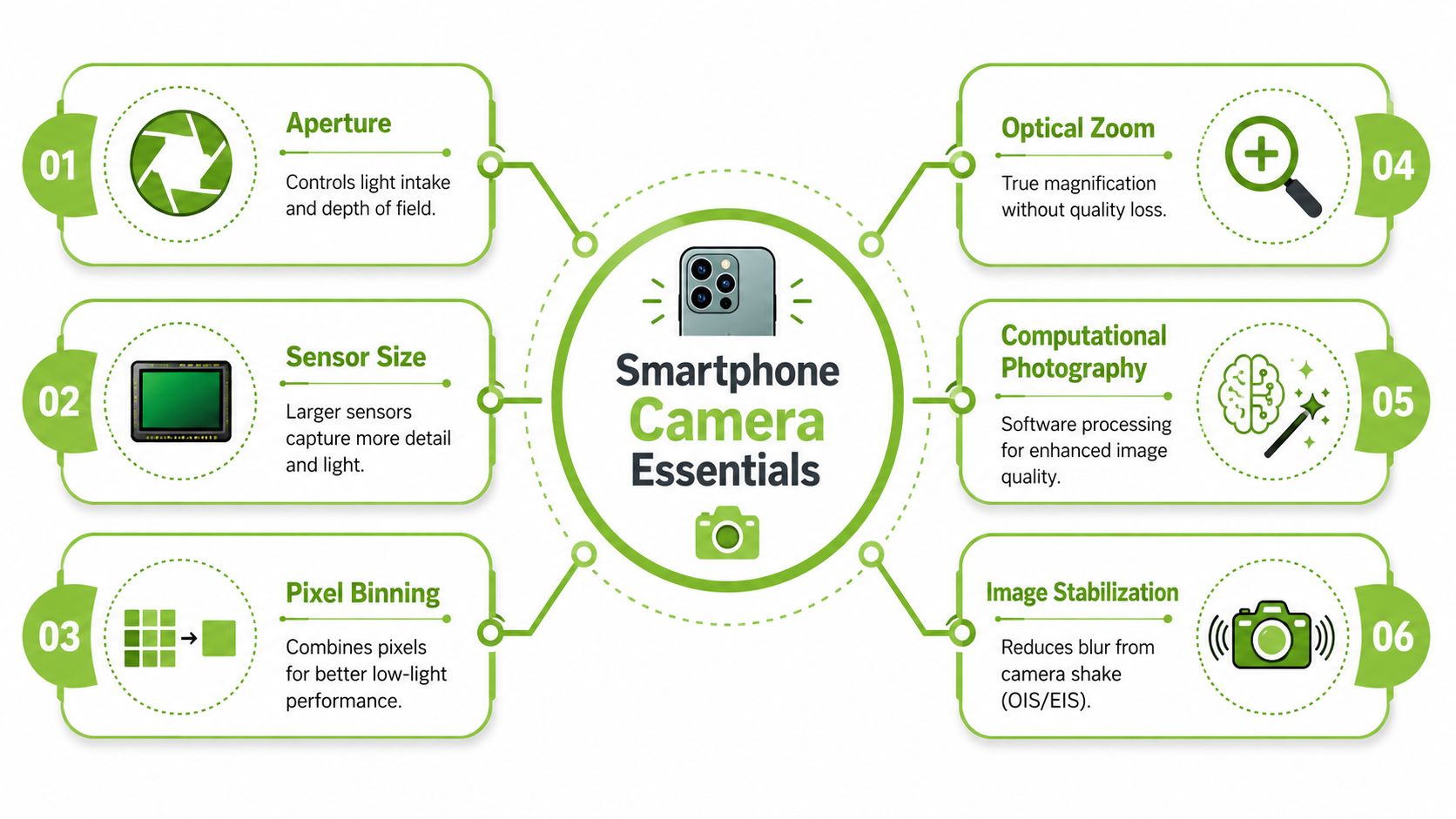
Sensor size decides how much light you keep
A bigger sensor usually gives you a cleaner file, especially in dim conditions. In plain terms, it catches more light. That helps with detail, shadow retention, and noise control when you're shooting indoors, under evening skies, or in mixed lighting around malls and restaurants.
Aperture matters too, but people often oversimplify it. A wider aperture lets in more light, yet it doesn't save a weak sensor or poor image processing. What you want is balance. Good hardware gives the phone better raw material to work with before software takes over.
Image stabilisation is another spec that sounds abstract until you use it at night. Optical stabilisation helps the camera hold a sharper frame when your hands move slightly. That matters for low-light street scenes, food photos under warm lights, and handheld indoor shots where blur creeps in quickly.
Lenses change what you can shoot
The lens mix is often more important than the main sensor headline. An ultra-wide lens is useful for architecture, interiors, and travel. A telephoto lens is what makes portraits look more flattering and what lets you zoom without the mushy look of digital crop.
Optical zoom is the one to prioritise. Digital zoom can still be usable, but once the phone starts inventing detail too aggressively, image quality falls apart. If you shoot events, stage performances, pets, or children from a distance, telephoto quality matters more than a higher megapixel claim.
A lot of buyers also forget storage when they start shooting more seriously. Large photo libraries and higher-quality video eat space quickly, so it's worth understanding how memory cards and micro SD cards differ, even if your next phone itself doesn't support expandable storage.
Software shapes the final image
Modern camera phones distinguish themselves here. Computational photography involves the phone using software to blend frames, improve dynamic range, reduce noise, and tune colour. Sometimes that's brilliant. Sometimes it goes too far and the image stops looking believable.
According to the 2025 Singapore Smart Photography Report, the Google Pixel 8 Pro remains the top smartphone for photography software in Singapore, winning 63% of 8,920 blind camera test votes among local creators, especially for product photography, as noted in the report reference. That makes sense because strong software can rescue difficult indoor scenes where small businesses often work without a full lighting setup.
There's a trade-off, though. More processing can introduce textures that look too polished, or create compression artefacts after editing and reposting. If you work with social commerce images, it helps to understand the impact on AI image detection because repeated compression and aggressive enhancement can alter how an image appears across platforms.
- Sensor size: Better low-light results and cleaner detail.
- Optical zoom: More useful than inflated digital zoom claims.
- Stabilisation: Essential for handheld night shots and smoother video.
- Computational photography: Powerful, but best when it improves rather than over-processes.
The 2026 Flagship Camera Showdown
No flagship gets everything right in the same way. Each brand has a camera philosophy, and you can see it in the files. Some phones chase impact on first glance. Others try to keep the image honest. Some reward manual control. Others do their best work when you point and shoot.
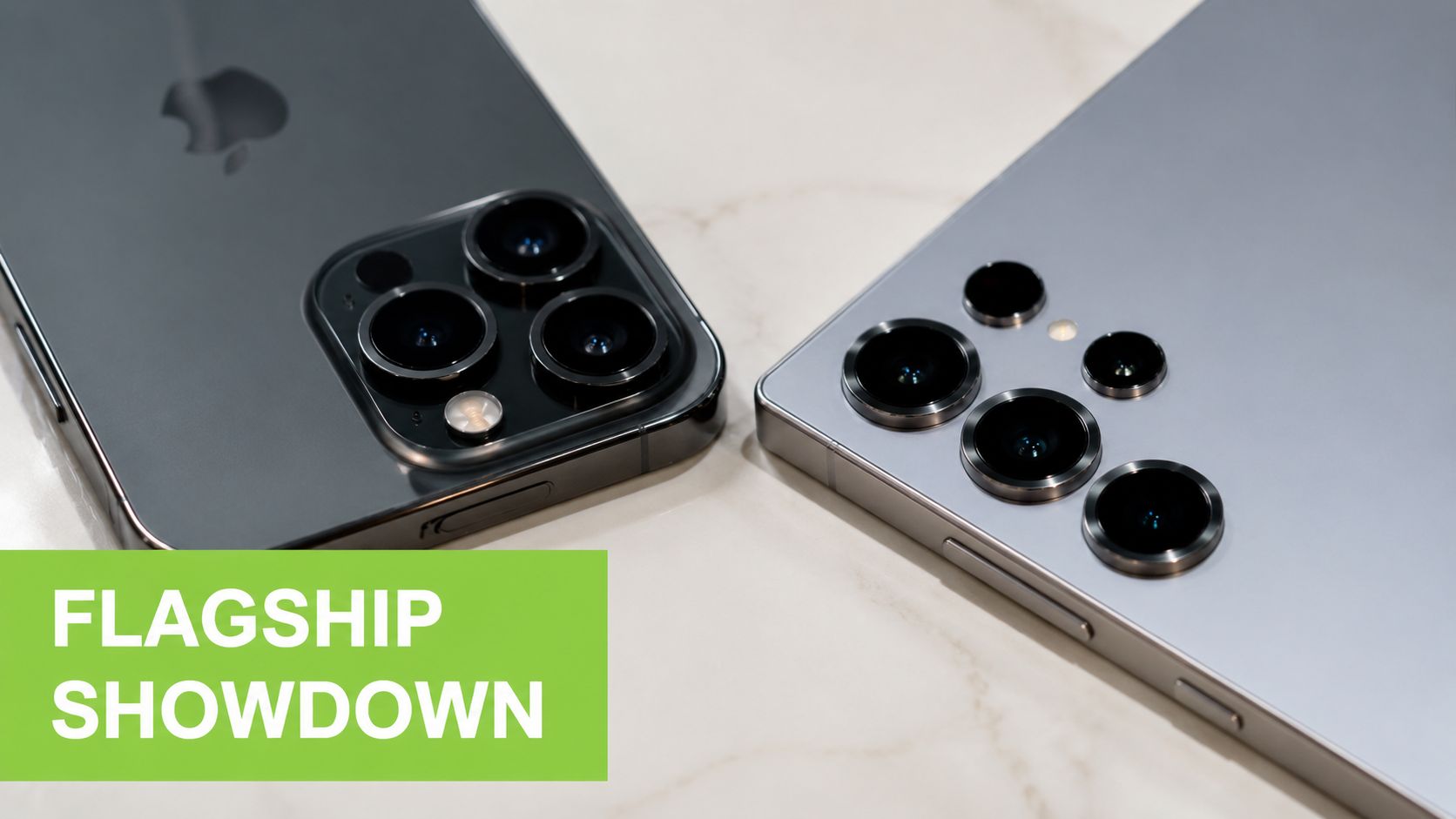
Samsung Galaxy S25 Ultra and OPPO Find X8 Pro
In Singapore, the HardwareZone 2026 annual camera phone survey identified the OPPO Find X8 Pro and Samsung Galaxy S25 Ultra as joint winners, with 48% of 12,450 Singaporean respondents choosing these models for their photography performance in local daylight and night conditions. That result matters because it reflects actual local shooting preferences, not a generic global ranking.
The OPPO case is especially interesting. HardwareZone notes that the Find X8 Pro includes a 50-megapixel main sensor, a 50-megapixel short-range telephoto at 3x zoom, and a 50-megapixel ultra-wide camera with a 14mm field of view. In practical use, that kind of lens spread gives you flexibility. Product shots, tighter framing, and broad city scenes all become easier without forcing extreme crops.
Samsung's Ultra appeal is more straightforward. It's the phone for buyers who want range, visual punch, and versatility in one device. If you're the type who shoots everything from food to concerts to skyline details from a rooftop bar, Samsung's approach usually feels generous rather than restrained.
There's a style difference between these two. OPPO leans into refined detail and flexibility across focal lengths. Samsung often gives you a more immediately dramatic image. Neither approach is wrong. It depends on whether you prefer realism or impact straight out of camera.
iPhone 17 Pro
The iPhone 17 Pro wins on restraint. It's identified by TechRadar as the best camera phone for most types of photos because it produces images that resemble real photography without obvious digital tricks or automatic touch-ups.
That sounds subtle, but it's a major advantage. Natural rendering matters when you photograph people, clothing, food, or products that need believable colour. A phone that doesn't overdo sharpening or HDR gives you files that feel more reliable and easier to edit later.
If you often think, “This scene looked nicer in real life than it does on my phone,” you probably want a camera with a more natural processing style.
The iPhone is also the easiest recommendation for buyers who don't want to fight the camera. It behaves predictably. Exposure is usually sensible. Skin tones tend to stay grounded. For many people, that consistency is more valuable than having the most aggressive zoom or the most dramatic night mode.
A related point is longevity. Many buyers considering an iPhone aren't only comparing image quality. They're also weighing how well an older Pro model holds up over time. If that's your lane, it's worth reading a grounded take on the Google Pixel 7 Pro versus newer alternatives because it highlights the broader question of whether recent flagships stay competitive longer than many assume.
Later in your decision process, it also helps to watch a side-by-side discussion rather than rely only on sample galleries.
Google Pixel 10 Pro XL and Pixel 8 Pro
For still photography specifically, the Digital Camera World buying guide ranks the Google Pixel 10 Pro XL and Pixel 9 Pro as the best camera phones for stills, especially for photo enthusiasts who care more about AI editing smarts than video capability.
That fits the Pixel identity. Google is strongest when software improves difficult scenes with minimal effort from the user. If you shoot indoor products, casual portraits, documents, or quick travel snaps and want a high hit rate, Pixel's computational approach remains one of the most practical on the market.
The caution is simple. If you dislike heavy software involvement, Pixel's strengths can also become its weakness. Some users love the convenience. Others prefer a file that feels less interpreted.
Xiaomi 15 Ultra
The Xiaomi 15 Ultra is the enthusiast's flagship. Photobohemian recommends it as the top choice for people who prioritise exceptional features, fantastic lenses, and a high-performance sensor that shines in experienced hands.
That last phrase matters. Xiaomi isn't always the most forgiving camera for casual users who just want instant consistency. But if you enjoy experimenting with focal lengths, exposure choices, and image character, it can be one of the most rewarding phones to carry.
For advanced users, Xiaomi often feels closer to a photographic tool than a social-first camera. That's a niche, but it's a real one.
Best Camera Phones for Specific Use Cases
A phone camera earns its keep in ordinary moments. Dim hawker centre dinners, backlit Marina Bay selfies, school concerts shot from the last row, and quick product photos under office lighting expose the strengths and weaknesses far faster than a spec sheet does.
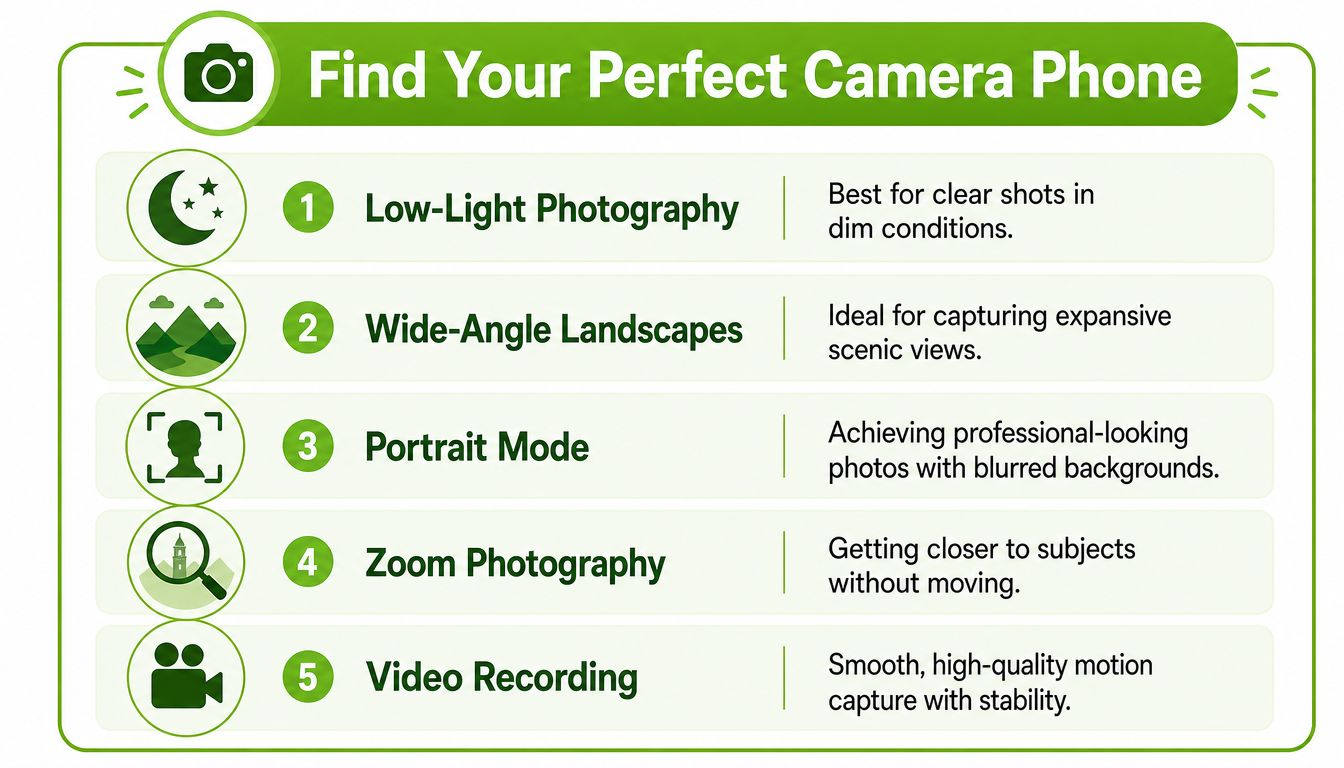
For portraits and people shots
The iPhone 17 Pro remains the safe pick for people photos because it usually gets skin tones, contrast, and exposure right without much correction after the shot. That matters in Singapore's mixed lighting, where faces can shift from warm indoor light to harsh daylight within a few steps. If you want a camera that flatters without making people look processed, iPhone is still hard to beat.
The Samsung Galaxy S25 Ultra makes a stronger case if portrait shooting means distance, stage events, or tighter framing. Its longer zoom options let you shoot from farther back, which gives faces a more natural look than standing close with a wide lens.
- Choose iPhone for natural colour and a high hit rate with family, kids, and social photos.
- Choose Samsung for portraits that benefit from telephoto reach, such as performances, candid street shots, and pet photos.
For city nights and indoor scenes
Low light separates good phone cameras from marketing. The Google Pixel 8 Pro is still one of the easiest phones to trust for indoor meals, café shots, and product photos because its image processing cleans up difficult scenes without much user effort. That makes it a practical choice for buyers who want reliable results straight out of camera.
The OPPO Find X8 Pro is the better fit if you want that low-light reliability with more focal length options. For daily use, that flexibility is useful. One phone can cover food, interiors, street scenes, and closer detail shots without forcing heavy cropping later.
Clean night photos come from restraint. The best phones keep shadow detail and texture without turning every dark area into a bright, flat smear.
For pro-grade video
Video buyers should be stricter than photo buyers. Resolution matters, but stability, exposure control, microphone support, and heat management matter more once recording runs past a few casual clips.
The Samsung Galaxy S25 Ultra suits users who want manual control, long zoom reach, and a more flexible shooting setup for events, property walkthroughs, or content production. The iPhone 17 Pro is still the simpler recommendation for creators who need dependable colour, predictable autofocus, and fewer surprises across different apps.
If you shoot reels, interviews, or client content, check these points before buying:
- Stabilisation: Walking footage should stay usable without heavy post-fixing.
- Exposure behaviour: Bright signs, indoor spotlights, and reflective shopfronts should not cause constant brightness shifts.
- Audio options: USB-C or wireless mic workflows should be easy to set up in real use.
- Thermals and battery drain: Long 4K sessions can expose weaker phones quickly.
For travel and wide scenes
The OPPO Find X8 Pro is easy to recommend for travel in Singapore and around the region because a very wide ultra-wide camera helps in tight spaces. It is useful in temples, museums, hotel rooms, shophouse streets, and skyline viewpoints where stepping back is not possible.
The Xiaomi 15 Ultra suits travellers who treat photography as part of the trip, not just a record of it. Its camera system rewards patience. If you enjoy choosing focal lengths carefully and making small exposure adjustments before pressing the shutter, Xiaomi gives you more room to shape the final image.
Travel buyers should also think beyond launch-year hype. A recent flagship bought refurbished can still produce excellent holiday photos if the cameras have been properly tested. Buyers who want better value should read these things to look out for before buying a refurbished phone, especially if camera condition is the main concern.
After the trip, sharing well matters too. If you post parks, wildlife, or hiking images regularly, this guide can help you improve your nature photography tagging strategy.
The Smart and Sustainable Choice Certified ReLoved Camera Phones
The assumption that you need a brand-new flagship for serious mobile photography doesn't hold up as well as many buyers think. Camera performance doesn't suddenly become irrelevant just because a phone is one generation older or professionally refurbished. In many cases, the smarter buy is the one that gives you high-end optics and processing without tying up more cash than necessary.
Why refurbished camera phones deserve a second look
The market continues to be distorted by fear. While 78% of Singaporeans prioritise sustainable tech, 63% skip refurbished phones fearing camera degradation. Yet lab tests show 92% of myhalo's 'As-New' graded units retain 98% of original sensor performance, according to the Singapore-based reference on refurbished camera concerns.
That's the gap most buyers need to understand. The camera quality concern is real, but it isn't automatically justified when the device has been professionally graded and tested.
A previous-generation flagship can be a strong photography buy for three reasons:
- You're buying proven camera hardware: Good sensors and good lenses don't stop being good just because a newer model launched.
- You avoid paying for marginal upgrades: Many annual camera changes are noticeable on spec sheets more than in everyday shooting.
- You improve resource use: Extending device life supports business resilience and smarter budget allocation, not just environmental goals.
For anyone considering this route, a practical checklist helps. This guide on what to look out for before buying a refurbished phone is useful because it focuses on condition, checks, and what buyers should verify before deciding.
Who should buy this way
A Certified ReLoved flagship makes the most sense for buyers who care about image quality but don't need the newest release cycle. That includes students, content creators working within a fixed budget, and SMEs equipping staff for social media, documentation, or lightweight product photography.
Certified Surplus devices can also make sense when the priority is dependable business use with good camera output, not prestige. The key is transparent grading, battery health disclosure, and proper testing standards. Those details matter far more than glossy marketing language.
A sustainable tech choice is strongest when it also improves value, lowers wasteful replacement cycles, and keeps useful hardware in service longer.
Making Your Choice a Long-Term Investment with myhalo
The best smartphone for photography isn't just the one that looks strongest on launch day. It's the one that still works for you after months of shoots, software updates, storage pressure, battery wear, and the occasional accident. That's why buying a camera phone should be treated as a lifecycle decision, not a one-off transaction.
myhalo fits that role best as a technology lifecycle partner. Beyond devices, the practical advantage comes from services that help users keep good hardware useful for longer. That includes repair support, reuse pathways, responsible recycling, and access to both Certified ReLoved and Certified Surplus options for buyers who want better value without guessing about device condition.
For consumers and SMEs, that approach supports cost savings and steadier planning. A phone that can be maintained, repaired, traded in, or replaced through a transparent grading system is easier to budget around than one treated as disposable. It also helps when device checks are structured, battery health is disclosed clearly, and processes are backed by ISO 9001 Certified and ISO 27001 Certified standards.
There's also a practical support layer. 30-point quality checks, RescueAdvise, and the mylo AI Assistant matter because they reduce uncertainty before and after purchase. Whether you're upgrading a personal camera phone, sourcing devices for staff, or trying to extend the life of an existing handset, that kind of support makes ownership more predictable.
A smart camera phone purchase should create options. Keep it longer, repair it, reuse it, trade it in responsibly, or move into another device class when your needs change. That's a more durable way to buy tech in Singapore.
If you're comparing flagship camera phones, older Pro models, or sustainable alternatives that still take excellent photos, explore myhalo for Certified ReLoved and Certified Surplus devices, transparent grading, battery health disclosure, and support that helps you extend device life through repair, reuse, and responsible recycling.