





StarHub Phone Trade in: A Complete 2026 Guide
You've got an old phone in a drawer, maybe an iPhone 13, maybe a Samsung that still powers on, and you're wondering if a StarHub phone trade in is the cleanest way to get value out of it. The headline looks tempting, especially when StarHub advertises up to S$1,200 cashback and payout within 2 business days through its local trade-in flow, but the question is simpler: does that value apply to your device and your situation? StarHub's trade-in page makes the process look quick, but quick doesn't always mean best value.
The mistake is treating telco trade-ins like a universal answer. They're not. If you're buying a new phone on contract, the deal can be neat and convenient. If you just want cash, or your phone isn't on the eligible list, the picture changes fast.
Table of Contents
- Why Singaporeans Are Rethinking Telco Trade-Ins
- Preparing Your Device Before Starting a Trade-In
- How the StarHub Trade-In Process Works
- Understanding Trade-In Value and Eligibility Criteria
- Data Wipe and SIM Transfer Before Handing Over Your Phone
- When an Independent Buyback Service Offers Better Value
- Making the Right Trade-In Decision for Your Situation
Why Singaporeans Are Rethinking Telco Trade-Ins
A lot of Singaporeans still default to the telco route because it feels safe. You hand over the phone, get a quote, and move on. That works well when the old handset is tied to a new purchase, but it's a weaker deal when you're only trying to turn an old device into cash.
Take the common drawer scenario. Your phone still charges, the screen is fine, and you've seen a big cashback headline from StarHub. The problem is that advertised maximums are usually the top end of the range, not the amount most phones get. The payout depends on exact model eligibility, condition, and whether the phone fits the device list.
Practical rule: if a trade-in offer sounds generous at first glance, check whether it's a cash payout, a bundle offset, or a trade value tied to a new handset. Those are very different outcomes.
The reason this matters in Singapore is simple, people don't upgrade in the same way anymore. Some want to reduce clutter, some want to recycle responsibly, and some just want the highest possible return from a still-usable phone. A telco trade-in can serve those goals, but not equally well in every case.
StarHub's own structure shows that the programme is built for short decision cycles and fast settlement, with a quote validity window of 7 days and payout within 2 business days after verification in its standard flow StarHub trade-in FAQ. That's efficient. It doesn't automatically make it the most valuable route for every device.
The smarter move is to treat the StarHub phone trade in as one option in a wider resale decision, not the default answer. If your goal is upgrading on contract, it can be tidy. If your goal is maximising cash, compare it properly.
Preparing Your Device Before Starting a Trade-In
Start with the device itself, not the form. A clean trade-in begins with a phone that matches what you declare online, because the biggest reason quotes get revised is condition mismatch. If the handset powers on but the screen has issues, or if there's cosmetic wear you didn't disclose, the final value can change on the spot.
Check eligibility before you do anything else
The first filter is model eligibility. StarHub says trade-in value is strongest for listed devices, while handsets that aren't on the list may receive only S$10 StarHub terms. That's not a typo, it's the main reason pre-checking matters. If your phone isn't on the drop-down list, the trade-in is usually not the route you want.
Before you submit details, confirm these points:
- Model and variant: Make sure the exact model appears in the device list, not just a similar version.
- IMEI: Find the IMEI first, because StarHub's workflow is IMEI-based and each phone must be separately listed.
- Condition: Look closely for scratches, cracked glass, liquid damage, charging issues, and any sign the phone won't power on normally.
- Locks and accounts: Remove active locks and sign-outs before you hand over the device.
Use the condition checks as your own audit
StarHub's acceptance criteria are strict. The phone must power on and off, charge normally, display clearly, and be free from cosmetic damage, liquid damage, missing or non-original parts, and active locks StarHub device trade-in terms. Apple devices also need Find My iPhone or iPad and the cloud ID switched off before reset.
That sounds bureaucratic, but it's useful. A quick self-audit before submission protects you from a revised quote later. If the phone fails one of those checks, you can decide early whether to repair it, trade it elsewhere, or keep it as a spare device.
For a broader resale checklist, I'd also compare your options against this Singapore phone trade-in guide before committing.
How the StarHub Trade-In Process Works
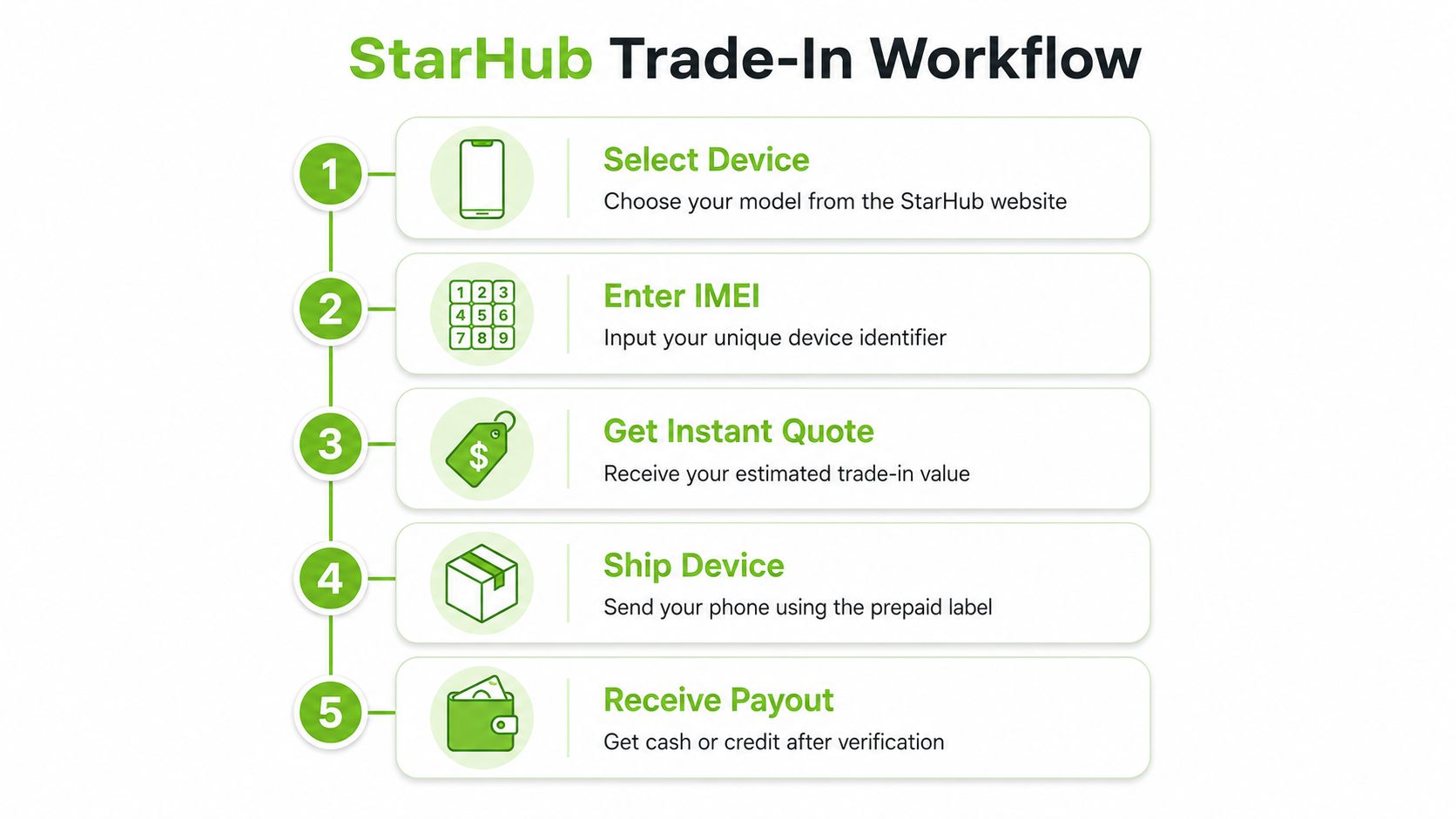
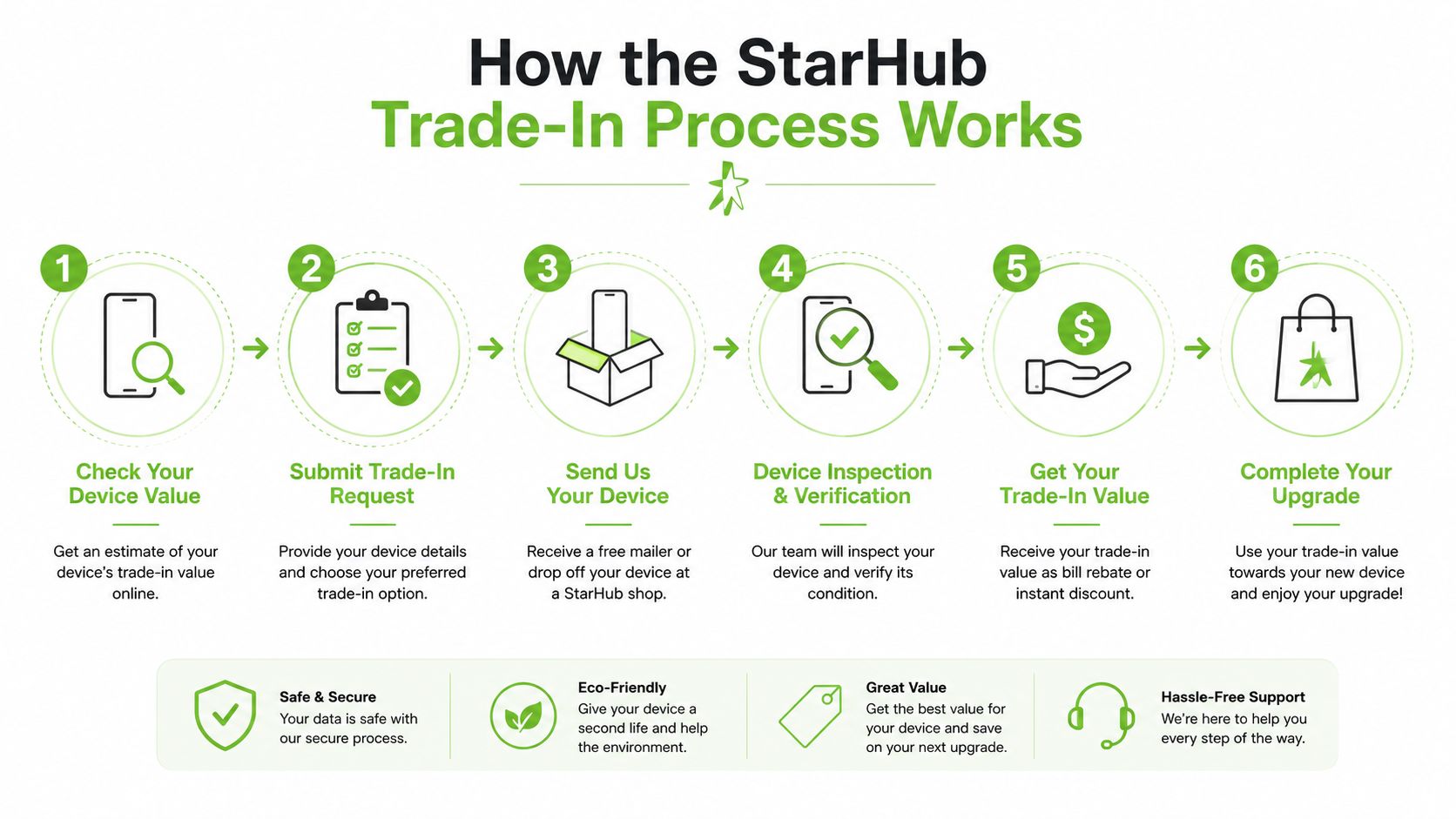
StarHub's standard trade-in flow is straightforward, which is why many people use it without much hesitation. You enter the device details, choose the exact model from the list, declare the condition, review the initial quote, then arrange pickup or drop-off and submit PayNow details. After inspection, payout follows within 2 business days if the phone matches what you declared StarHub support article.
The key point is that the quote is not a promise until the inspection passes. It's an estimate. That distinction matters because the most common friction point is the inspection result, not the online submission.
The seven-day decision window is useful, but don't treat it like free time
StarHub says the quotation stays valid for 7 days StarHub trade-in page. That gives you a short but useful decision window if you're checking prices, backing up data, or waiting for your new phone to arrive. It also means you shouldn't procrastinate for weeks and expect the same quote to still hold.
The payout route is flexible too. StarHub's terms describe payout as bank transfer cash or StarHub credits, depending on the pathway you use StarHub terms PDF. That flexibility helps if you're already planning a StarHub upgrade, because the value can sit neatly inside the same purchase flow.
Revised quotes are where people lose time
The inspection stage is where the process can change. If the device doesn't match the declared condition, StarHub issues a revised quote on the spot and you can accept or reject it with no obligation to continue StarHub support article. That's fair, but it can still be disappointing if you expected a smoother handover.
If the value matters to you, be conservative in the online condition declaration. A slightly lower initial estimate is better than an optimistic quote that gets cut later.
Understanding Trade-In Value and Eligibility Criteria
StarHub's trade-in programme is structured, not random. That's a good thing, because structured value is easier to compare against other channels. The catch is that the value is often strongest when it's used the way StarHub intends, as an offset against a new device purchase on a 2-year contract or EasyGo StarHub trade-in terms.
The value tiers also show that this is more than a scrap programme. Eligible devices can receive at least 50% of the device RRP under one pathway, or at least 30% under another, with payout either as cash or StarHub credits StarHub terms PDF. That only helps if your handset sits inside the eligible framework.
What the table really tells you
| Pathway | Minimum Value | Payout Method | Key Condition |
|---|---|---|---|
| Eligible device pathway one | 50% of device RRP | Cash or StarHub credits | Device must qualify under the stated programme terms |
| Eligible device pathway two | 30% of device RRP | Cash or StarHub credits | Device must qualify under the stated programme terms |
| Non-listed handset | S$10 | Trade-in value only | Phone is not on the eligible list |
For Samsung users, there's a separate guarantee structure. StarHub says the Samsung trade-in guarantee applies only to the latest-generation Galaxy S series bought through StarHub with SmartSupport from day one, with minimum trade-in values of 50% or more for the next Galaxy S series upgrade, 35% or more for any other mobile device before 31 March 2027, and 20% or more for any mobile device from 1 April 2027 to 31 March 2028 StarHub Samsung trade-in guarantee. That's meaningful if you stay inside that ecosystem. It's much less useful if you want freedom to shop around.
The practical lesson is blunt. If your device is on the list and you're already buying a new handset through StarHub, the trade-in can be solid. If your device isn't listed, or you don't want the purchase offset, the value gap becomes obvious.
For a second perspective on device resale logic, this phone buyback guide for Singapore is useful context.
Data Wipe and SIM Transfer Before Handing Over Your Phone
Don't hand over a phone with your data still on it. People get careless here because the trade-in process feels routine, but this is the point where your personal accounts, photos, messages, and payment apps are still in reach if you skip a step.
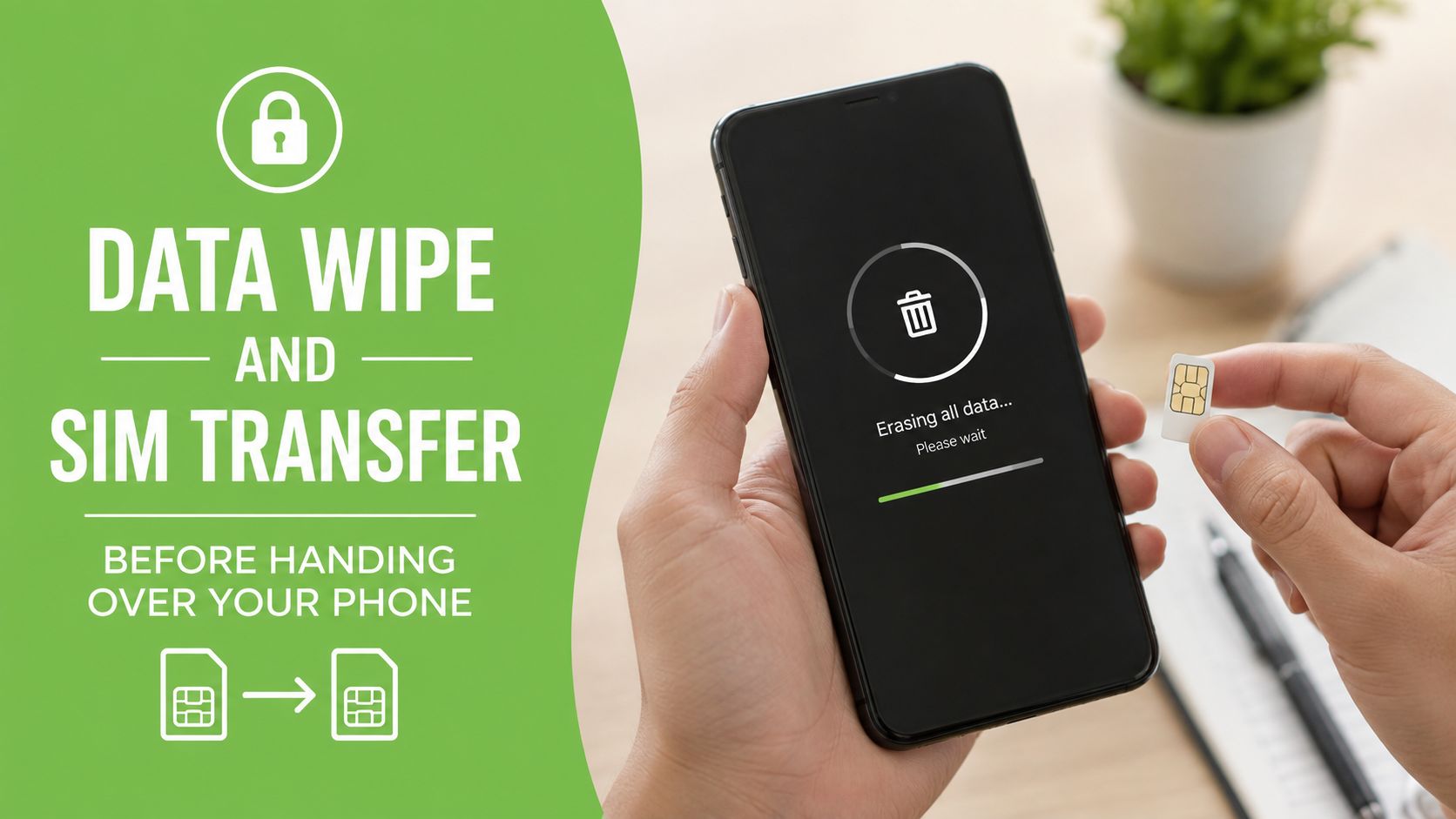
Start with a backup. Use iCloud on iPhone or Google Drive on Android if you need your photos, contacts, and app data later. Then remove account locks, because a phone that still has activation protection attached can delay or reduce the trade-in outcome.
Do the reset properly
On iPhone, disable Find My iPhone before you wipe the device. That step matters because StarHub's acceptance criteria specifically call it out for Apple devices StarHub trade-in terms. After that, sign out of your Apple ID, erase all content and settings, and check that the phone restarts like a fresh device.
On Android, sign out of your Google account, remove any screen lock you don't need, and then do a factory reset from the settings menu. If your phone uses a work profile or device management app, clear that too before handover.
Practical rule: if the handset still asks for your password after a reset, it's not ready for trade-in yet.
Move your SIM or eSIM before the handover
If you're swapping devices, move your SIM first so your new phone is live when the old one leaves your hands. For eSIM transfers, this practical eSIM transfer guide is a helpful reference if your line is already digital.
One more thing. Check that your old phone powers on, charges normally, and shows a clear display before you book the handover, because those are the same conditions StarHub uses during inspection. A clean reset and a clean handoff make the whole process faster.
When an Independent Buyback Service Offers Better Value
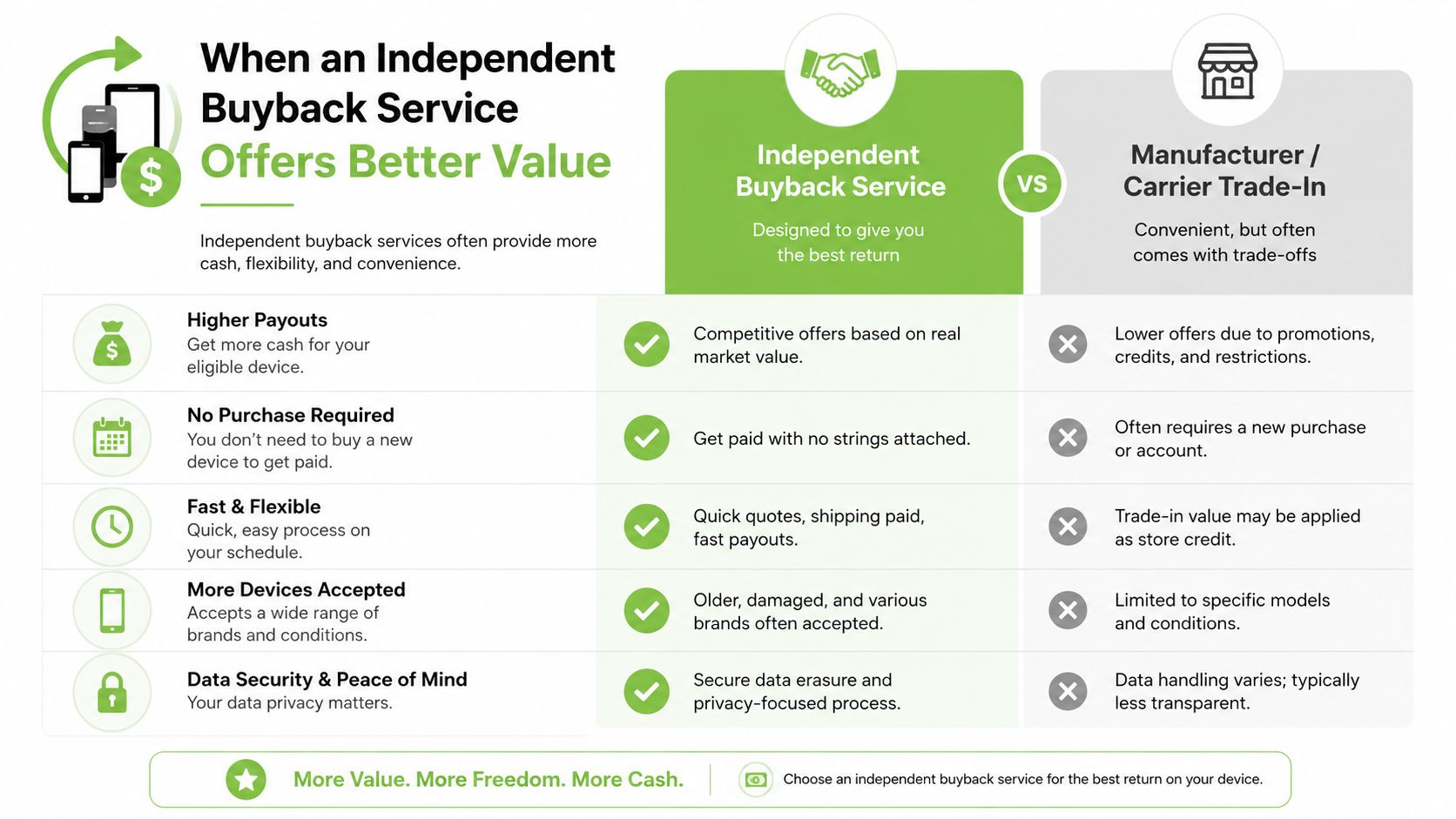
The hidden value gap shows up. StarHub's trade-in structure works best when you're offsetting a new purchase inside its ecosystem, but if you just want cash for an older phone, the programme can be restrictive. That's especially true for non-listed handsets, which only receive S$10 under the fallback route StarHub trade-in terms.
That's why independent buyback channels deserve a proper look. They're built around device value first, not contract attachment. In myhalo's case, the service is positioned around device lifecycle work, which includes Certified ReLoved, Certified Surplus, repairs, and responsible reuse rather than a pure one-way sell-off. It also uses transparent device grading, battery health disclosure, and 30-point quality checks under an ISO 9001-certified process, which helps owners understand what they're selling before they commit.
The value question is not just convenience
If you're not buying a new handset, ask one blunt question, does the trade-in route pay enough to justify the channel lock-in? In many cases, a buyback service that evaluates the phone on its own merits makes more sense than a telco path designed to support a fresh purchase.
A useful habit is to compare the outcome against the phone's actual resale position, not just the headline convenience. That's where a separate buyback quote can reveal whether your older flagship still has meaningful value. It also helps SMEs and families who want to stretch device life without locking into a new plan cycle.
For sellers who want a broader market view, this refurbished products buying guide is a good reference point for how reused devices are judged in practice. For a Singapore-specific path, myhalo's iPhone buyback page is the kind of resale workflow people often compare against telco trade-ins.
Making the Right Trade-In Decision for Your Situation
Choose StarHub if you're upgrading on contract, your phone is on the eligible list, and you want the simplest possible offset against a new device. That's where the programme is strongest. It's less attractive when you want standalone cash, when your device is outside the list, or when you want to compare against a resale channel that isn't tied to a telco purchase.
Use this quick filter before you decide:
- Are you buying a new handset now? If yes, StarHub can be efficient.
- Is your model listed? If no, the fallback value may be too low to justify it.
- Do you want cash without a contract tie-in? If yes, compare independent buyback first.
- Is the phone still in strong condition? If yes, get a fresh quote elsewhere before accepting the first offer.
Repair and reuse still matter here. A phone that only needs a battery, screen, or clean data migration can often be kept in circulation longer, which protects value and reduces replacement pressure for households and SMEs alike.
If you want a clean, transparent alternative for selling or renewing devices, myhalo helps with trade-ins, device grading, Certified ReLoved options, and responsible recycling, so you can choose the route that fits the phone you own. Visit myhalo if you want to compare a cash buyback against a telco trade-in before you hand your device over.