




iPhone 14 Prices in Singapore (2026 Buyer's Guide)
You're probably looking at three tabs right now. One shows a brand-new iPhone 14 from a big retailer. Another shows a much cheaper listing from a marketplace seller. The third is some refurbished option that looks promising, but you're wondering what the catch is.
That's exactly how most buyers in Singapore approach iphone 14 prices in 2026. The problem isn't a lack of options. It's that the sticker price alone doesn't tell you enough. You need to know what condition you're paying for, what support comes after the sale, and whether the cheaper option stays cheaper once repairs, battery wear, and upgrade timing enter the picture.
A sensible buy in 2026 isn't about chasing the lowest number on screen. It's about matching the right iPhone 14 to how you use your phone, then making sure the total cost stays under control over the next couple of years.
Table of Contents
- The iPhone 14 Price Landscape in Singapore 2026
- Decoding the Factors That Change iPhone 14 Prices
- Your Guide to myhalo's Certified iPhone 14 Grades
- Why the iPhone 14 is Still a Smart Buy in 2026
- Maximising Value with Trade-Ins and Financing
- Tips for Getting the Best Deal and When to Buy
- Singapore iPhone 14 Prices FAQ
The iPhone 14 Price Landscape in Singapore 2026
If you want a clean snapshot of iphone 14 prices in Singapore, start with the official launch point and where the market has settled since then. The iPhone 14 128GB launched locally in September 2022 at around SGD 1,149, and by May 2026, new units had stabilised around SGD 950 to 1,050, while certified As-New refurbished units were sitting around SGD 650 to 800. That puts refurbished devices at up to 40% savings versus launch price, based on historical pricing context for the iPhone 14.
That spread matters because “iPhone 14 price” isn't one number. In practice, Singapore buyers are choosing between three very different categories:
| Option | Typical 2026 market position | Who it suits |
|---|---|---|
| Brand-new sealed | Highest price band | Buyers who want untouched stock and full new-device certainty |
| Certified refurbished | Mid-price band | Buyers who want lower cost with checks and warranty support |
| Casual second-hand listing | Lowest visible asking price | Buyers comfortable taking on more risk themselves |
The biggest mistake I see is treating those options as if they differ only by age. They don't. A factory-sealed phone gives you the cleanest ownership history. A professionally refurbished phone gives you a lower entry price and some protection if something isn't right. A peer-to-peer deal may look cheapest, but it often shifts the checking and risk to you.
Practical rule: Don't compare devices by headline price alone. Compare purchase type, condition standard, and after-sales support together.
Local buyers also tend to feel the difference between “cheap” and “value” very quickly. If you're already deciding between older and newer Apple models, it helps to look at how nearby generations are priced too, especially when buyers start cross-shopping against newer flagships like the iPhone 15 Pro Max price in Singapore.
In 2026, the iPhone 14 sits in a useful middle ground. It's no longer priced like a current flagship, but it hasn't dropped into the category where buyers usually expect major performance compromise. That's why it keeps showing up on shortlists for students, small business users, and anyone who wants an iPhone that still feels current without paying current-flagship money.
Decoding the Factors That Change iPhone 14 Prices
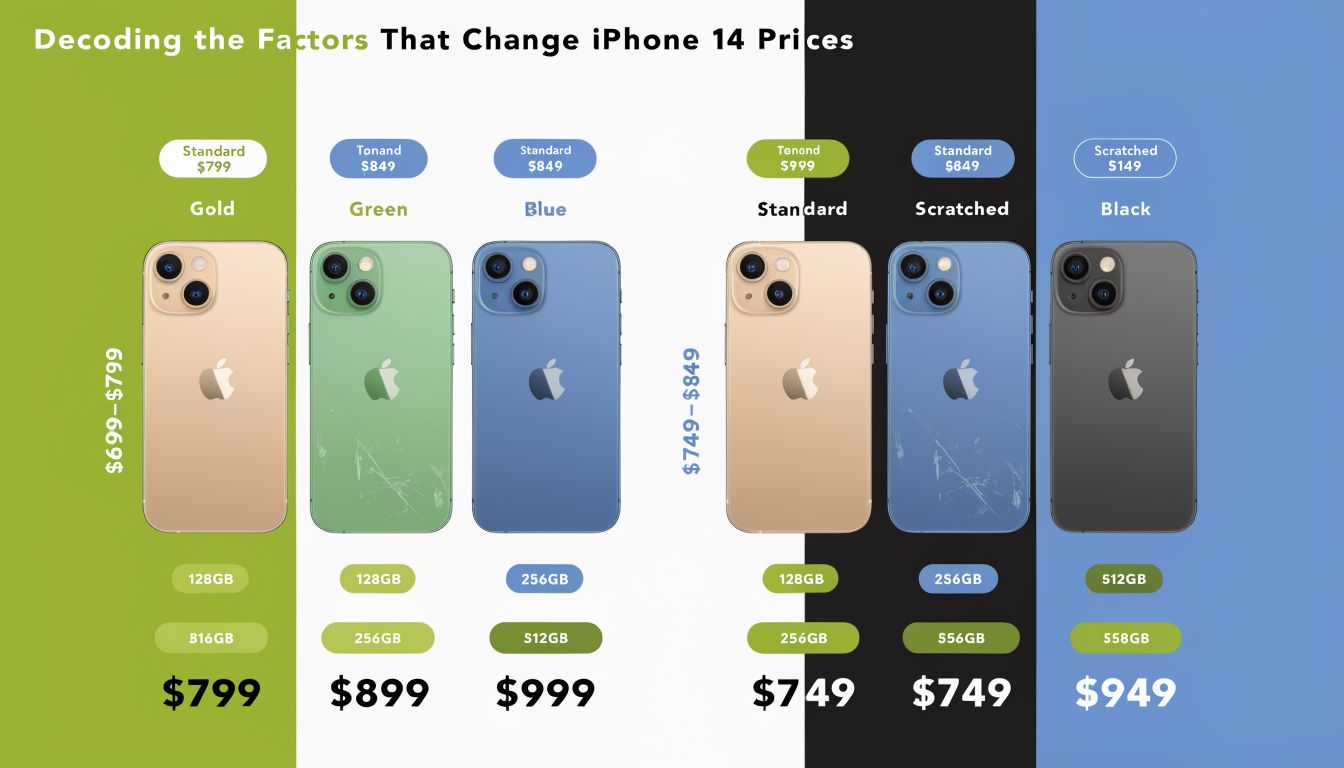
The same iPhone 14 can be priced very differently from one listing to the next. Usually, the difference comes down to four things: storage, condition, colour, and warranty.
Storage changes the value equation
Storage is the easiest factor to understand, but many buyers still judge it too narrowly. The iPhone 14's original pricing had a $100 to $200 premium per storage tier, and that structure still shapes used and refurbished pricing today. It also affects buyer behaviour, where 128GB units move fastest, while 256GB and 512GB versions tend to hold stronger buyer value over time, according to EveryMac's iPhone 14 pricing and spec reference.
Here's the practical read:
- 128GB works for people who stream most of their content and don't shoot a huge amount of local video.
- 256GB is the sweet spot for many users because it gives breathing room without moving too far up the price ladder.
- 512GB makes sense for heavier creators or anyone who hates managing storage, but it's often slower to sell and only worth paying for if you'll use it.
If you're buying refurbished, don't just ask what's cheapest. Ask what prevents your next upgrade from happening too early.
Condition affects more than appearance
Condition isn't only about scratches. It changes how confident you can feel when you leave the shop with the phone.
A lightly marked unit may be completely fine for daily use. A badly graded or vaguely described unit is where buyers get into trouble, because cosmetic wear can be manageable, but uncertainty about battery health, prior repair quality, and testing standards is where “cheap” stops being cheap. That's why it's worth reading a proper checklist before you buy, especially if you're comparing independent sellers against certified stock. A solid starting point is this guide on things to look out for before buying a refurbished phone.
The safest lower-price phone is usually the one with the clearest grading, not the one with the lowest asking price.
Colour and warranty still matter
Colour doesn't usually create a huge pricing gap, but it can influence how quickly a listing sells. Neutral colours tend to be easier to move in the resale market because they appeal to a wider pool of buyers. If you plan to keep the phone for years, buy the colour you like. If you already know you'll trade up later, choosing a broadly popular finish can make resale easier.
Warranty has a bigger effect than colour because it changes the risk you carry after purchase. A phone with a proper warranty isn't just a more expensive version of the same hardware. Part of the price is covering testing, accountability, and a clear process if the device develops a problem soon after purchase.
That's why two phones that look identical on paper can still deserve very different prices.
Your Guide to myhalo's Certified iPhone 14 Grades
Singapore's refurbished market is different from broad global resale guides because local buyers usually pay more for carrier-free units and for stock with clear support. Global resale sites put the iPhone 14 around SGD 325 to 525, but Singapore's market carries a 10 to 20% premium, and graded local options such as a ReLoved 128GB starting at SGD 428 exist because buyers here expect more transparency and warranty support than generic resale platforms usually provide, as noted in BankMyCell's resale value discussion.
That's where a grading system becomes useful. Instead of guessing what “good condition” means, you get a cleaner way to match price to expectations.
How to read the grades properly
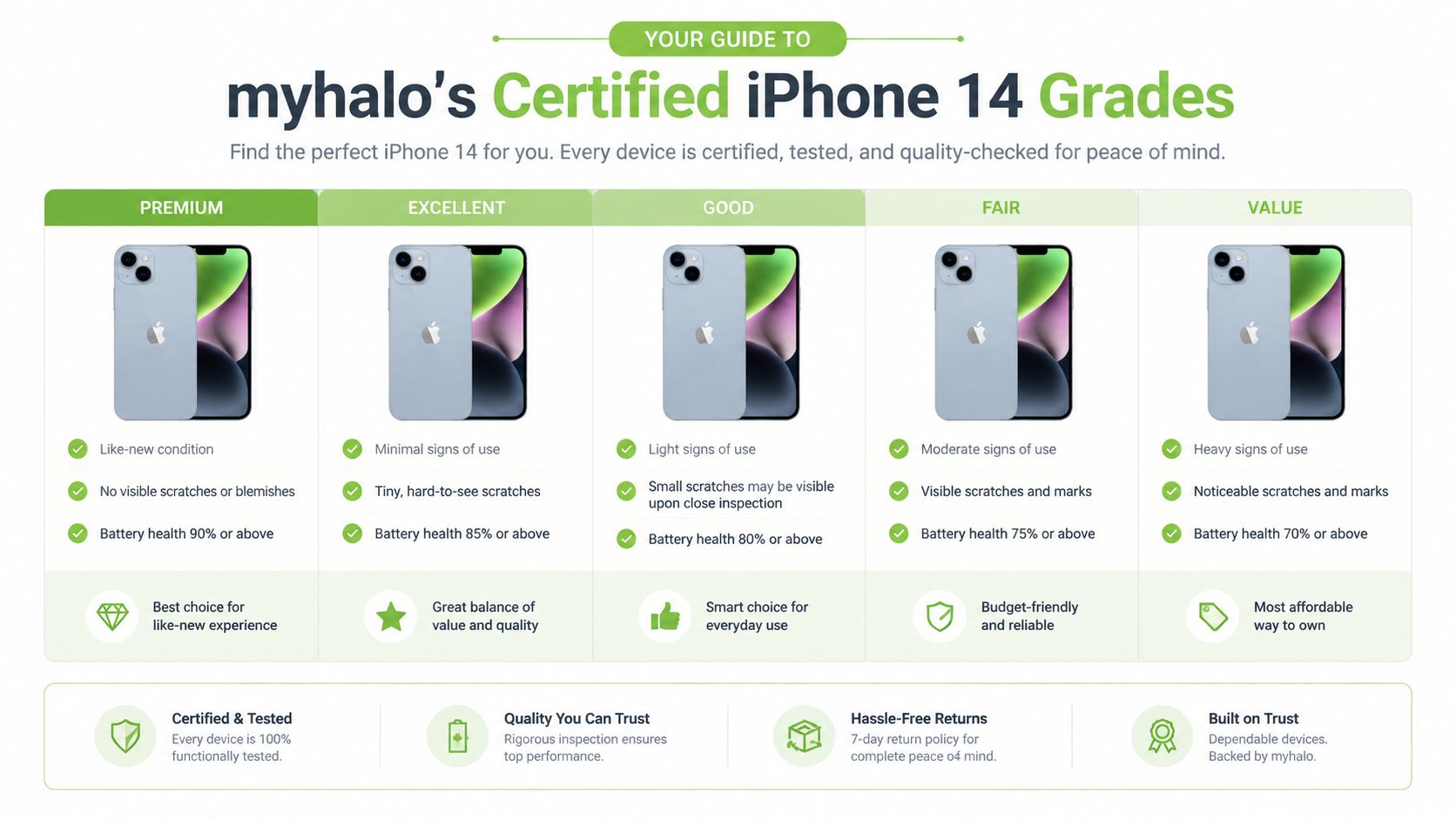
The easiest way to think about grading is this: you're not only buying a phone, you're buying a tolerance level for cosmetic wear.
A useful condition reference is the mobile conditions guide from myhalo, which sets expectations around how each grade should look and what type of buyer it fits. In practical terms, the grades break down like this:
| Grade | What it usually means | Best for |
|---|---|---|
| As-New | Very close to a like-new appearance, with stronger peace of mind | Buyers who care about presentation and want a premium refurbished feel |
| ReLoved Premium | Minimal signs of use | Buyers who want a cleaner device without paying As-New pricing |
| ReLoved Excellent | Visible but modest wear | Buyers focused on value first, looks second |
| ReLoved Value | More obvious cosmetic marks, but still suitable for normal use | Buyers who don't mind visible wear if the savings are right |
| ReEco | Fully functional with heavier cosmetic wear | Buyers who care mainly about function and lowest entry cost |
That's the part many people get wrong. They assume lower grade means unreliable. It doesn't have to. Lower grade usually means you're accepting more visible wear, not necessarily weaker day-to-day function.
Which grade fits which buyer
If you're shopping for yourself and you use a case from day one, a mid-grade device often makes the most sense. You'll stop noticing a small mark quickly, but you'll keep noticing the money you didn't spend.
If the phone is for a gift, client-facing work, or someone who is particular about appearance, As-New usually avoids buyer's regret. It costs more, but it reduces that nagging feeling that the phone looks “used” every time you pick it up.
For budget-led buyers, the lower grades are where refurbished starts to become compelling. A student who needs reliable iOS performance, a delivery rider who wants Face ID and solid battery life, or a small team member who just needs a dependable work handset may care far more about function than cosmetics.
Buying filter: Pay for appearance only if appearance matters to you every day. Otherwise, direct that budget toward more storage or a better support package.
One mention worth making here is myhalo, which sells factory-sealed devices alongside graded refurbished ones and pairs that with transparent condition categories, warranty coverage, and exchange support. That setup suits buyers who want a local option with less ambiguity than an informal marketplace listing.
Why the iPhone 14 is Still a Smart Buy in 2026
Some phones feel old the moment the next generation lands. The iPhone 14 doesn't fall into that category. In 2026, it still makes sense because its core hardware remains strong where its impact is most evident: app speed, camera responsiveness, gaming stability, and battery efficiency.
The chip is the real reason
The iPhone 14 runs on Apple's A15 Bionic, with a 6-core CPU, 5-core GPU, and 5nm process, and that combination is why its performance and thermal efficiency remain competitive through 2026 to 2027, according to the iPhone 14 technical overview on Wikipedia.
That sounds technical, but the practical takeaway is simple. The phone still feels fast. It handles messaging, banking apps, maps, social apps, mobile games, video calls, and photo editing without feeling like a budget compromise.
The 5nm design matters because efficient chips tend to age better in day-to-day use. They don't only chase benchmark numbers. They also help keep heat and battery drain under control, which matters far more over a long ownership period.
Who gets the most value from it
The iPhone 14 makes sense for buyers who want a “still current” experience without paying for the newest badge. That includes:
- Students who need a dependable phone for classes, content, and casual gaming
- SME owners and staff who want reliable iOS support for work apps and communication
- Eco-conscious buyers who would rather extend a device lifecycle than buy fresh hardware unnecessarily
Battery condition still deserves attention on any older device, especially if you're buying pre-owned. If you want a practical explainer on what to check and how to maintain battery performance after purchase, AquaVault's guide to iPhone battery care is worth reading.
The iPhone 14's value in 2026 isn't based on nostalgia. It's based on the fact that for a lot of users, it still does the job with very little friction.
Maximising Value with Trade-Ins and Financing
The smartest way to lower your iPhone 14 cost often isn't negotiating harder. It's reducing how much cash leaves your pocket in the first place.
Trade-ins reduce the real out-of-pocket cost
A trade-in changes the maths immediately. Verified analysis says a refurbished iPhone 14 can deliver 55 to 65% total cost of ownership savings over two years compared with buying a new model, and in Singapore, trade-ins through programmes like myhalo's can return SGD 300 to 450 in credit, based on Gazelle's iPhone 14 cost analysis adapted for local trade-in context.
That means your buying decision shouldn't stop at “What does the phone cost?” It should continue to “What am I replacing, and how much can that offset?”
A simple way to evaluate it:
- Check your current phone's realistic trade-in value.
- Subtract that from the iPhone 14 option you want.
- Compare the final outlay across new and refurbished, not the shelf prices alone.
Buyers often discover the difference between new and refurbished gets even wider once trade-in credit is applied to the lower-priced refurbished unit.
Think in total cost not just selling price
Financing can also help, but only if it supports a sensible purchase rather than stretching you into a more expensive model than you need. A 0% instalment plan is useful when it preserves cash flow without inflating the actual cost.
Here's where buyers usually make better decisions:
| Buying approach | What works | What doesn't |
|---|---|---|
| Refurbished plus trade-in | Lowers upfront spend and long-term ownership cost | Doesn't work if you ignore condition and support terms |
| New plus instalments | Spreads cost for buyers who want sealed stock | Can tempt you into overpaying for a model you don't need |
| Cheapest second-hand listing | May reduce initial spend | Often weak on recourse if the phone has hidden issues |
Good financing supports the right device choice. Bad financing makes the wrong device feel affordable.
If you're buying for a small business or a household with several upgrades over time, this matters even more. Keeping each purchase disciplined usually saves more than chasing the newest spec sheet every cycle.
Tips for Getting the Best Deal and When to Buy
Timing affects iphone 14 prices, but timing alone won't save you from a bad purchase. The better approach is to combine timing with package comparison.
Use this short checklist before you buy:
- Compare the full package: Don't stop at the listed price. Check grading clarity, warranty terms, exchange policy, and whether the device is clearly suited for local use.
- Buy according to your habits: If you use cloud storage and don't shoot much video, don't overpay for storage you won't fill.
- Match grade to tolerance: A buyer who always uses a case can usually save money by choosing a lower cosmetic grade without affecting day-to-day use.
- Watch upgrade seasons: Price movement often becomes more interesting when a newer iPhone generation shifts buyer attention and increases trade-in activity.
- Think regionally but buy locally: Looking at other markets can help you spot broad pricing patterns. For example, deal round-ups such as Australia's best phone deals can be useful for comparison mindset, but Singapore buyers still need to prioritise local warranty, local compatibility, and local support.
The best deal is usually the one that stays a good deal after a few months of ownership. If you save a bit less upfront but avoid repair uncertainty, unclear history, or a no-return situation, that's often money well spent.
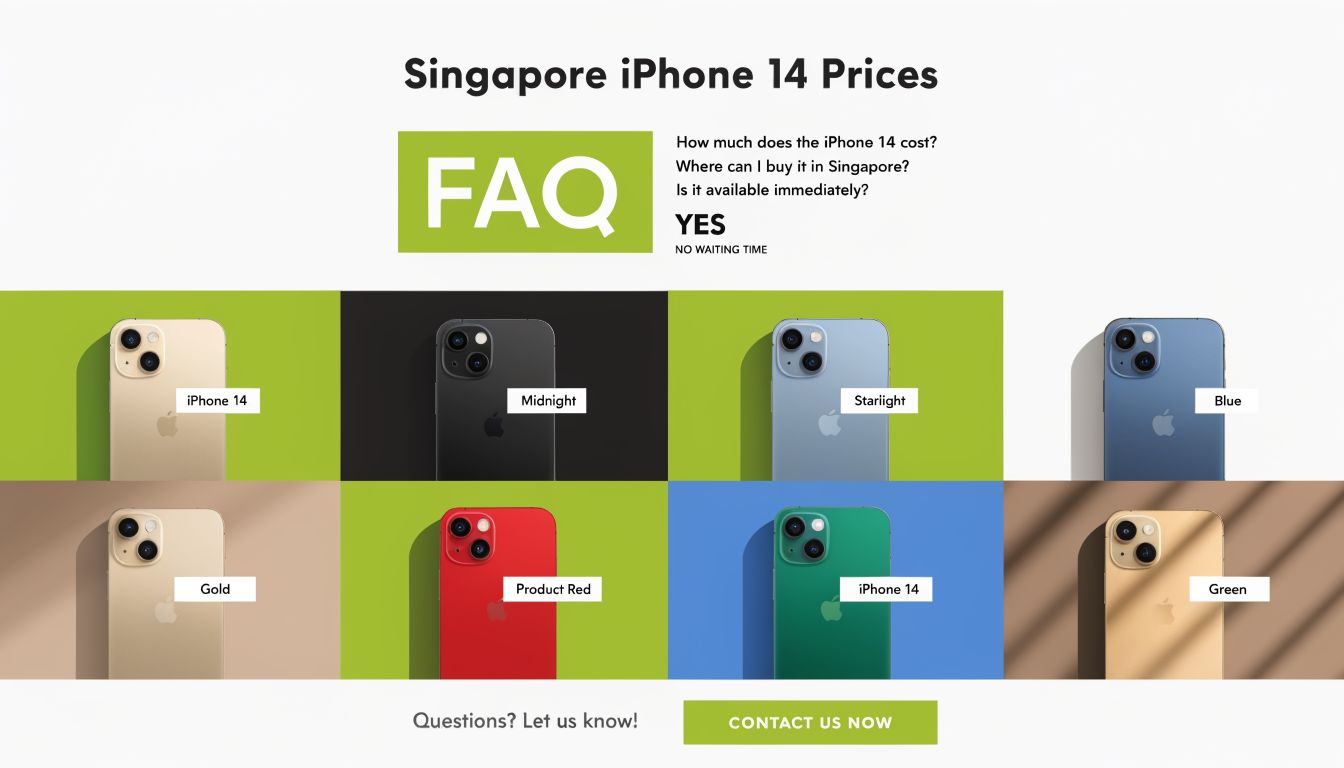
Singapore iPhone 14 Prices FAQ
Is a refurbished iPhone 14 safe to buy in Singapore
Yes, if you buy from a seller that clearly states grading, warranty, and exchange terms. The risky part of the second-hand market usually isn't that the phone is used. It's that some listings are vague about condition, prior repairs, battery state, or what happens if something goes wrong after purchase.
A certified refurbished device is generally the safer route for buyers who don't want to inspect every detail themselves. An informal marketplace deal can still work, but it places more of the checking burden on you.
Will an iPhone 14 work with Singtel StarHub and M1
In general, buyers in Singapore should prioritise SIM-free units. That avoids unnecessary complications and gives you flexibility if you switch plans or move between carriers. If a listing doesn't clearly state the lock status, ask before you commit.
For most shoppers, clarity matters more than chasing a slightly lower asking price. A phone that works smoothly with your preferred local telco is worth more than one that creates setup problems later.
Why does an exchange policy matter so much
Because the first days of ownership reveal issues that photos and listing descriptions may not. Maybe the device runs warmer than expected. Maybe a cosmetic mark bothers you more in person. Maybe something about the camera, battery, or buttons doesn't feel right.
An exchange window gives you a practical safety net. That's especially useful when you're buying refurbished, since grading is still a human judgement and buyers differ in what they find acceptable.
Should you buy new or refurbished in 2026
Buy new if you want factory-sealed stock and you're comfortable paying the premium for that peace of mind. Buy refurbished if you care more about value, support, and keeping total ownership cost lower.
For many Singapore buyers, that second route is the more rational one. The iPhone 14 still performs well enough that the savings can matter more than the prestige of opening a sealed box.
Which iPhone 14 version is the safest buy for value
The answer is the storage and grade combination that avoids two mistakes: overspending on capacity you won't use, and buying a cosmetic standard that you'll regret seeing every day.
A balanced option is usually a mid-grade unit with enough storage for your actual habits. That tends to keep both the purchase price and the ownership experience sensible.
If you want to compare current iPhone 14 options in Singapore without guessing what the condition labels mean, browse myhalo for factory-sealed and certified refurbished stock, then weigh the grade, warranty, exchange terms, and trade-in route together before deciding.