





Insta360 Ace Buyback Singapore: Get Top Cash Now
Your Insta360 Ace often ends up in the same place as old phones and spare cables. A drawer, a shelf, or a camera pouch you haven’t opened in months. If you’ve upgraded your setup, stopped using your action cam, or realised you’d rather turn it into cash than let it sit, you’re not looking at clutter. You’re looking at a device that still has resale appeal in Singapore.
That matters because insta360 ace buyback singapore isn’t just about finding any buyer. It’s about choosing a route that gives you fair value without the usual friction of endless messages, vague condition disputes, or waiting around for store credit you may not even want. The right preparation and the right channel can make a noticeable difference to the outcome.
Table of Contents
- Your Insta360 Ace Is Worth More Than You Think
- Choosing Your Best Buyback Option in Singapore
- How to Prepare Your Camera for Maximum Value
- Understanding the Grading and Pricing Process
- Navigating the Logistics of Your Trade-In
- Frequently Asked Questions for Insta360 Ace Buyback
Your Insta360 Ace Is Worth More Than You Think
The first mistake sellers make is assuming an older action camera has already peaked in value. That’s usually not true for the Ace series. Insta360 Ace (2023) models are among the most sought-after action cameras for buyback and trade-in programmes in Singapore, and local trade-in listings already place them alongside GoPro and DJI models in active demand. That broader interest also sits against Insta360’s business momentum, with revenue reaching nearly RMB 4 billion in 2023, and 80% coming from overseas markets including fast-growing Asia-Pacific regions, according to moomoo’s report on Insta360’s 2023 revenue.
That combination matters in practical terms. A camera with active buyer interest is easier to resell, easier to refurbish, and easier to place into a local trade-in or buyback channel. Buyers aren’t guessing whether someone will want it later. They already know there’s movement in the category.
Why resale demand stays healthy
The Ace line appeals to a specific kind of second-hand buyer. Someone who wants strong action-camera features without paying full new-device pricing. That buyer might be a student, a casual creator, a cyclist, or someone replacing an older action cam without stretching the budget.
The stronger the secondary demand, the less likely your camera is to be treated like dead stock. That’s why unused gear shouldn’t be viewed as a write-off. It’s still a tradable product.
Practical rule: If a camera still sits in an active upgrade cycle, you’ll usually do better selling it sooner rather than waiting for the next product wave to push your model further down.
Why local resale context matters
Singapore buyers usually care about three things. Fast turnaround, condition transparency, and some confidence that the device has been checked properly. That’s where a local circular economy matters more than people think. A camera that can be assessed, graded, and resold locally has a clearer path back into use instead of sitting in storage or being pushed into an uncertain private sale.
That’s also why the conversation shouldn’t be framed as “disposing of old tech”. It’s closer to realizing value from a device you’ve already paid for. If your Insta360 Ace is clean, complete, and functioning properly, there’s every reason to treat it as an asset.
Choosing Your Best Buyback Option in Singapore
Selling an Insta360 Ace in Singapore usually comes down to three routes: official brand trade-in, online marketplace sale, or a specialist local buyer. The best choice depends on what you want out of the deal. Highest possible asking price, fastest payout, or the least hassle rarely come together in one option.
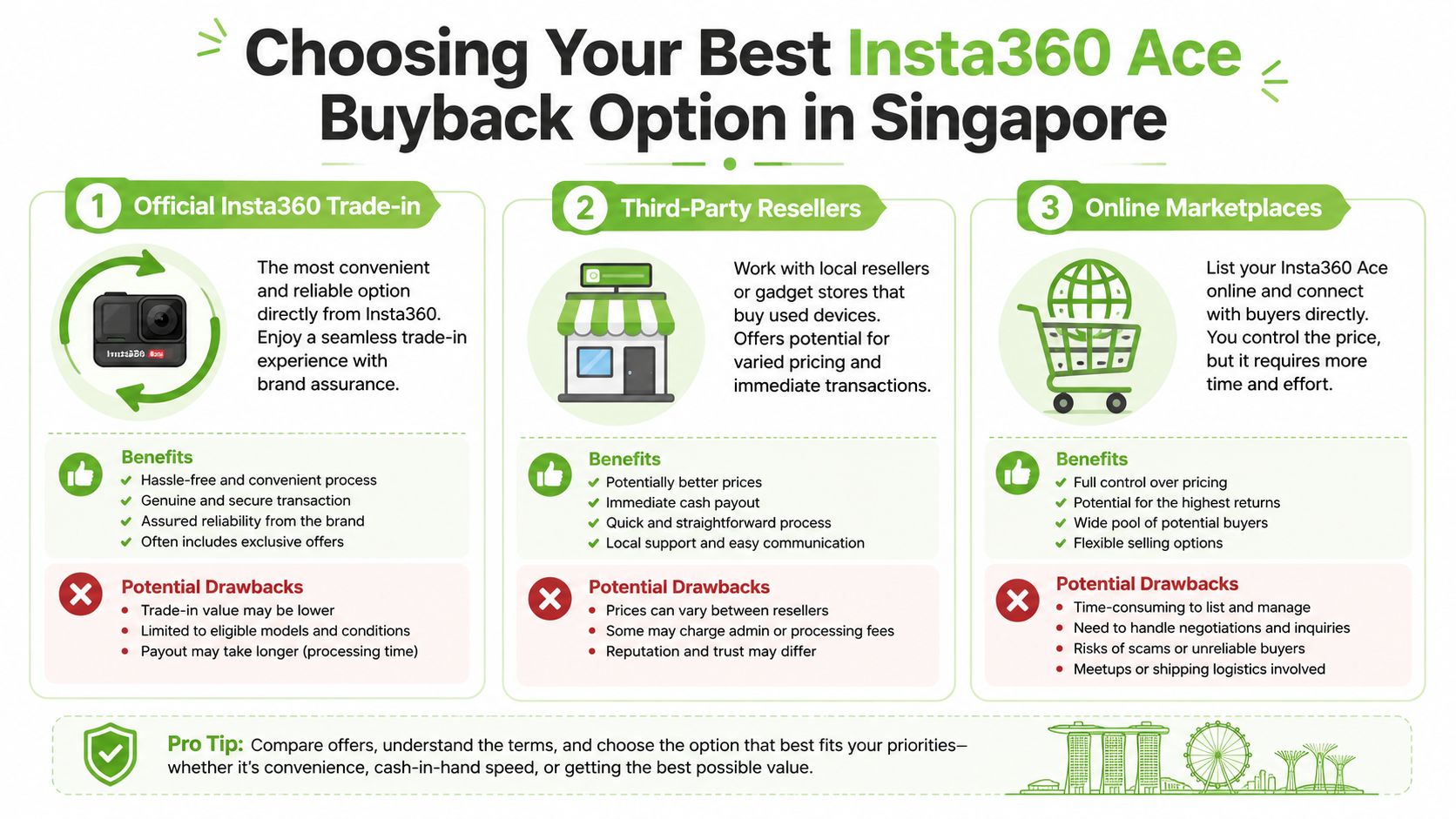
A common local scenario is simple. Someone lists an Ace online at a strong price, waits a week answering messages, then ends up accepting less after a meetup and on-the-spot bargaining. Another seller walks into a local shop, gets the camera checked properly, accepts a lower but clear offer, and gets paid the same day. The better route depends on how much your time and certainty are worth.
Why official trade-in suits some sellers
Official trade-in works best if you already plan to buy another Insta360 product and are happy to receive store credit or a coupon instead of cash. That route is structured, but it is also narrower. You are tied to programme terms, model eligibility, and the brand’s condition rules.
For some sellers, that is perfectly fine. For others, it lowers the actual value of the offer because the credit can only be used inside the same product ecosystem. If your goal is cash in hand, official trade-in is usually the less flexible route.
Why peer-to-peer works differently
Marketplaces such as Carousell give you full control over the listing price and buyer conversation. You can check active Insta360 Ace Pro listings on Carousell’s Singapore marketplace to get a rough sense of how sellers position their units locally.
That said, asking price is not sale price.
Private selling often means taking photos, writing the listing, replying to lowball offers, arranging meetups, and handling buyers who compare your unit against cheaper listings without factoring in condition or included accessories. If your Ace is clean and complete, you may still do well. If you want a predictable outcome, this route can be frustrating.
A higher listing price only helps if the deal actually closes.
Where specialist retail buyback fits
A specialist local buyer sits between those two extremes. You usually give up some pricing control compared with a private listing, but you gain speed, inspection transparency, and a defined handover process. That matters in Singapore, where many sellers want a fair quote without spending days managing chats and meetups.
Local services also make it easier to compare the actual trade-off. A faceless online programme may give you a quote upfront, but the final number can change after inspection, and the process often feels distant. A physical buyer or established local trade-in service can explain how the unit is graded, what affects the offer, and why one camera gets more than another. For a practical overview, this guide to how trade-in works in Singapore is a useful reference.
Here’s the comparison most sellers care about:
| Method | Potential Value | Speed | Convenience | Security |
|---|---|---|---|---|
| Official Insta360 Trade-in | Better if you want brand credit for another purchase | Slower, especially if shipping and verification are involved | Straightforward if your unit meets programme rules | Structured, but limited by programme terms |
| Third-party resellers | Usually balanced against condition, completeness, and resale demand | Fast if inspection and payout are done locally | Easier than managing your own listing | Clearer handover than informal buyer meetups |
| Online marketplaces | Highest control over asking price | Unpredictable | Most work for the seller | Depends heavily on buyer behaviour and meetup handling |
The practical answer is usually obvious once you decide what matters most. Choose official trade-in if brand credit suits your next purchase. Choose a marketplace if you are prepared to put in the work for a stronger headline price. Choose a specialist local buyer if you want a transparent process, realistic grading, and less wasted time.
How to Prepare Your Camera for Maximum Value
Condition decides value, and preparation decides condition perception. Buyers don’t only inspect whether the camera powers on. They look at how well you’ve kept it, how complete the package is, and whether the unit appears ready for immediate resale.
Insta360’s official trade-in standards are strict. The programme requires original packaging and all accessories for the highest valuation, rejects human damage, and notes that an estimated 15% to 25% of submissions in some markets are disqualified or devalued for failing to meet condition expectations, based on Insta360’s trade-in support documentation. That tells you something important. Preparation isn’t cosmetic. It directly affects what happens to your quote.
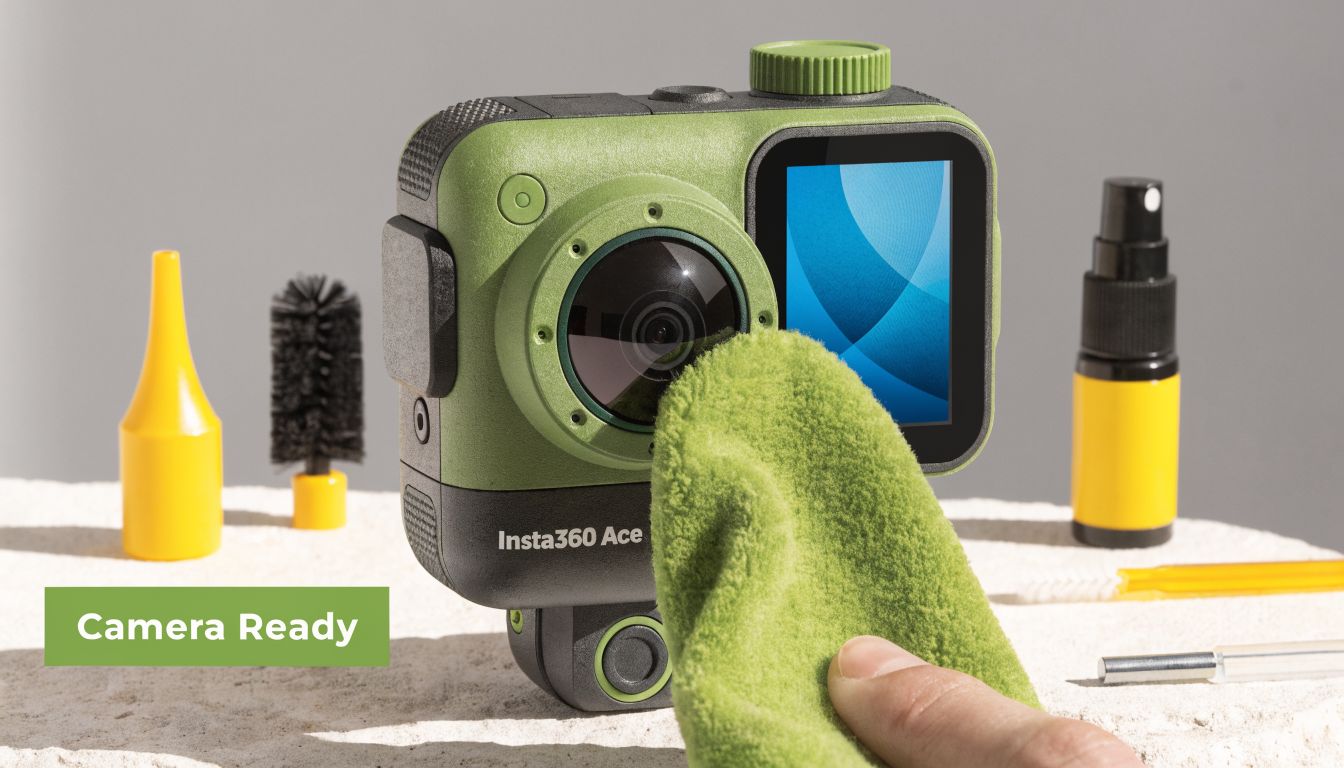
Start with the physical condition
Clean the camera before anyone inspects it. Use a soft microfibre cloth on the screen and body. Pay extra attention to the lens area, corners, hinge points, battery compartment, and ports where dust tends to collect.
Don’t use harsh liquid cleaners or anything abrasive. A buyer can tell the difference between normal wear and damage caused by careless cleaning. Small details matter here. Dried residue around buttons, sticky port covers, and grime inside creases make a camera look harder-used than it may be.
A quick checklist helps:
- Wipe the body carefully so fingerprints and grime don’t make cosmetic wear look worse than it is.
- Inspect the lens under bright light because faint scratches are easier to spot before the buyer does.
- Check covers and doors to make sure they open and close properly without looseness.
- Look for corrosion or moisture signs around battery contacts and internal edges.
Gather the items that support valuation
A complete set nearly always presents better than a loose camera body on its own. If you still have the retail box, charging cable, battery, mount, paperwork, or any included accessory, put them together before requesting a quote.
Some sellers assume the box doesn’t matter. In practice, packaging helps confirm completeness and makes the device easier to resell. Accessories also reduce uncertainty for the next buyer.
Use this order when laying things out:
- Camera body first. Check for obvious scratches, chips, or dents.
- Battery and charging items next. Make sure they’re clean and identifiable.
- Original box and inserts last. Keep them dry and tidy, not crushed at the bottom of a drawer.
If you’re missing one minor accessory, don’t panic. Missing accessories usually affect value less than functional issues or visible damage.
Handle your files and reset properly
Before handover, transfer any footage you still need. Check the internal storage or card, remove any memory card that isn’t part of the sale, and sign out where relevant. Then do a proper factory reset.
This step protects your footage, your settings, and your account information. It also makes testing easier for the buyer. A reset camera is faster to inspect because there’s no personal clutter, no account confusion, and no leftover pairing history.
A good final routine looks like this:
- Back up your clips to your phone, tablet, or computer first.
- Remove your memory card unless you intend to include it.
- Factory reset the device through the proper menu, not by just deleting files.
- Charge it before inspection so the buyer can test it immediately.
That last point gets overlooked all the time. A flat battery slows the process and can create avoidable doubt.
Understanding the Grading and Pricing Process
Most sellers only see the final quote. What they don’t see is the reasoning behind it. A proper buyback process usually separates cosmetic condition from functional condition, then maps both to a resale grade.
That matters because a camera with light surface wear but perfect operation is very different from one that looks clean but has flaky buttons or charging issues. Singapore’s market for affordable action cameras is moving upward, with imports up 28% year-on-year from 2024 to 2025, while refurbished market penetration remains below 5%, according to Insta360 Singapore refurbished market context. That gap is one reason graded resale matters. Buyers want affordable gear, but they also want confidence that someone has checked it properly.
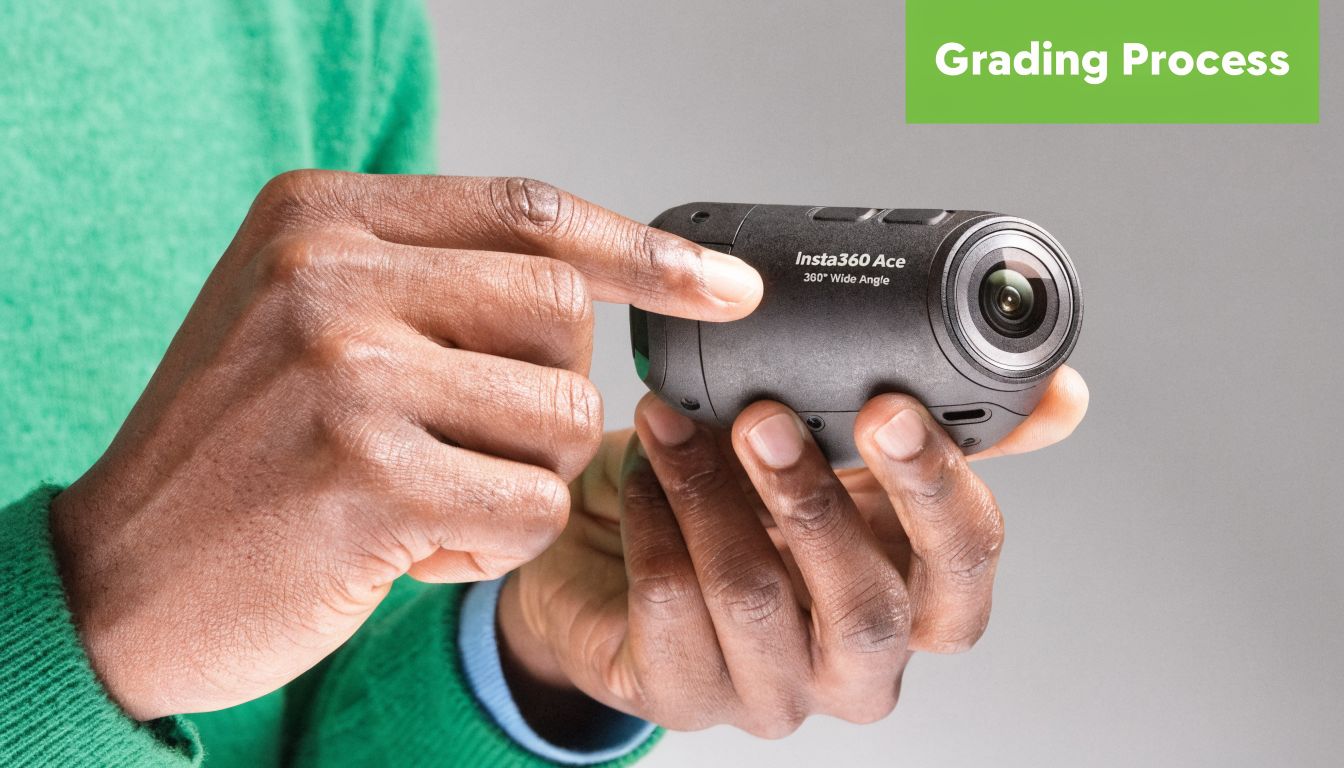
What buyers actually inspect
A realistic grading process usually looks at two buckets.
Cosmetic checks cover the visible state of the camera. Scratches, dents, lens marks, wear on buttons, faded printing, and condition of battery doors all fall into this category. Cosmetic wear affects buyer appeal, but it doesn’t always ruin value if the device still performs correctly.
Functional checks are more serious. The camera should power on reliably, charge properly, respond to button input, capture footage without errors, and connect as expected. A fully working unit with visible wear can still sit in a lower cosmetic grade. A clean-looking unit with a fault is harder to place.
For a general benchmark on how condition categories are typically described in a local retail setting, this product conditions page from myhalo shows how different refurbished grades are communicated to buyers.
How grades affect resale potential
Think of grading as a resale language. It helps the next buyer understand what they’re getting, and it helps the trade-in team tie condition to a realistic offer.
A simple way to understand this:
| Check area | Usually helps value when | Usually lowers value when |
|---|---|---|
| Lens and screen | Clear, clean, no major marks | Scratches affect appearance or confidence |
| Body condition | Only light wear from normal use | Dents, chips, or obvious impact signs |
| Buttons and ports | Everything responds normally | Loose, sticky, or inconsistent behaviour |
| Battery and charging | Charges and holds power as expected | Unreliable charging or battery issues |
| Completeness | Core accessories are present | Important items are missing |
Worth remembering: cosmetic deductions are usually easier to accept than functional deductions. Buyers can live with wear more easily than faults.
You don’t need a complicated formula to set expectations. The logic is simple. Better condition, stronger completeness, and easier resale potential usually support a stronger quote. More wear, missing items, or uncertain function usually pull it down.
Navigating the Logistics of Your Trade-In
Once you accept a quote, most of the important work is already done. The last stage is about handover, verification, and payment. The buyback route you chose will then start to feel either smooth or annoying.
Mail-in programmes suit people who don’t mind waiting and following a remote workflow. Local handover tends to suit sellers who want fewer moving parts. If you prefer a physical redemption route, this offline redemption page from myhalo shows what an in-person process typically looks like in Singapore.
Drop-off versus collection
Drop-off works well if you want face-to-face verification. The camera can be checked in front of you, questions can be clarified on the spot, and there’s less anxiety about shipping loss or transit damage.
Collection or courier is more convenient when your schedule is packed. The trade-off is simple. You save travel time, but you lose some immediacy because the device still has to arrive, be opened, and be checked.
The practical difference usually comes down to your tolerance for delay. If you want the process concluded quickly, direct handover is usually easier to trust.
What to have ready before handover
Don’t turn up with a half-prepared bag of accessories and a nearly flat camera. That slows everyone down. Keep the handover organised.
Bring or prepare these items:
- The camera itself, fully charged if possible.
- Included accessories, especially anything you mentioned when requesting the quote.
- Identification or order details, if the buyer requires them for processing.
- A backup confirmation, so you know your footage is already safe elsewhere.
A clean handover avoids the usual friction points. Missing items create renegotiation. A camera that can’t be tested immediately creates delay. An unreset device creates avoidable awkwardness.
One practical habit helps more than people expect. Before handing over the unit, power it on one last time yourself. Check the screen, basic controls, and battery level. It takes less than a minute and catches issues while the camera is still in your hands.
Frequently Asked Questions for Insta360 Ace Buyback
Some concerns only show up right before you sell. That’s normal. Most of them are easy to handle once you know how buyers usually assess the camera.
Can I sell it if it has scratches
Yes, in many cases you can. Light cosmetic wear doesn’t automatically make the camera unsellable. What matters more is whether the lens, screen, buttons, and charging functions still work properly. Be upfront about any marks early so the quote reflects reality.
What if I’ve lost the box or a cable
You can still ask for a buyback in many cases. A missing box or minor accessory may reduce value, but it’s usually less serious than actual damage or faults. If you’ve got the main camera, battery, and key included parts, you’re still in a workable position.
Should I choose cash or store credit
That depends on what you need next. Cash gives you full flexibility. Store credit can make sense if you already plan to replace the camera with another device from the same seller and the credit structure suits your purchase. If there’s any doubt, cash is usually easier to value because it isn’t tied to another transaction.
Is my personal data still on the camera
Potentially, yes, if you haven’t reset it. Back up your footage, remove any memory card you want to keep, and do a proper factory reset before the handover. That protects your clips, your settings, and any account-linked information.
If you’re unsure whether you reset the camera correctly, ask the buyer to confirm the device is wiped before finalising the handover.
The easiest way to get through an insta360 ace buyback singapore process without wasting time is to keep it simple. Clean the device, gather what belongs with it, reset it properly, and choose a channel that matches your priorities.
If you’d rather skip marketplace haggling and want a straightforward local route, myhalo is one option to check for trade-in and buyback support in Singapore, especially if you prefer transparent grading, warranty-backed resale standards, and a physical retail presence.